
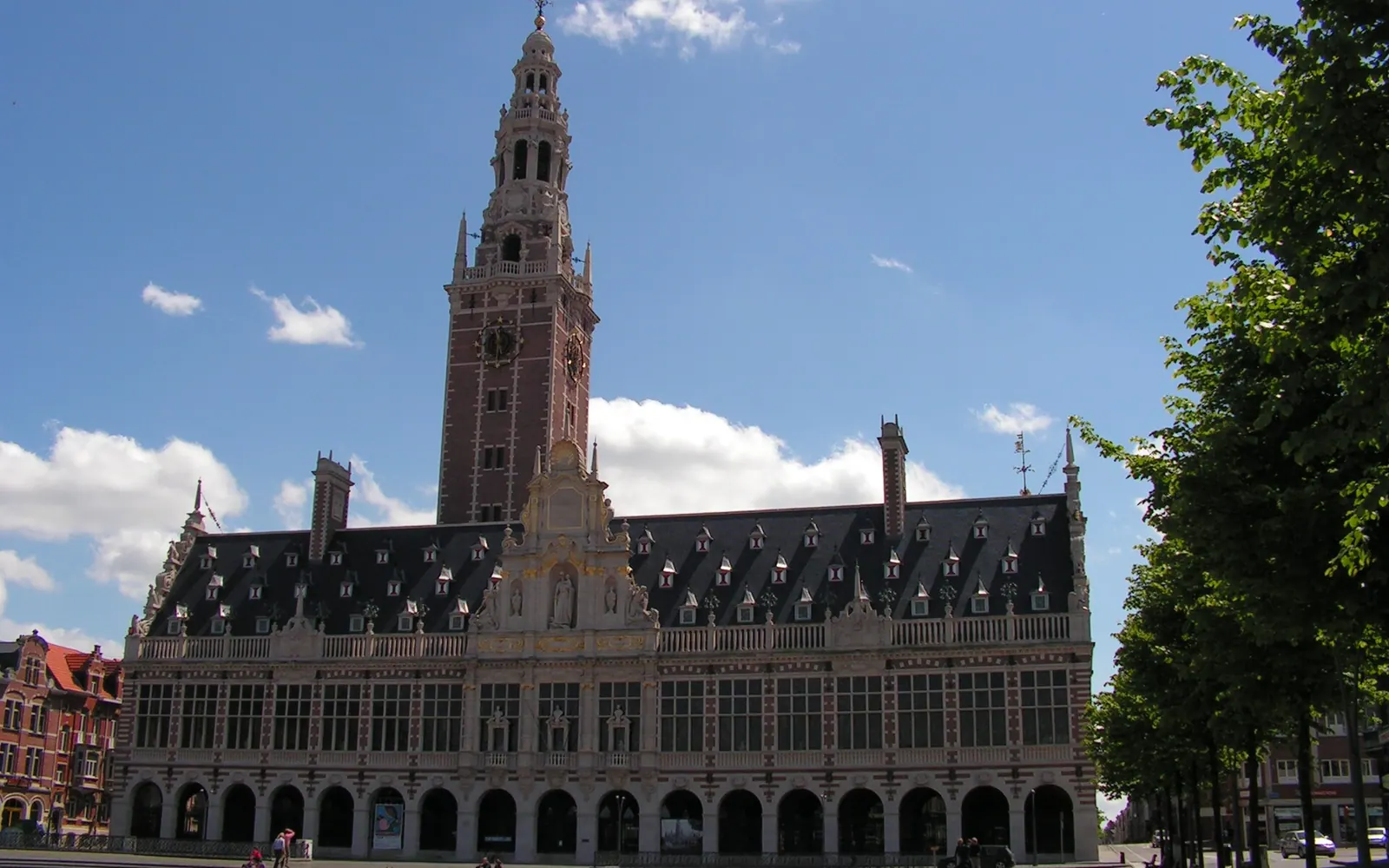
KU Leuven
Flemish research university in Leuven; seven English-taught bachelor's in Leuven and Brussels, two of…
Leuven7 programmes
Western Europe · May 2027 IB session · Autumn 2027 entry
Low fees, and mostly not in English at bachelor level
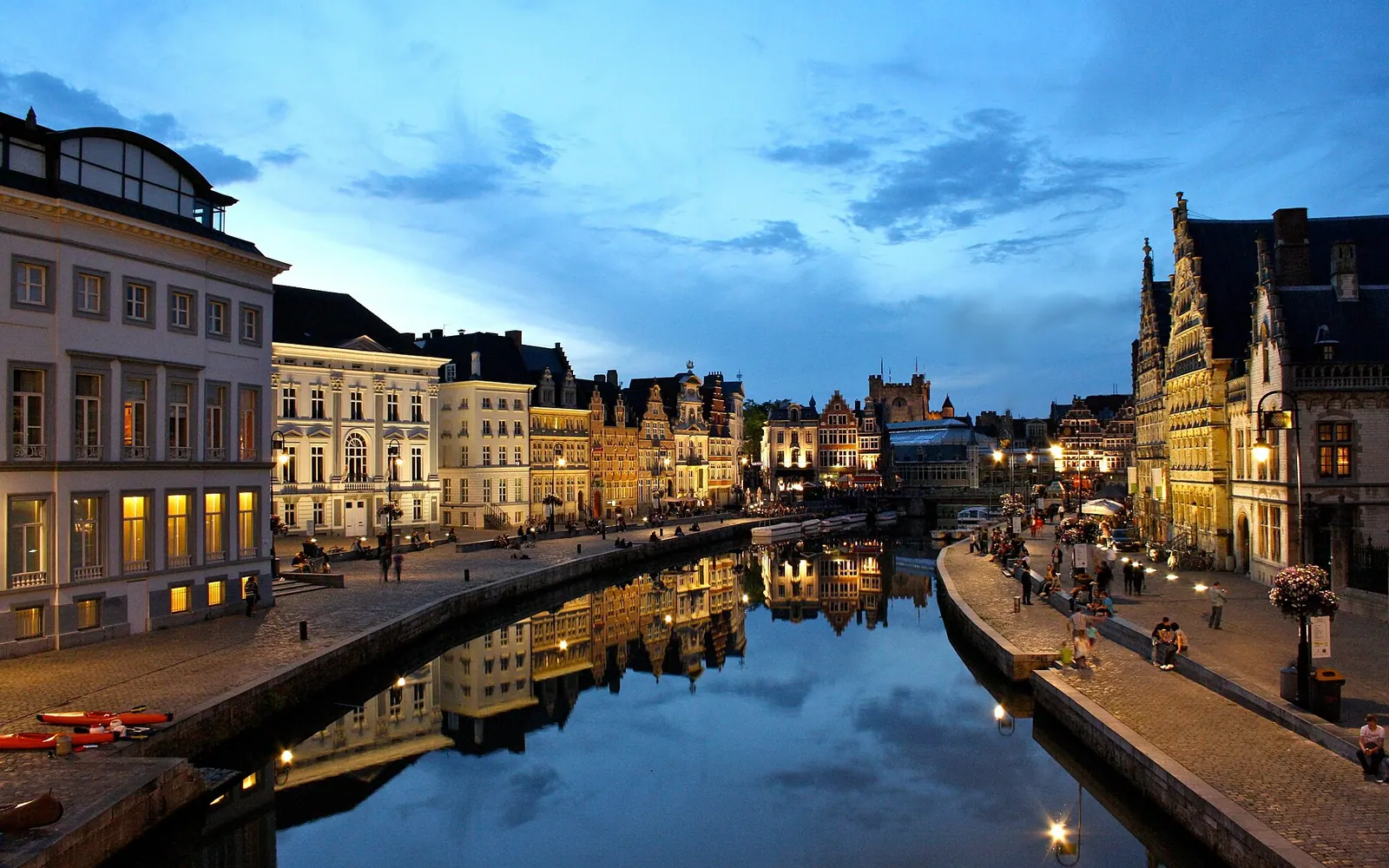
Ghent's Graslei at blue hour
11 institutions
9 universities
9 institutions · apply to each directly
KU Leuven, Ghent, Antwerp, VUB, Hasselt and the Flemish hogescholen, including the Dutch-language institutions in Brussels. Apply to each directly; applications usually open around November-December.
Medicine 2 July, dentistry 3 July, veterinary medicine 4 July 2027. Register 1 March to 17 May 2027.
Source
Flemish research university in Leuven; seven English-taught bachelor's in Leuven and Brussels, two of…
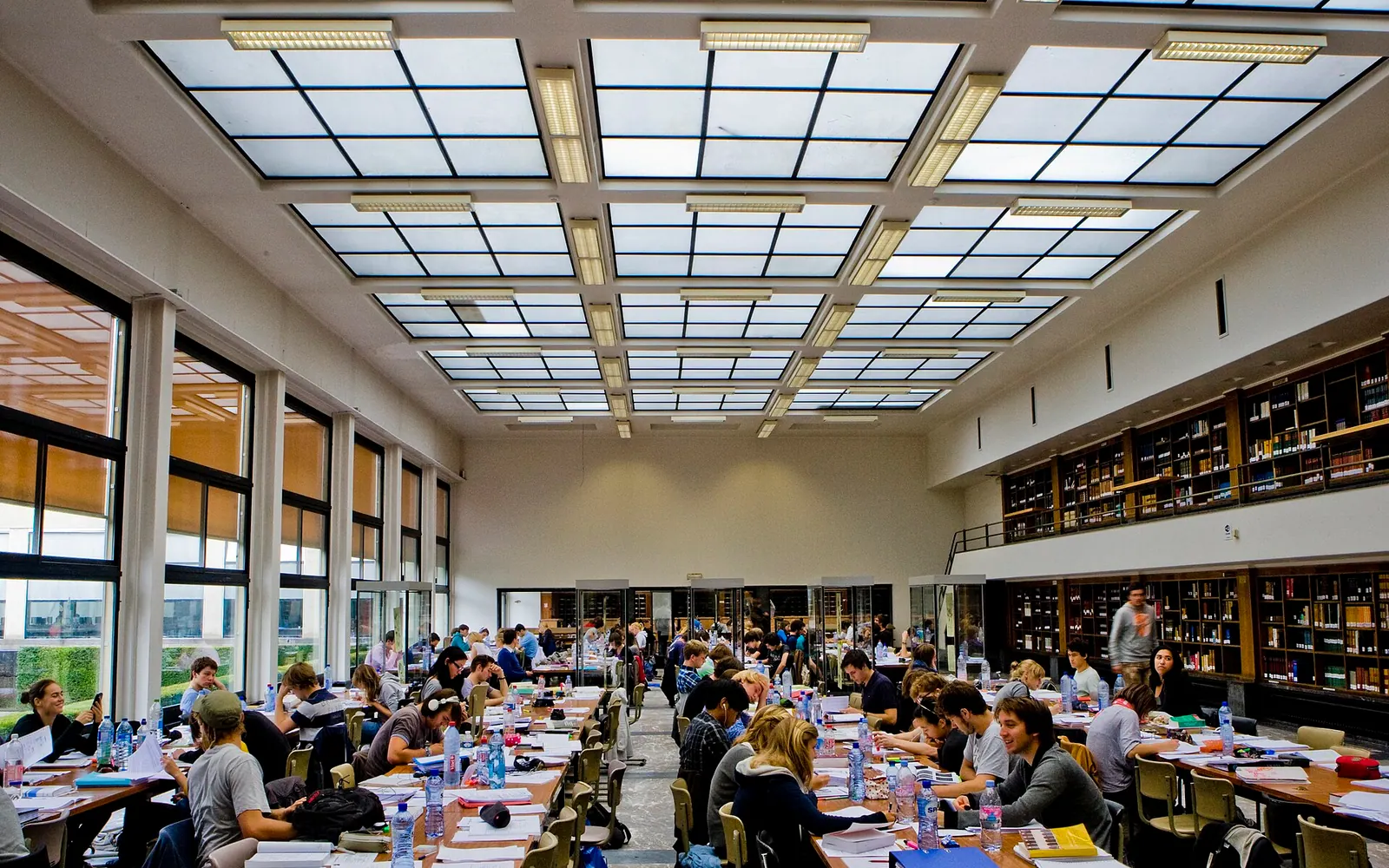
Flemish research university in Ghent teaching its bachelor's in Dutch; its one English bachelor's…
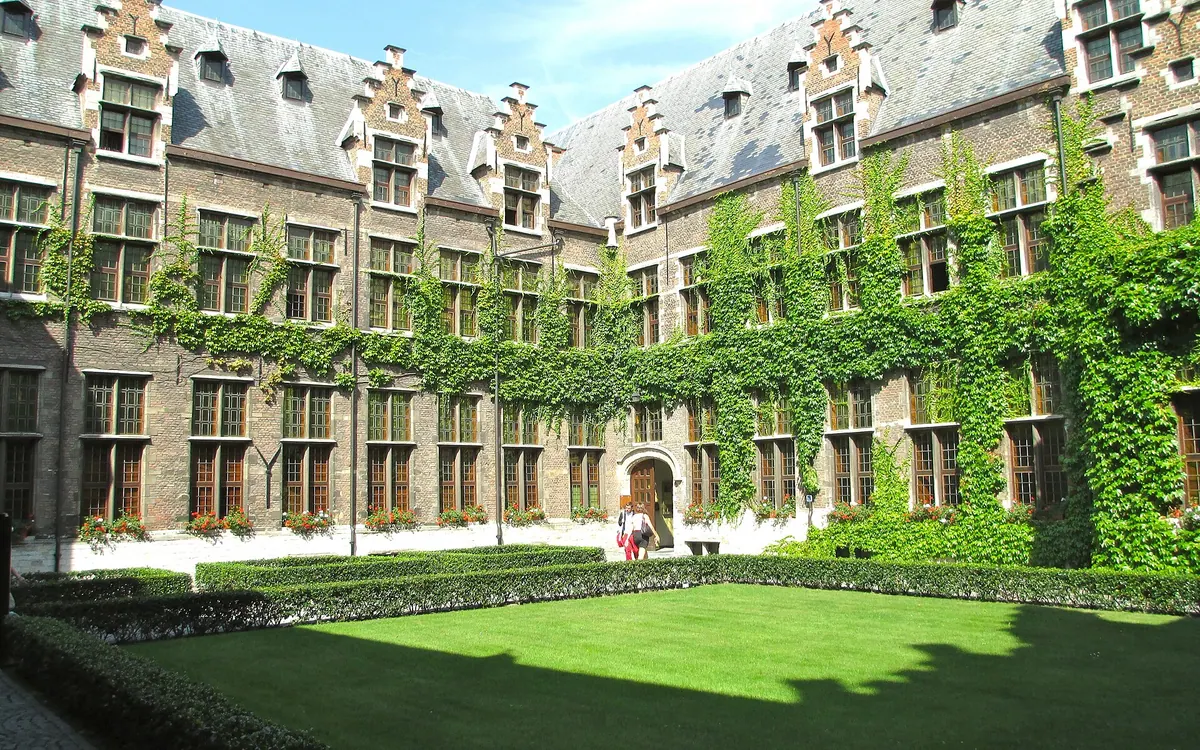
Flemish research university in Antwerp; two of its 34 bachelor's are in English: social-economic…
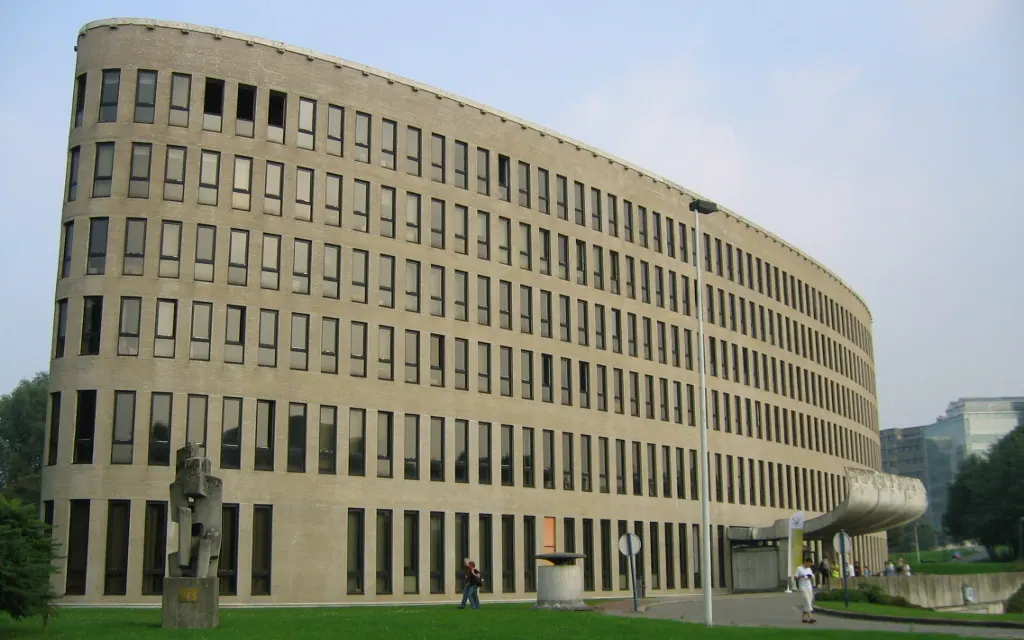
Dutch-speaking university in Brussels; three English-taught bachelor's: business economics, languages and literature, and social…
English-taught college in Brussels, now the Brussels School of Governance: three BAs in international…
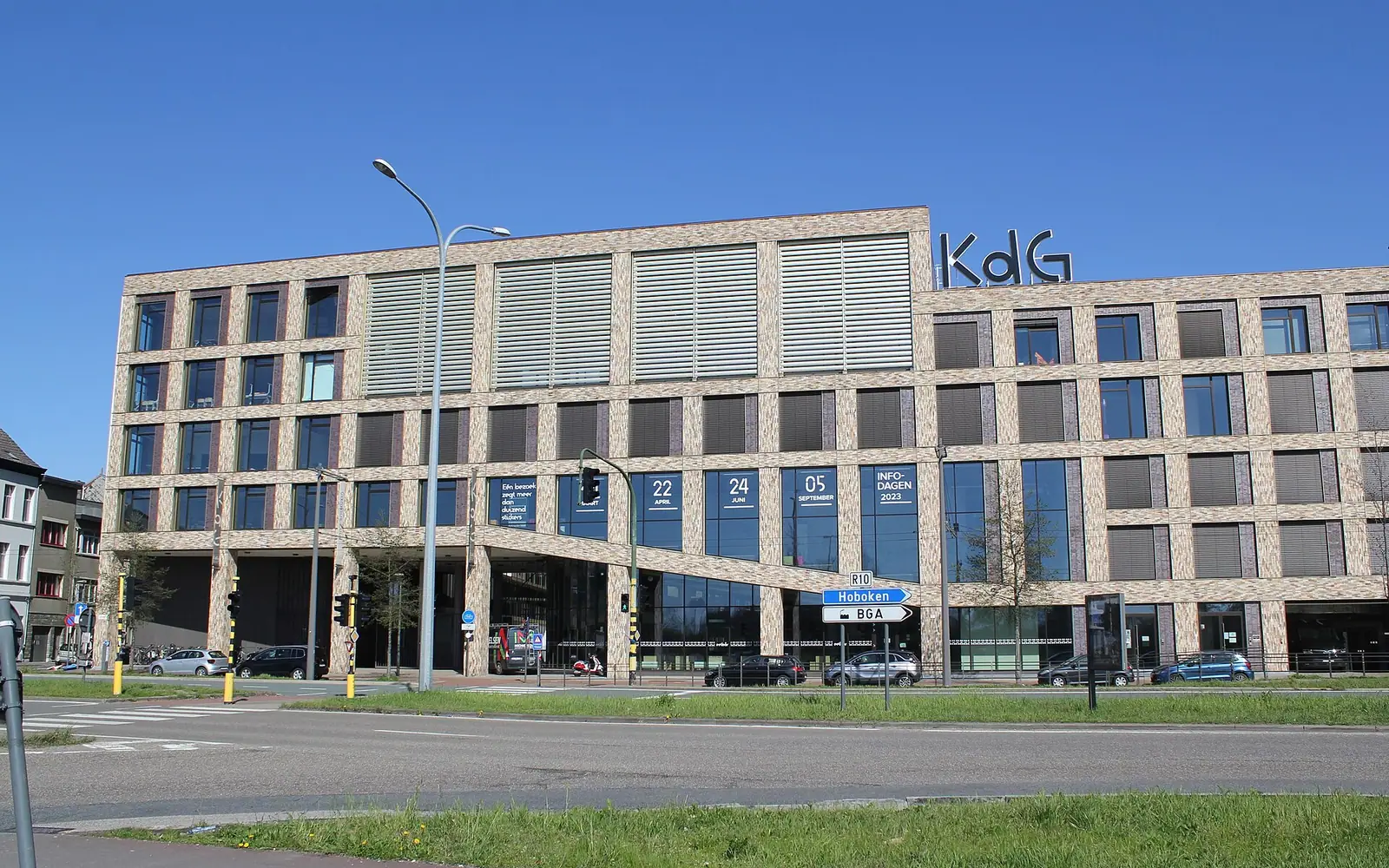
University of applied sciences in Antwerp with four English-taught professional bachelor's: computing, business, multimedia…

University of applied sciences in the Antwerp province; nine English-taught professional bachelor's in Mechelen…

University of applied sciences in Kortrijk and Bruges; five English-taught bachelor's, from games and…
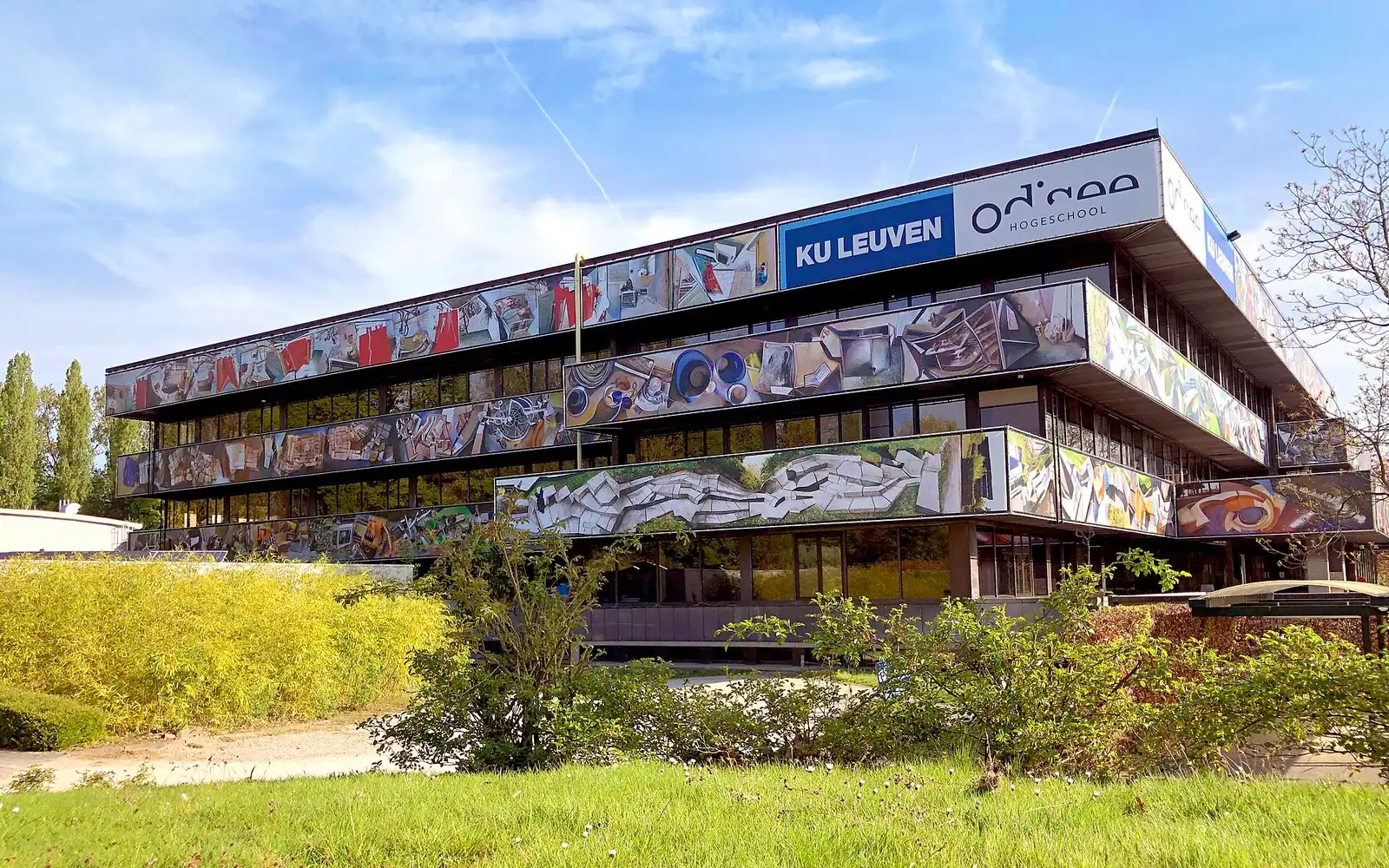
University of applied sciences in Brussels, Ghent, Aalst and Sint-Niklaas; one English bachelor's: Business…
2 universities
2 institutions · apply to each directly
UCLouvain, ULB, Liège, Mons and the French-speaking hautes écoles. Apply on each institution's own website; February to 31 March is the recommended window.
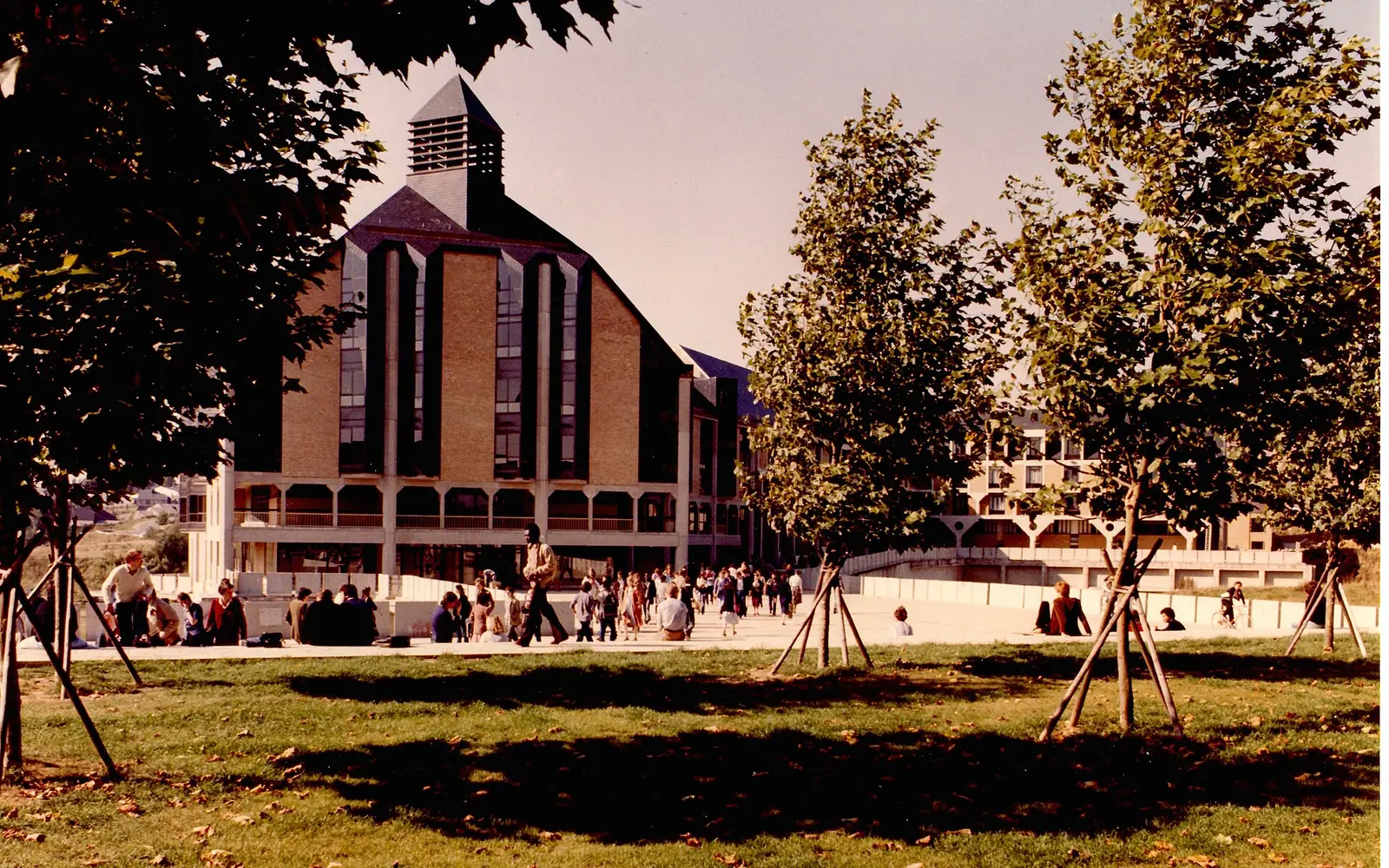
French-speaking university in Louvain-la-Neuve; bachelor's in French, plus one English business engineering degree with…
French-speaking university in Brussels; its Solvay business school runs two bachelor's mostly in English…
This browser cannot draw the globe. Every place is in the list below.
Belgium is two higher education systems in one country.
Dutch-speaking Flanders (KU Leuven, Ghent, Antwerp, VUB, Hasselt) and French-speaking Wallonia and Brussels (UCLouvain, ULB, Liege, Mons) each have their own ministry, fees, rules and calendar. Tuition for an EU student is low - 1,181.40 EUR for a full year in Flanders in 2026/27 - and the universities are genuinely strong. The honest problem for an IB student from Denmark is language: almost all Belgian bachelor's degrees are taught in Dutch or French, and the fully English-taught bachelor's offer is small. Master's programmes are a different story, with hundreds in English.
Very low EU tuition: 1,181.40 EUR for a full 60-credit year in Flanders in 2026/27, and a means-tested scale from 0 to 1,194 EUR in French-speaking Belgium.
English-taught bachelor's are rare. Flemish law restricts English-taught bachelor programmes, and most of what you will find in English at bachelor level sits at university colleges or in a handful of specific programmes.
Each language community runs its own binary system.
Each language community runs its own binary system. Flanders has universiteiten and hogescholen (university colleges, also called universities of applied sciences); the Fédération Wallonie-Bruxelles has universités, hautes écoles and écoles supérieures des arts. Flemish hogescholen also run short associate degrees (graduaten) that lead on to a professional bachelor.
Three-year academic bachelor's degrees with a theoretical focus, leading to a master's. Open access for most programmes; medicine, dentistry and veterinary medicine need an entrance exam.
In French-speaking Belgium a full IB Diploma needs no equivalence. In Flanders admission rests on a diploma giving university access where it was awarded.
Three-year professional bachelor's degrees combining theory with compulsory internships, aimed straight at a profession. Several Flemish hogescholen run a few English-taught bachelor's.
A 90-120 ECTS practice-based programme at a Flemish hogeschool, between secondary school and a professional bachelor's, which it can lead on to.
Flanders only. Not covered further on this site.
Art, music, drama and design. In Flanders the schools of arts sit inside the hogescholen and award academic and professional bachelor's degrees; in French-speaking Belgium they are separate institutions.
Not covered on this site.
Yes, an IB Diploma is accepted.
Yes
Belgium does not publish a national IB conversion. Flanders requires a secondary education diploma that gives access to university study in the country where it was awarded, plus a declaration from your school confirming that. A full IB Diploma satisfies this in principle, but recognition is decided case by case by NARIC-Vlaanderen or by the institution. Specific programmes (engineering, sciences, medicine) set their own subject expectations and will look at your HL choices.
No official IB-to-Belgian grade conversion is published. Belgian bachelor entry is normally about eligibility and language rather than a ranked score, with the exception of the medicine and dentistry entrance examinations.
How Belgium reads an IB Diploma.
These are the pages this section was written from. None has been signed off by a person yet, so confirm anything consequential at the source.
Apply directly to each university.
Decide which community you are applying to - Flanders (Dutch-speaking) or the Fédération Wallonie-Bruxelles (French-speaking). The rules, fees and calendars are different.
Confirm on the institution's own site that the programme you want is genuinely taught in English at bachelor level.
Start the diploma recognition or admission procedure early: NARIC-Vlaanderen or the institution's admissions office in Flanders. In French-speaking Belgium a full IB Diploma from an IB-recognised school needs no equivalence.
Prove English at the level the programme asks for - Study in Flanders gives B2 (IELTS 6.0 overall, TOEFL iBT 72-94) as the usual minimum for bachelor's, with C1 for some programmes.
Apply directly to the institution by its own deadline for your programme. KU Leuven sets deadlines per programme and publishes them only through its application-windows tool.
If you want medicine or dentistry, register for the entrance examination in the relevant community as soon as registration opens - this is a separate process with its own hard deadline.
Once admitted, enrol, pay the tuition fee and arrange a room, and register with the local commune after you arrive.
Most Belgian bachelor's are open access: meet the diploma, equivalence and language conditions and you are in, with no ranking on grades. The big exceptions are medicine and dentistry, which are closed by entrance examination in both communities. In French-speaking Belgium a further group of programmes - physiotherapy, veterinary medicine, speech therapy, and psychological sciences with a speech-therapy focus at universities, plus physiotherapy, speech therapy and audiology at university colleges - restricts non-resident students to a quota (30% of the previous year's enrolment, 20% for veterinary medicine) and allocates those places by random draw when demand exceeds the quota. For medicine and dentistry in that community, 30% of those who pass the entrance exam can be non-residents. Non-EU students only count as 'residents' in narrow circumstances such as five years of prior residence in Belgium; a Belgian address alone is not enough.
UAntwerpen: by 31 May 2027.
Hard deadline
After this the door closes.
The official dates-cles page gives "Ouverture des inscriptions - 18 mai 2026" and "Cloture des inscriptions - 5 juillet 2026 a 23h59"; note the 23h59 closing time. The 50 euro fee must be paid online before registration closes, and an unpaid application is not processed. The window opens roughly fourteen weeks before the examination, which is why it is recorded even though the 2027 equivalent has not been set: if the rhythm repeats, registration for the August 2027 concours would open in May 2027, before your IB results.
"Le concours d'entree est organise une seule fois par an, le jeudi 27 aout 2026", at Brussels Expo, in person only, 09h30 to 17h00 with no admission after 10h30. Results followed on 4 September 2026. The rule for 2027 is that results come within three days of the jury's deliberation and at most ten days after the examination. Two structural points a candidate applying from Denmark needs: non-residents compete for a capped share of places, 15 per cent for medecine and dentisterie and 20 per cent for sciences veterinaires, and you may sit the concours in at most two different academic years within any five-year period, with sittings from 2023 onwards already counting.
Hard deadline Via Flemish institution
After this the door closes.
No late registration. One registration and fee per exam.
A genuine 2027 window, published in Dutch as "Je kan je inschrijven van 1 maart tot en met 17 mei 2027" - 17 May included. This closes more than six weeks before the exam and there is no late entry, so it is the date that decides whether you sit at all. You register and pay separately for each of the three examinations; the fee was 65 euro per examination in 2026 and the 2027 figure is not yet published. At registration you must name which programme is your preference, and that choice is binding: if you qualify for more than one, you are ranked only for the preferred one. Source, in Dutch: the Flemish government's exam pages at vlaanderen.be/toelatingsexamens.
Hard deadline Via Flemish institution
After this the door closes.
Dentistry is on 3 July, veterinary medicine on 4 July.
Published as "vrijdag 2 juli 2027" - one of the first 2027 dates Belgium has published. It falls four days before IB results are released on 6 July 2027, so you sit it not knowing your diploma grades. That is survivable, because the rule is about the diploma rather than the marks: you must hold your secondary-school diploma by 30 September of the year you are favourably ranked. The examination has two parts, Kennis in de Wetenschappen and Generieke Competenties, and is taken on paper. It is a ranking competition - only those "gunstig gerangschikt" may start - not a pass mark. Source, in Dutch: the Flemish government's exam pages at vlaanderen.be/toelatingsexamens.
Hard deadline
After this the door closes.
Published as "zaterdag 3 juli 2027". From 2027 the three examinations are held on three consecutive days, so sitting more than one is physically possible but means three registrations and three fees. Source, in Dutch: the Flemish government's exam pages at vlaanderen.be/toelatingsexamens.
Hard deadline
After this the door closes.
Published as "zondag 4 juli 2027". Veterinary medicine is new to this examination - the Flemish entrance examination now covers arts, tandarts and dierenarts, where it used to cover only the first two. Source, in Dutch: the Flemish government's exam pages at vlaanderen.be/toelatingsexamens.
Via Flemish institution
Via French-speaking Belgian institution
Hard deadline
After this the door closes.
The rule that makes the July examination workable for an IB candidate, published as: you must be favourably ranked for that specific programme and "ten laatste op 30 september van het jaar van gunstige rangschikking je diploma secundair onderwijs behaald hebben". Your IB diploma is issued in early July, comfortably inside it. Source, in Dutch: the Flemish government's exam pages at vlaanderen.be/toelatingsexamens.
Via Flemish institution
Usually around November-December. Each institution sets its own opening and closing dates.
Via French-speaking Belgian institution
Wallonie-Bruxelles Campus recommends applying between February and 31 March. Each institution's own date is the binding one.
Hard deadline Via French-speaking Belgian institution
After this the door closes.
In 2026 registration ran 18 May to 5 July, 23:59.
Hard deadline Via French-speaking Belgian institution
After this the door closes.
One sitting a year, in late August. In 2026 it was 27 August, with results on 4 September.
Hard deadline
After this the door closes.
Not yet published: "Pour 2027, la date du concours n'est pas encore connue", and the registration page says "cette date n'a pas encore ete fixee pour l'edition 2027" and "Les inscriptions a l'epreuve du concours 2027 ne sont pas encore possibles actuellement". What is fixed is the frame: "Le concours est une epreuve unique organise entre le 16 et le 31 aout de chaque annee" - one sitting a year, in the second half of August, in person. For 2026 the day was Thursday 27 August at Brussels Expo, with registration 18 May to 5 July 2026 at 23h59 and results on 4 September; those 2026 dates are shown as separate entries, as a guide. Two changes for 2027 matter: sciences veterinaires joins medecine and dentisterie, and you choose one filiere and one university at registration. Recheck around April or May 2027; the dates-cles page is the one that will flip first.
KU Leuven publishes its deadlines only through an interactive tool on its application pages (www.kuleuven.be/english/apply/). Its academic-year selector offers only 2026-2027, 2025-2026 and 2024-2025 - there is no 2027-2028, so nothing is published for your intake. KU Leuven states the principle plainly: "Every programme at KU Leuven has its own entry requirements, application procedure and deadlines", several English-taught programmes have a fixed deadline and the rest do not, and the tool does not block late submissions in any case. Look your own programme up rather than working to a university-wide date.
The one nationality-specific deadline KU Leuven states in plain text, and it is good news: "For Dutch-taught programmes, the deadline for non-EEA applicants is 1 February. EEA applicants applying for a Dutch-taught programme are not subject to a deadline." As an EU/EEA citizen you are in the second group. It says nothing about English-taught programmes, which are handled per programme.
What Study in Flanders does publish, on its how-to-apply page, is the opening rather than the closing: "Each Flemish higher education institution has its own procedures, opening and closing dates for applications" and "In general, applications at Flemish higher education institutions open around November-December." The late-October enrolment cut-off is a matter for the Flemish higher education codex rather than for this portal, and it is not confirmed here. The practical point stands: international applicants who need a diploma equivalence or a visa are given much earlier deadlines, so do not plan around a late date.
Limited. Belgium teaches its bachelor's degrees overwhelmingly in Dutch (Flanders) or French (Wallonia and Brussels), and Flemish legislation restricts how much of a bachelor programme may be taught in another language.
Limited. Belgium teaches its bachelor's degrees overwhelmingly in Dutch (Flanders) or French (Wallonia and Brussels), and Flemish legislation restricts how much of a bachelor programme may be taught in another language. A realistic expectation is a few dozen fully English-taught bachelor programmes nationwide, concentrated in business, international relations and some university-college programmes. The English-taught offer widens dramatically at master's level. No official count of English-taught bachelor programmes is confirmed here.
Study in Flanders states that English at level B2 is required for most bachelor's and master's programmes, which it puts at IELTS 6.0 overall or TOEFL iBT 72-94 (paper 510-559), with C1 for some specialised programmes. Institutions decide individually whether an IB Diploma taught in English counts as proof - many accept IB English A or B at a specified grade, but you must confirm this with the institution.
Not for English-taught programmes
Flanders: 1,181.40 EUR for a full-time year of 60 credits in 2026/27 (University of Antwerp publishes this as 305.40 EUR fixed plus 14.60 EUR per credit; Study in Flanders gives the same 1,181.40 EUR figure for EEA nationals).
Flanders: 1,181.40 EUR for a full-time year of 60 credits in 2026/27 (University of Antwerp publishes this as 305.40 EUR fixed plus 14.60 EUR per credit; Study in Flanders gives the same 1,181.40 EUR figure for EEA nationals). French-speaking Belgium: a four-tier means-tested scale from 2026/27 - 0 EUR for grant holders, 374 EUR for students of modest means, 835 EUR for the intermediate category and 1,194 EUR at the full rate. (2026/27)
Flanders: 5,300-12,000 EUR per year for most programmes, and 8,800-25,000 EUR at schools of arts (Study in Flanders). At the University of Antwerp the increased rate is 1,000 EUR plus 55 EUR per credit, i.e. 4,300 EUR for 60 credits. KU Leuven's increased tuition fee for non-EEA citizens was reported as 9,493.90 EUR for 60 credits in 2026-2027. (2026/27)
Varies by institution; several Flemish universities charge non-EEA applicants an application fee. No single national figure is confirmed here; check with the university.
800-1,000 EUR per month in Flanders, of which accommodation is 450-600 EUR. Brussels is more expensive than Leuven, Ghent or Antwerp. (Year not stated on the source page; figures as published in September 2026)
As an EU citizen you do not need a visa.
As an EU citizen you do not need a visa. You must, however, register with the commune (gemeente / commune) of your Belgian address within the first months of your stay, showing your passport or ID card, proof of enrolment, proof of sufficient means and health cover. The commune issues a residence document and a national register number, which you need for a bank account, a phone contract and a student job. Non-EU students need a student visa (type D) obtained before travelling and must register with the commune on arrival.
As an EU citizen you may work in Belgium without a work permit. Under the student job contract (jobstudent) you pay reduced social contributions (2.71% instead of 13.07%) for up to 650 hours a year, a package that has applied since 1 January 2025 (Student@work, the federal service). Non-EU students holding a student residence permit may work a limited number of hours during term and full time in holidays, subject to their permit conditions; check that limit with the university.
Much easier than the Netherlands or Ireland, but not effortless in Leuven, Ghent and Brussels. Belgian student rooms are called kot (Flanders) or kot/chambre (French-speaking) and are usually rented from private landlords on a ten- or twelve-month contract, with university housing services running their own listings. Start looking in spring for September, and expect 450-600 EUR a month per Study in Flanders. Brussels has more supply than Leuven but a wider quality range; Ghent and Antwerp are comfortable student cities with real turnover in the market. University housing offices publish vetted listings and are the safest place to start.
Bring your European Health Insurance Card. If you stay for a full degree, Belgium will normally expect you to join a Belgian health insurance fund (mutualité / ziekenfonds) - registration is cheap, sometimes free for students, and it is what makes reimbursement of GP and hospital costs work in practice. Universities usually have a designated fund they work with and will help you sign up during enrolment. Non-EU students must show proof of health cover to get their residence permit.
If you hold Belgian citizenship, you do not register a right of residence or prove your fee status, and Belgium's own student grants and loans are open to you on their ordinary terms; check them, because some depend on where you have lived.
Your IB is still a foreign qualification here, so the IB entry rules still apply to you.