
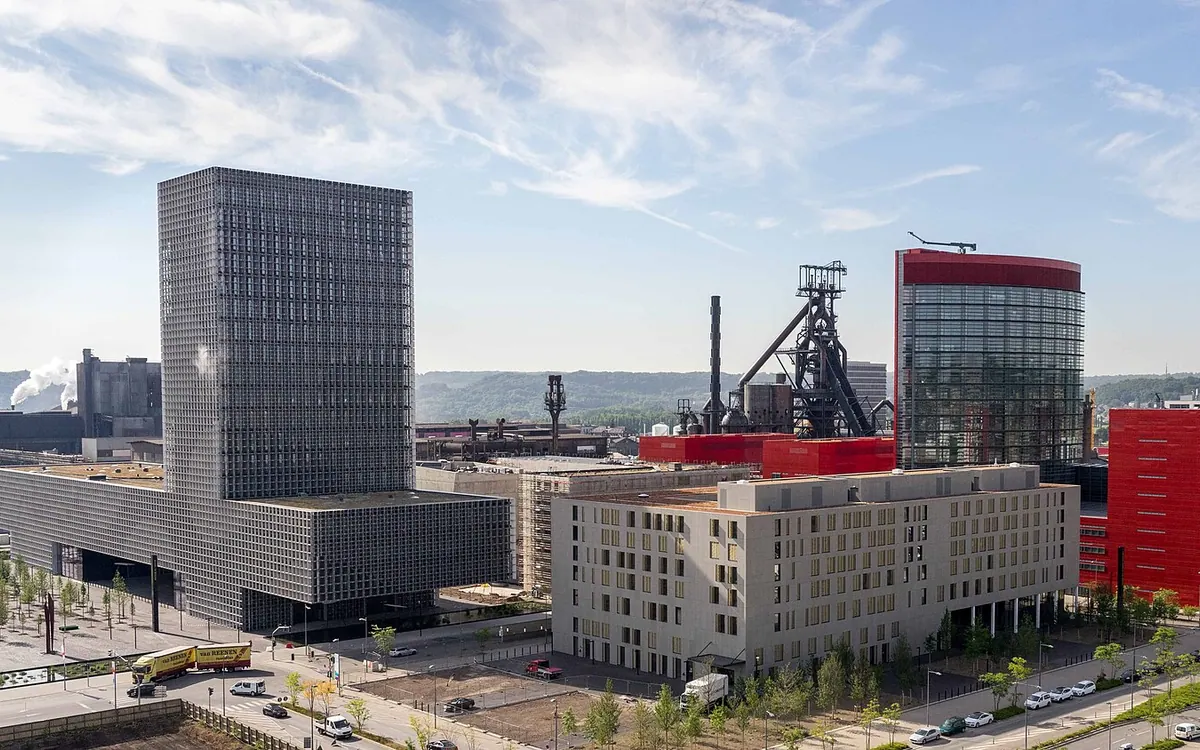
uni.lu — University of Luxembourg
Multilingual university at Esch-Belval and in Luxembourg City; two bachelor's run mainly in English…
Esch-sur-Alzette (Belval), Luxembourg City2 programmes
Western Europe · May 2027 IB session · Autumn 2027 entry
One small multilingual university, and a semester abroad built in
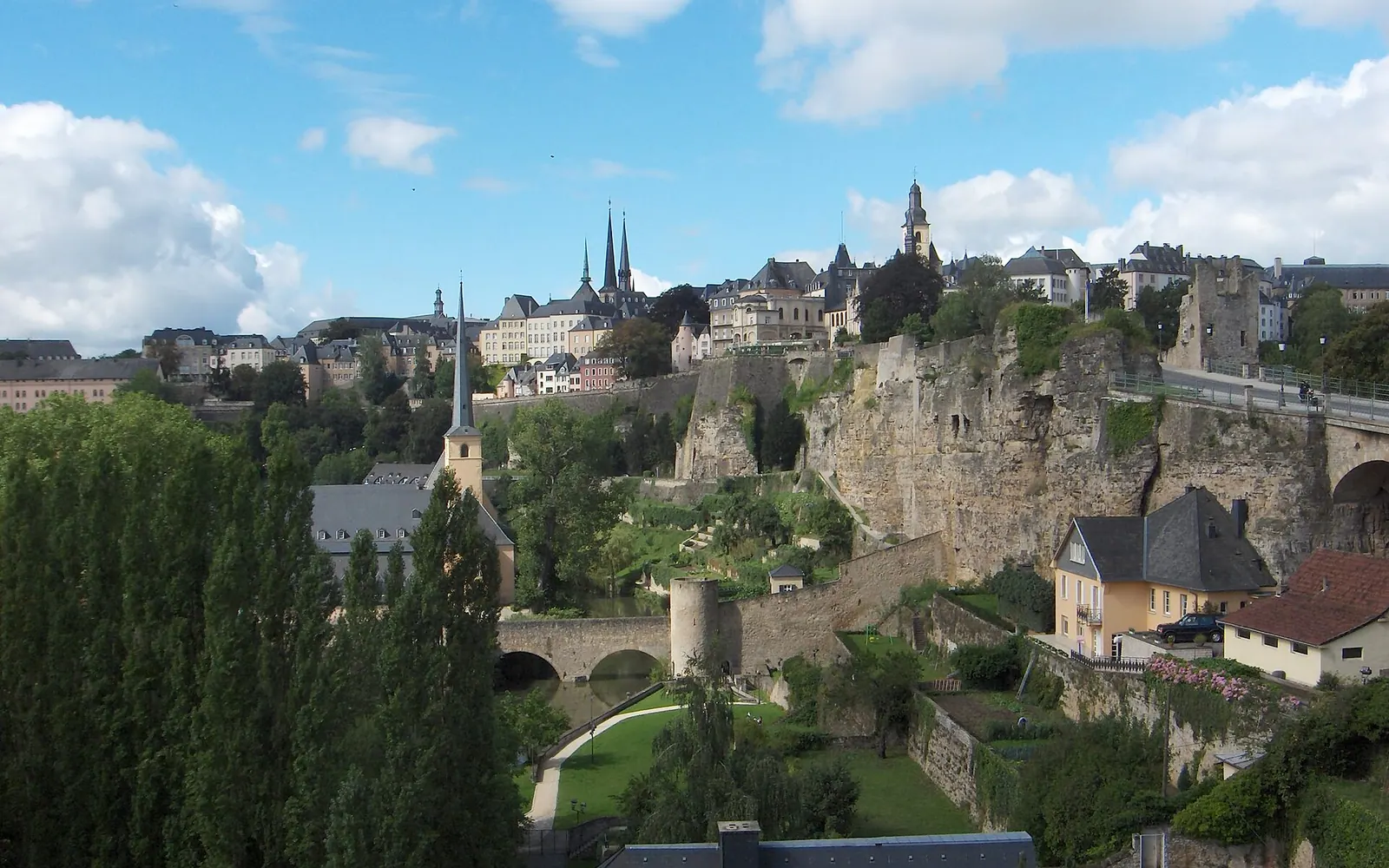
Luxembourg City’s valleys
2 institutions
Multilingual university at Esch-Belval and in Luxembourg City; two bachelor's run mainly in English…
Private health and sport university in Differdange; five bachelor's taught in English, from physiotherapy…
Luxembourg has essentially one public university, founded in 2003.
Programmes are multilingual by design - many bachelor's are taught in two languages, typically French and English or French and German - and every bachelor student has to spend a semester abroad, which is written into the rules rather than offered as an option. It is small, well funded, and sits at the centre of EU institutions and international finance. Living costs are high - the university's own budget floor is at least 1,517 EUR a month - and there is only one annual intake, in September.
Very low public tuition compared with anywhere outside continental Europe, and the same fee whether you are EU or not.
English alone is often not enough. Many bachelor's require French or German as well as English, and the requirement is per programme.
Luxembourg higher education is small: the Université du Luxembourg is the only public university, lycées run two-year BTS programmes, and the ministry lists just two specialised private institutions with accredited programmes, LUNEX and the Luxembourg School of Business.
Luxembourg higher education is small: the Université du Luxembourg is the only public university, lycées run two-year BTS programmes, and the ministry lists just two specialised private institutions with accredited programmes, LUNEX and the Luxembourg School of Business.
The only public university. Three-year bachelor's degrees, often bilingual, with a compulsory semester abroad. Eligibility depends on your nationality, residence and where your diploma is from.
The IB is not named on the university's admission criteria page; its eligibility checker decides each case.
Two-year, 120-ECTS vocational higher education run by secondary schools (lycées), in commerce, health, industry, applied arts, crafts and services. 36 programmes, each with its own registration period.
The ministry's page gives neither the teaching language nor whether a foreign diploma gives access. Not covered further on this site.
Private institutions with ministry-accredited programmes: LUNEX in Differdange (physiotherapy, sport and health, taught in English) and the Luxembourg School of Business. They charge private tuition.
LUNEX asks for a university entrance qualification and English at B2, and takes applications all year.
Yes, an IB Diploma is accepted.
Yes
The University of Luxembourg assesses foreign school-leaving diplomas individually against its programme-specific admission criteria, and states that the criteria for 2027-2028 are under review. No IB-specific rule is published. The decisive requirement in practice is the language combination the programme demands, not a points threshold.
No official IB-to-Luxembourgish conversion is published.
How Luxembourg reads an IB Diploma.
These are the pages this section was written from. None has been signed off by a person yet, so confirm anything consequential at the source.
Apply directly to each university.
Choose a programme from the university's bachelor list and read its language requirements first - this is what decides whether Luxembourg is viable for you.
Check the eligibility criteria for that programme, and note that the university says its 2027-2028 criteria are under review.
Prepare your documents: IB transcript or predicted grades, school-leaving certificate, proof of the required languages, passport, motivation letter.
Create an account on the university’s admission platform when applications open on 1 February 2027, and find your own programme’s closing date on its admissions page - there is no single university-wide deadline.
Complete the application and pay the application fee, then submit online.
If admitted, enrol and pay the semester registration fee, and start looking for accommodation immediately - housing is the tightest constraint in Luxembourg.
Plan for the compulsory semester abroad, normally taken in the third, fourth or fifth semester.
Admission is decided by the university programme by programme against published eligibility criteria, rather than by a national points system or a central office. There is no numerus fixus system of the Dutch kind and no CAO-style ranking; the practical filters are the language combination and the subject prerequisites of the individual programme.
Via Luxembourg institution
One intake a year, in September. The university says its 2027-2028 admission criteria are under review.
On 23 September 2026 the university's admissions page said: "The application period for the 2026–2027 academic year is now closed. Applications for the 2027–2028 academic year will open on 1 February 2027." The university offers one intake a year, in September, and states there are no spring or summer intakes. The same page warns that "The application criteria for the 2027–2028 academic year are currently under review and may be subject to change", so the eligibility rules you plan around today may not be the ones you apply under. There is an application fee, paid as step five of the application, before you can submit.
Via Luxembourg institution
If the 2027 EU window matches 2026, some University of Luxembourg programmes are still open when results arrive.
Via Luxembourg institution
Each programme publishes its own. In 2026 Computer Science closed on 15 July for EU applicants and 24 March for non-EU applicants. Check your programme's admissions page.
Rolling Via Luxembourg institution
Considered as they arrive, until places run out.
Applies to: EU citizens
There is no single University of Luxembourg deadline: each programme publishes its own, on its own admissions page, and they differ by more than a week. Precedent, from the Bachelor in Computer Science admissions page (as of 23 September 2026): "EU: 1 Feb 2026 – 15 Jul 2026". That is nine days after IB results are released, so an EU student could apply on actual results rather than predicted ones. Do not generalise it, though: a date of 8 July 2026 circulates for the Bachelor en Medecine, but it is not on the university's own page, so do not rely on it. Take the date from your own programme’s admissions page, and take it early.
Applies to: applicants who are not EU citizens
Precedent, from the Bachelor in Computer Science admissions page (as of 23 September 2026): "Non-EU: 1 Feb 2026 – 24 Mar 2026" - nearly four months earlier than the EU window, and three and a half months before IB results exist. The same 24 March appeared for a second programme. If you are not an EU citizen, Luxembourg is a predicted-grades application and the July advantage that EU applicants get does not exist for you.
Two official Luxembourgish pages describe the period for getting into the University of Luxembourg and they do not agree, so no single window is given here. The university’s own admissions page says applications for 2027-2028 "will open on 1 February 2027", and its programme pages give windows running from 1 February to July. The state portal guichet.public.lu, on its page "Enrolling at the University of Luxembourg", says enrolment runs "from the end of April to mid-September" for a bachelor. Both were live on 23 September 2026. The likeliest explanation is that guichet is describing enrolment after admission while the university is describing application - but guichet’s page is headed "This page is currently being updated", which is the publisher telling you it may be stale. What to do instead: work to the dates on your own programme’s page at uni.lu, and if the guichet window is the one you were counting on, get it confirmed by the university’s student department (SEVE) before you rely on it.
Small and mostly multilingual rather than purely English.
Small and mostly multilingual rather than purely English. The University of Luxembourg builds bachelor's around combinations of French, English and German, so a programme described as partly English-taught may still require French or German for a substantial part of the teaching. A few programmes are taught wholly in English. No count of fully English-taught bachelor programmes is confirmed here.
Set per programme by the University of Luxembourg; no national rule. An IB Diploma taken in English will usually satisfy the English component, but you must check whether the programme also requires French or German and at what level.
Yes, for most programmes
Registration fee of 400 EUR per semester at the University of Luxembourg; the university notes that fees may vary by programme, so check your programme page.
Registration fee of 400 EUR per semester at the University of Luxembourg; the university notes that fees may vary by programme, so check your programme page. (Current figure on the university budget page (September 2026))
The university budget page gives the same 400 EUR per semester and does not distinguish by nationality; check your programme page. (Current figure on the university budget page (September 2026))
At least 1,517 EUR a month (18,211 EUR per academic year): the resources the immigration authority requires, which the University of Luxembourg quotes as its budget floor. University housing starts at 450 EUR a month and is not guaranteed; private rooms cost significantly more. Plan about 2,700 EUR for the first weeks (registration, insurance, first rent and deposit). (2025 figure, as published by the University of Luxembourg)
As an EU citizen you enter with your EU passport or national ID card and need no visa.
As an EU citizen you enter with your EU passport or national ID card and need no visa. You must make a declaration of arrival at the commune where you live, and after three months register as an EU citizen residing in Luxembourg, showing proof of enrolment, sufficient resources and health cover. Non-EU students need a temporary authorisation to stay before travelling, followed by a residence permit after arrival.
As an EU citizen you may work in Luxembourg without a permit. A student enrolled in Luxembourg can work on a student fixed-term contract for up to 15 hours a week on average over a month (60 hours) during term, and up to the normal 40 hours a week in the holidays, at no less than the age-adjusted minimum wage (guichet.public.lu).
The hardest practical problem of studying in Luxembourg. The country has an expensive rental market, and the student population competes with a large professional and cross-border workforce. The University of Luxembourg runs its own student housing service and this should be your first and main approach - apply as soon as you are admitted, not after. If you miss university housing, consider living just across the border in France, Germany or Belgium and commuting: public transport inside Luxembourg is free, and many students in the Greater Region do exactly this. No official rent figures are quoted here.
Bring your European Health Insurance Card from the country where you are insured. If you register as a resident and study in Luxembourg for a full degree, you will normally be affiliated to the Luxembourg health insurance system (CNS) - the university's student department explains the process during enrolment. Non-EU students must show proof of health cover to obtain their residence permit.
If you hold Luxembourgish citizenship, you do not register a right of residence or prove your fee status, and Luxembourg's own student grants and loans are open to you on their ordinary terms; check them, because some depend on where you have lived.
Your IB is still a foreign qualification here, so the IB entry rules still apply to you.