
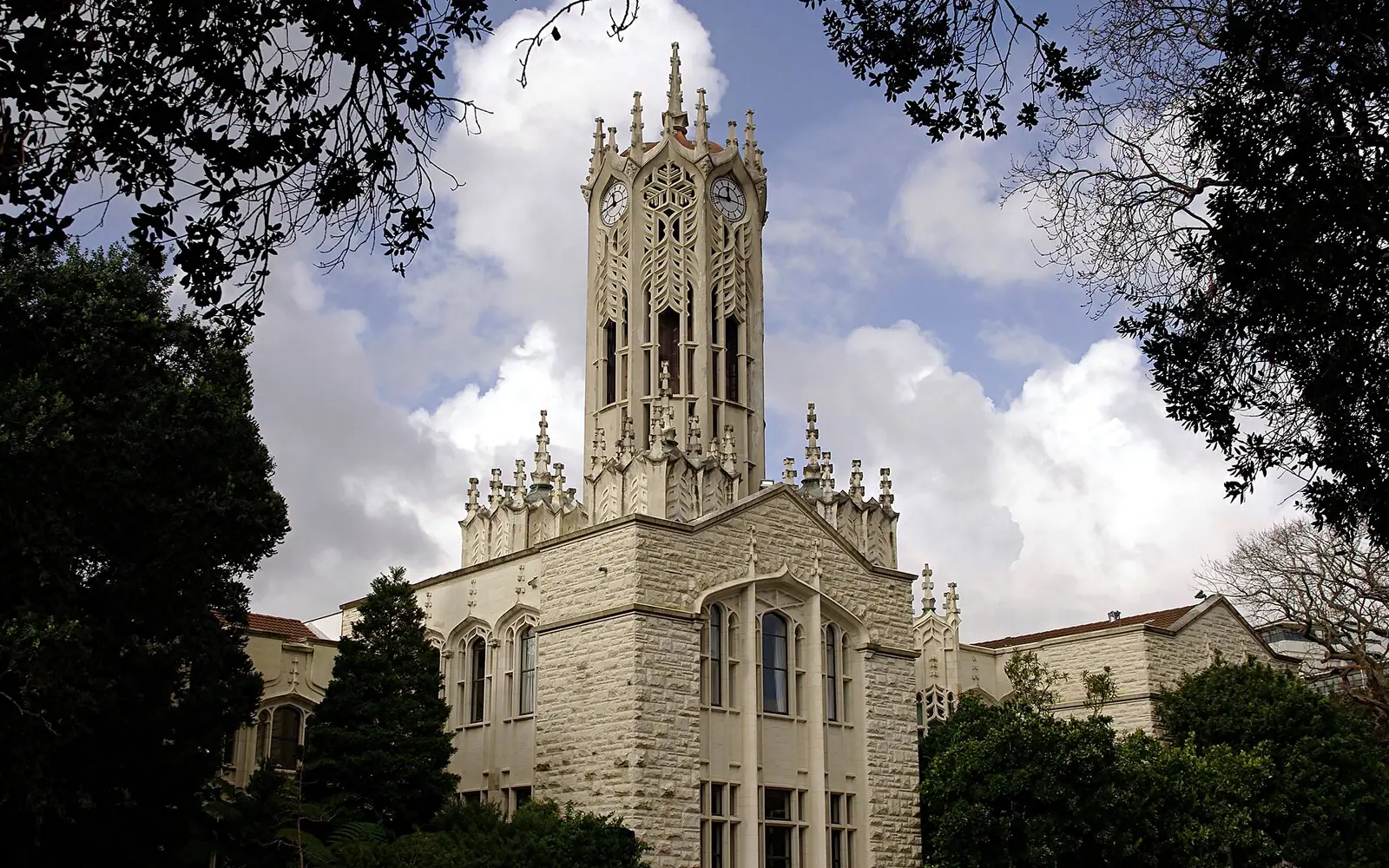
Auckland — University of Auckland
A city campus in Auckland, six faculties from Arts and Education to Engineering and…
AucklandNearly all in English
Oceania · May 2027 IB session · Autumn 2027 entry
One national entrance rule, no central portal, and your IB total is the rank
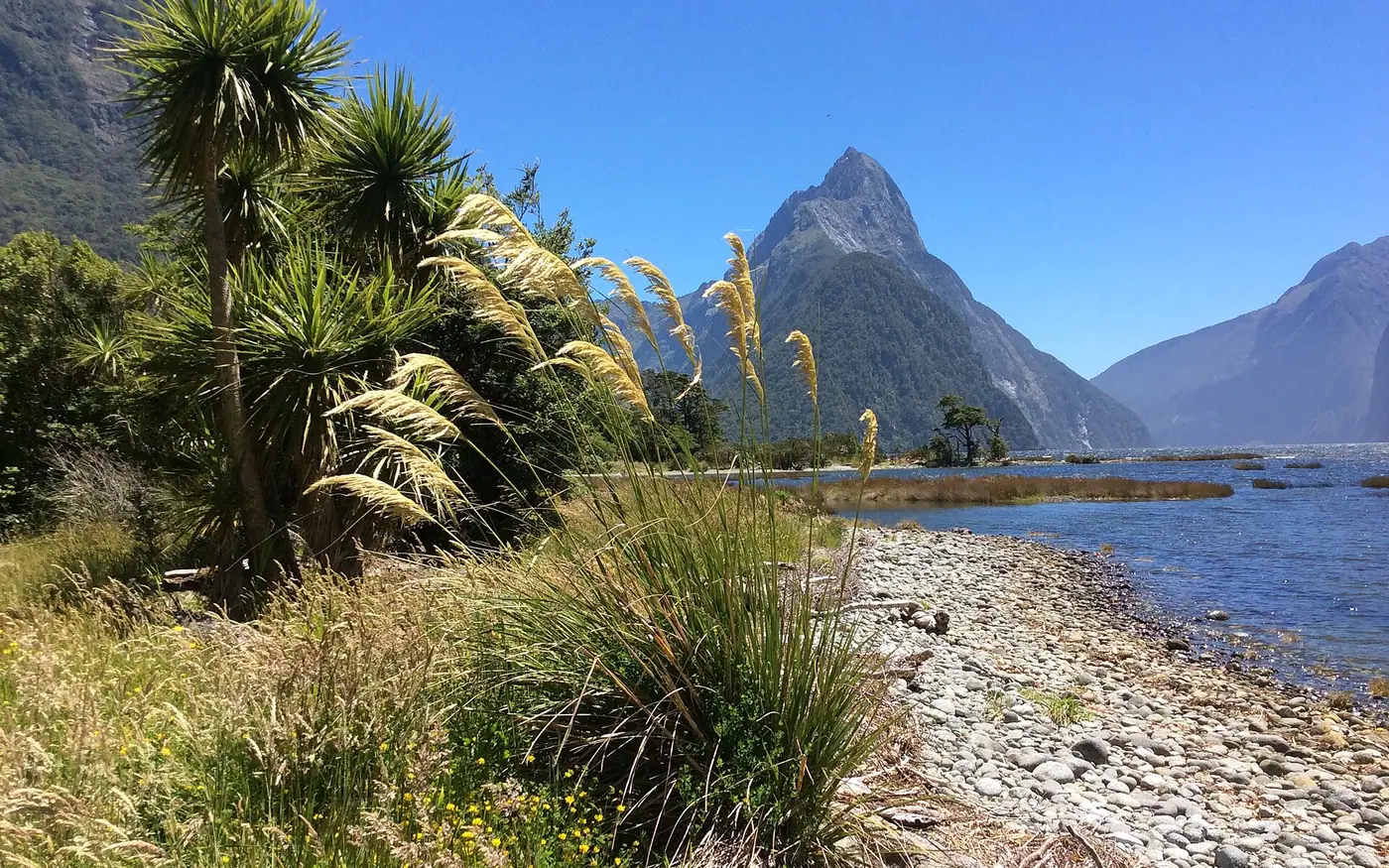
Mitre Peak, Milford Sound
10 institutions
A city campus in Auckland, six faculties from Arts and Education to Engineering and…
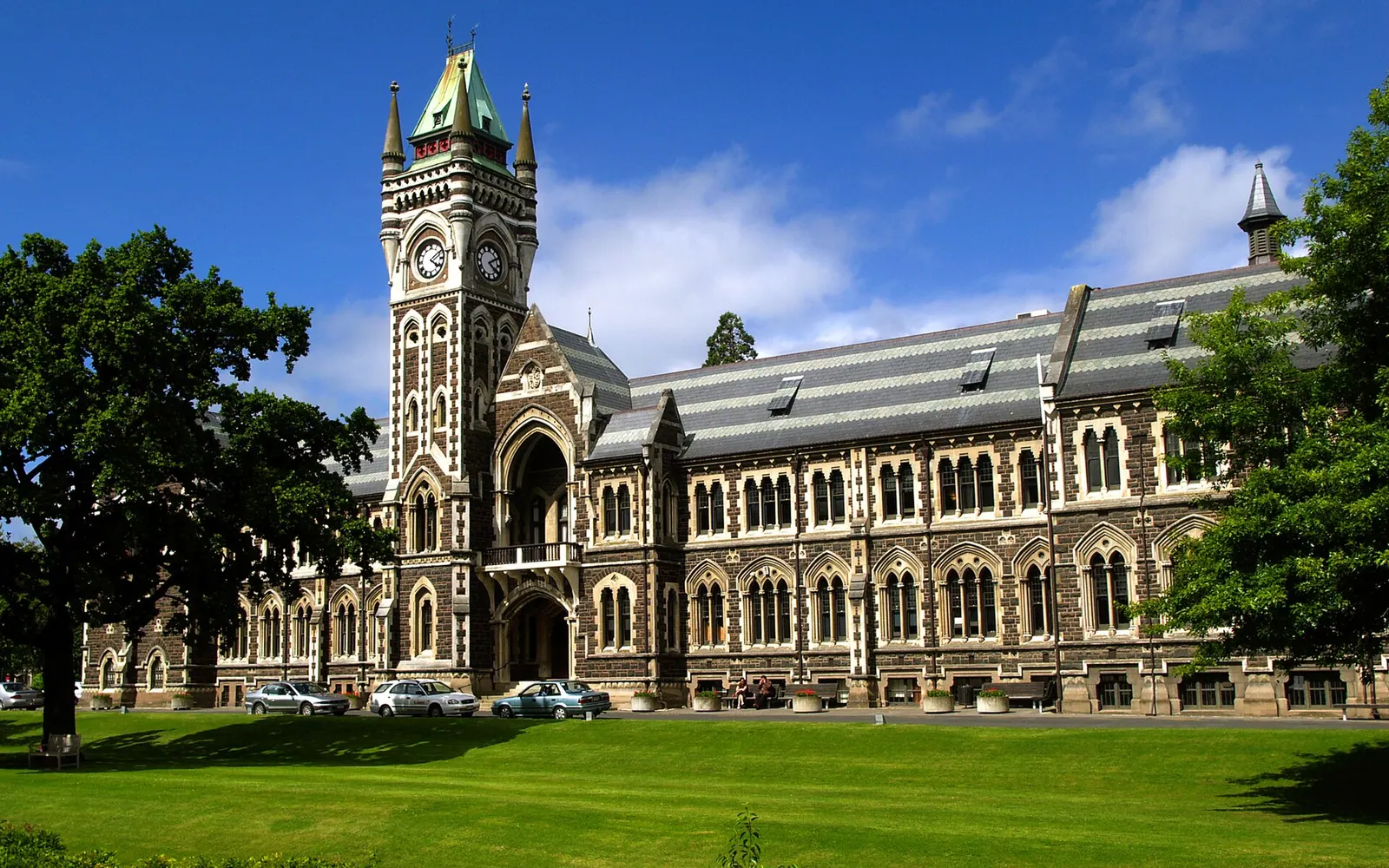
Dunedin, a medical school since 1875 and 15 residential colleges for first-years; entry from…
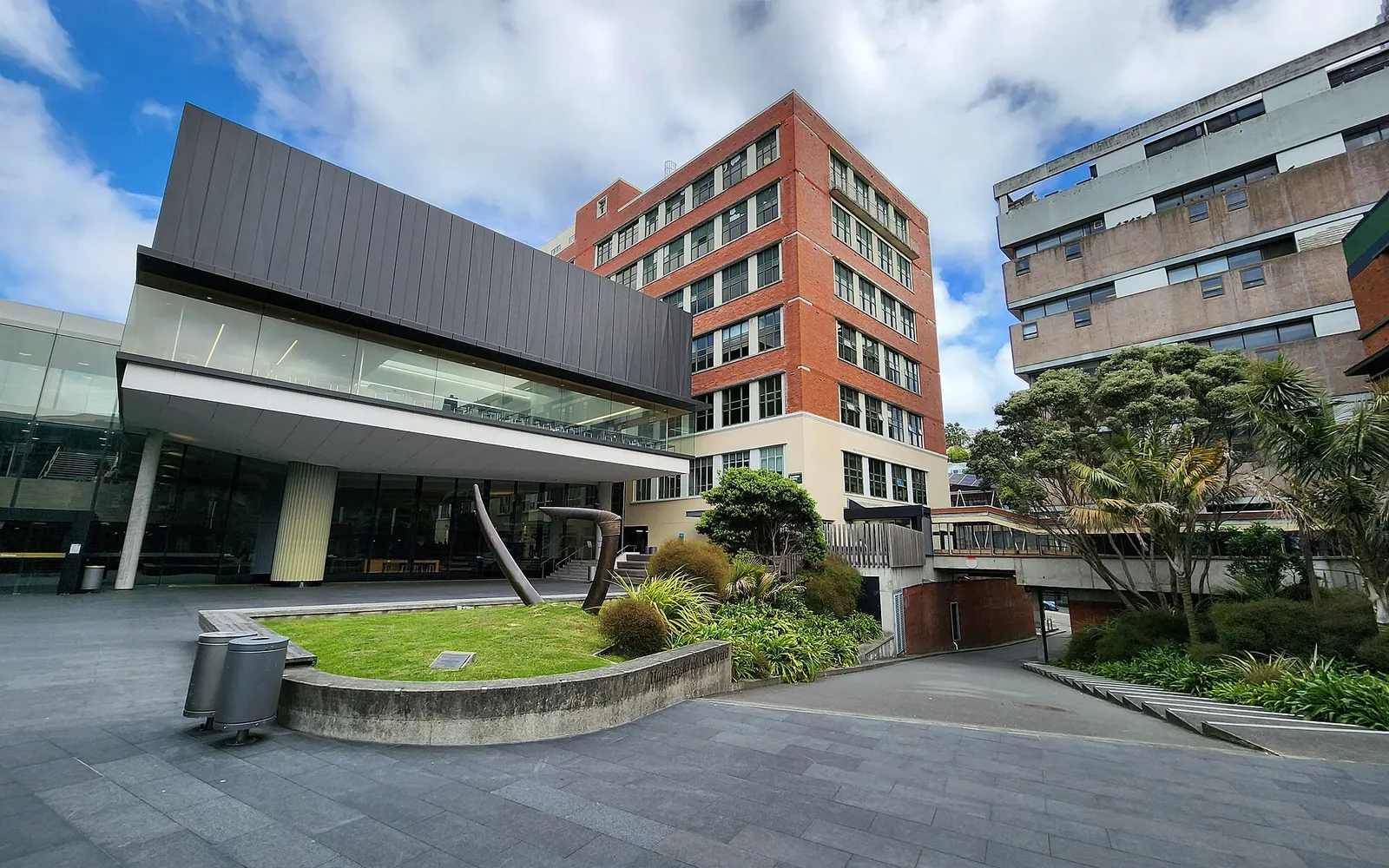
Wellington university with six faculties, Law and Business in the parliamentary precinct, and one…
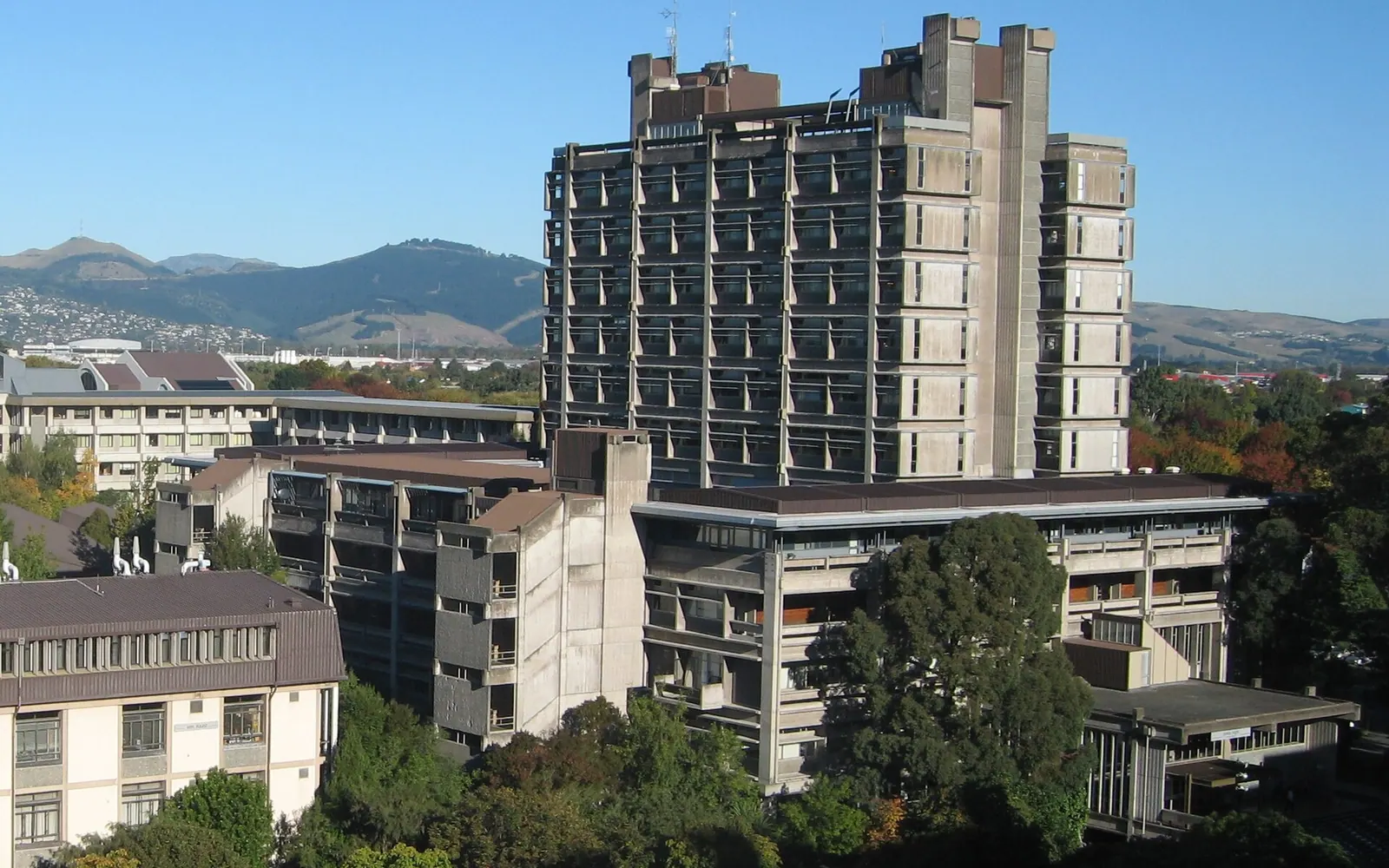
Christchurch university with seven faculties, professional forestry, and an accelerated international route into Engineering…
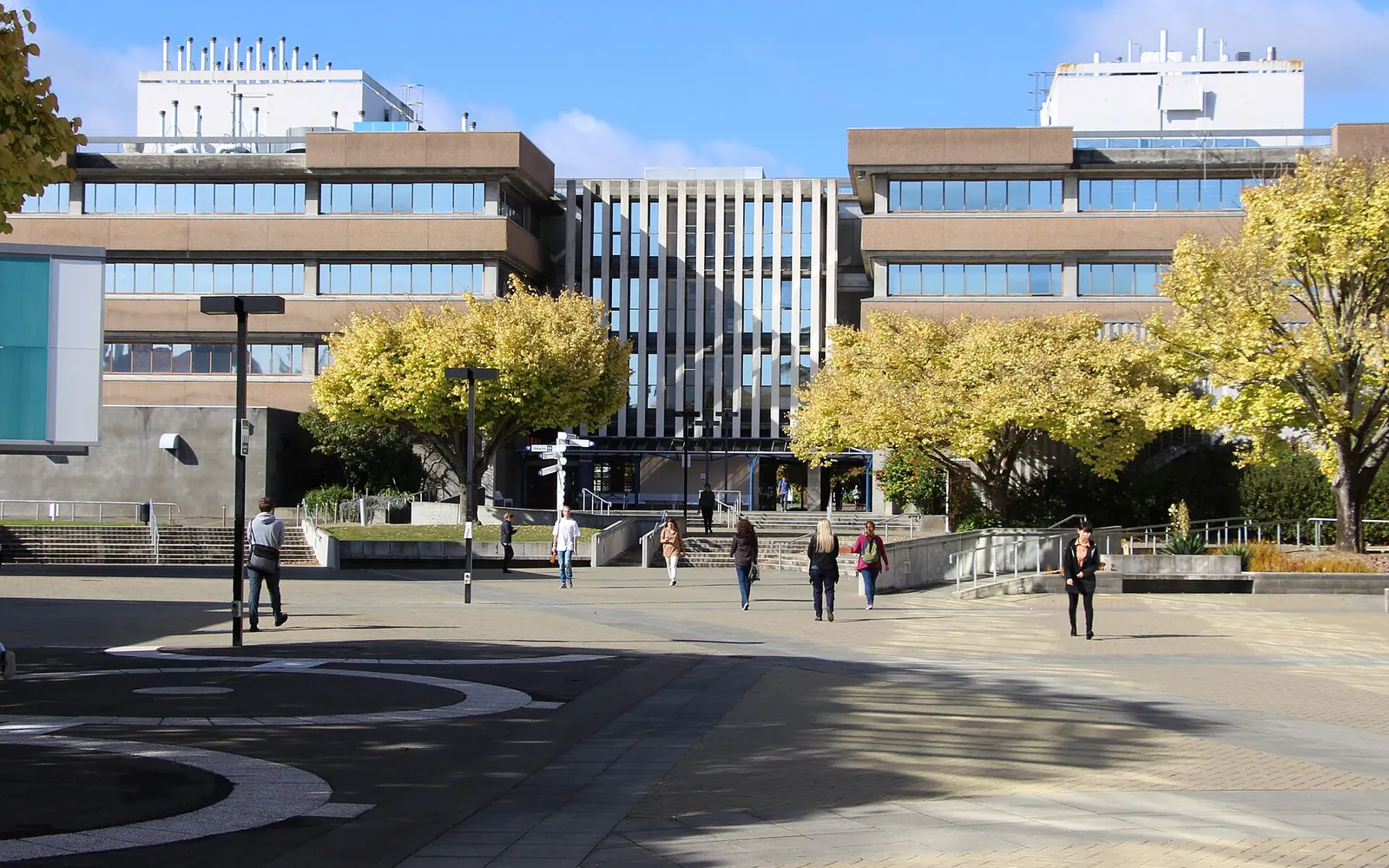
Campuses in Palmerston North, Auckland and Wellington; veterinary science and pilot degrees at Manawatu…
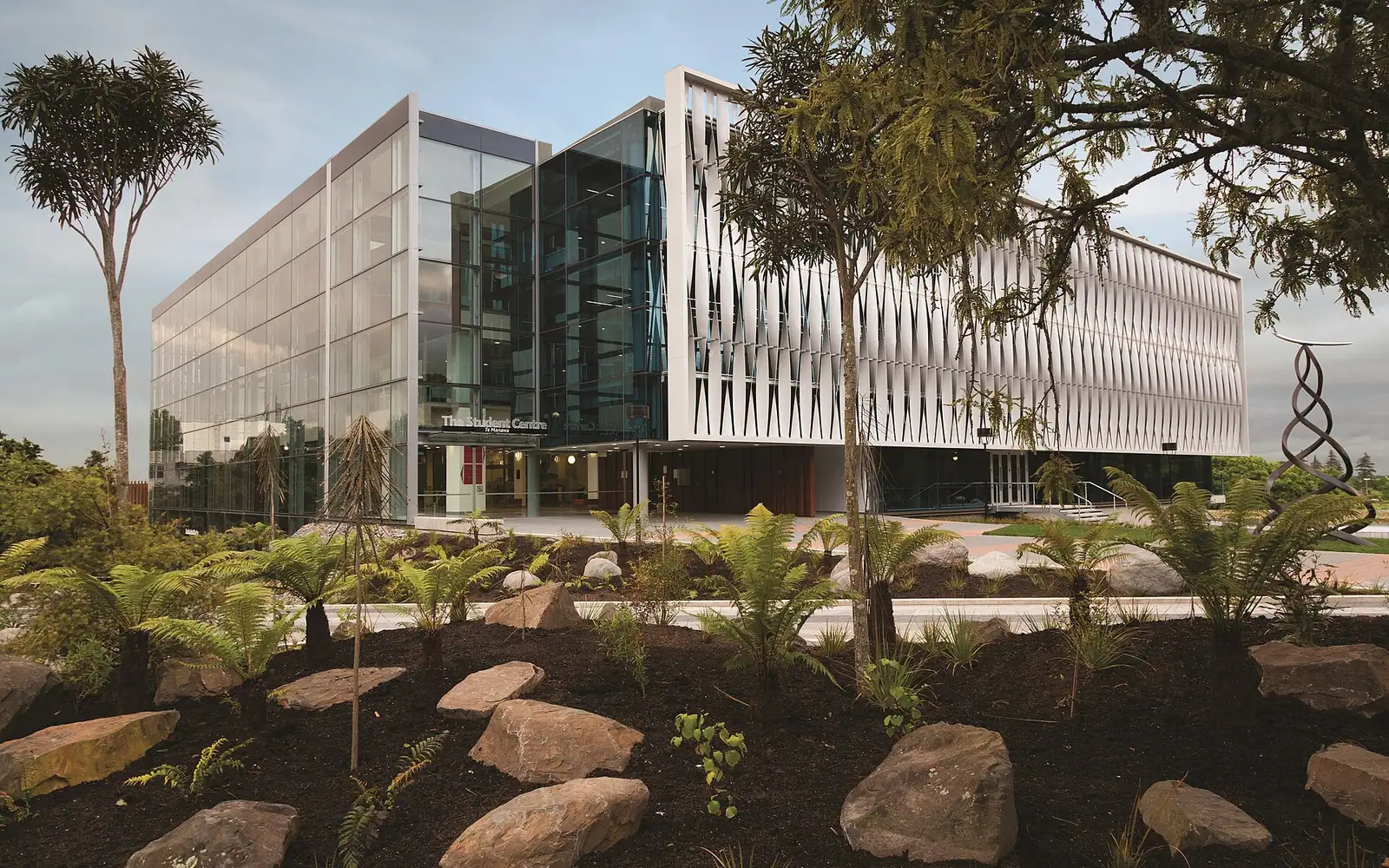
Campuses in Hamilton and Tauranga with 100+ subjects and smaller classes; the Hamilton campus…
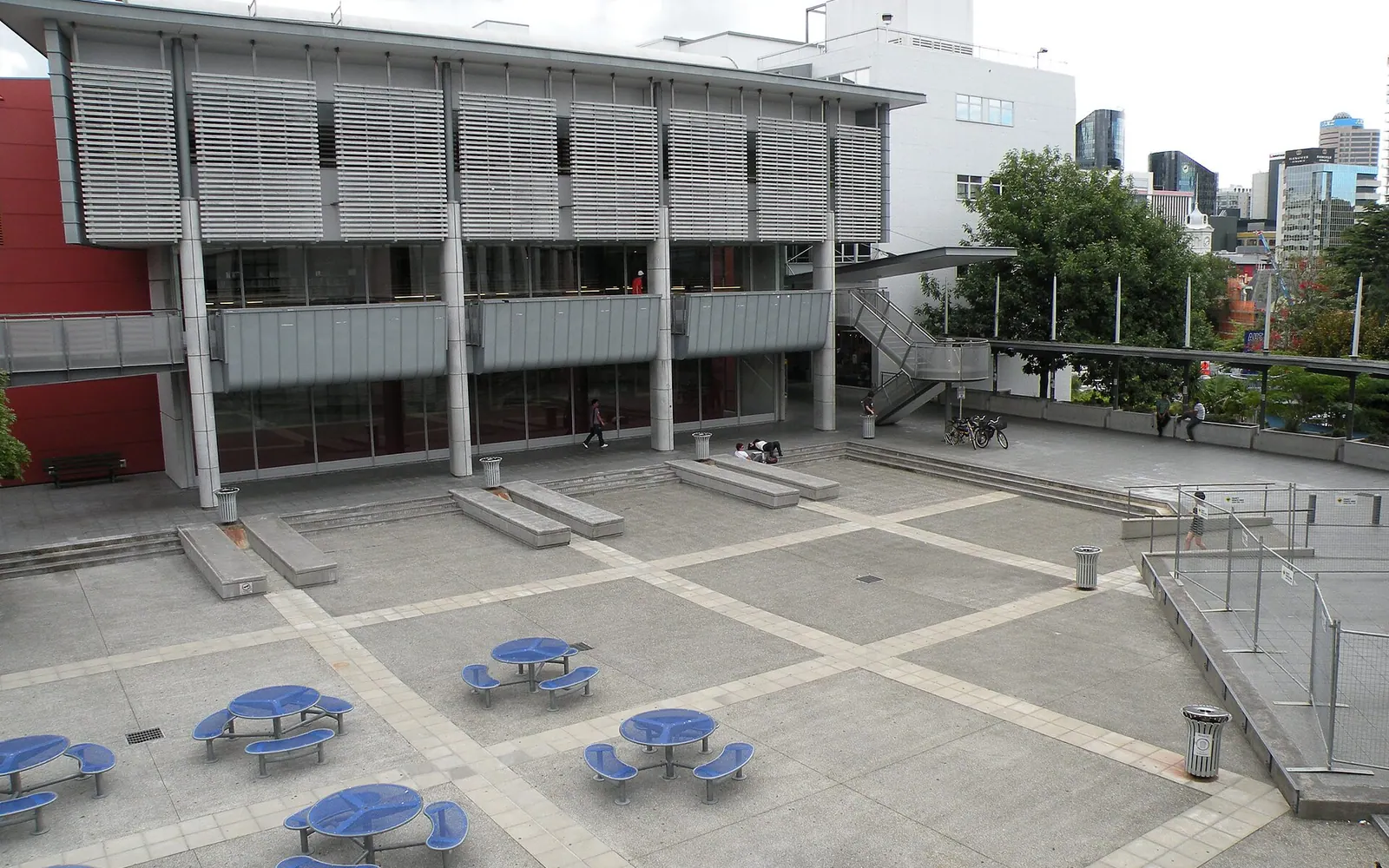
Three Auckland campuses and 250+ programmes; 89% of bachelor's students complete workplace experience as…
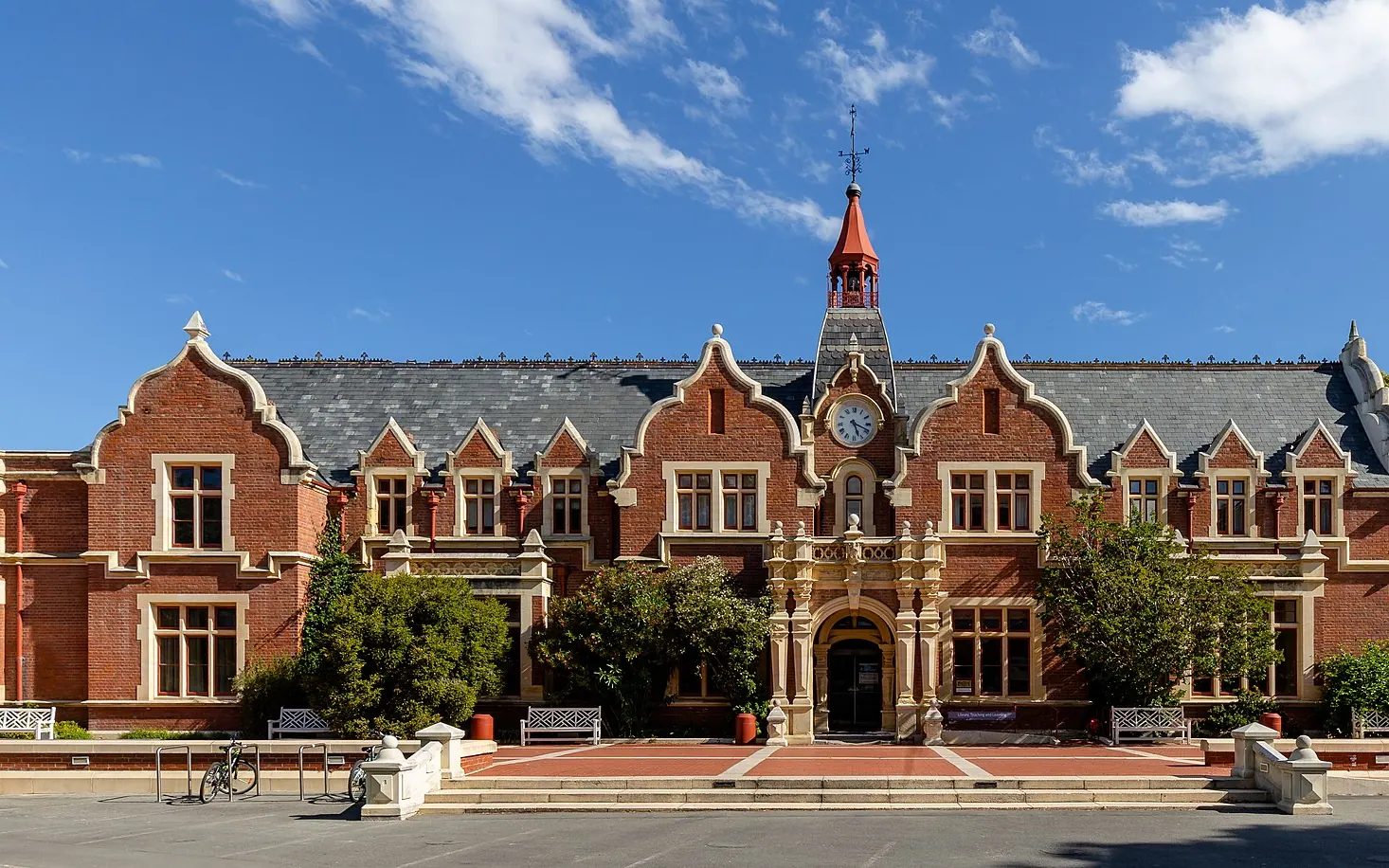
Land-based specialist on a 120 ha campus in the town of Lincoln, 20 km…
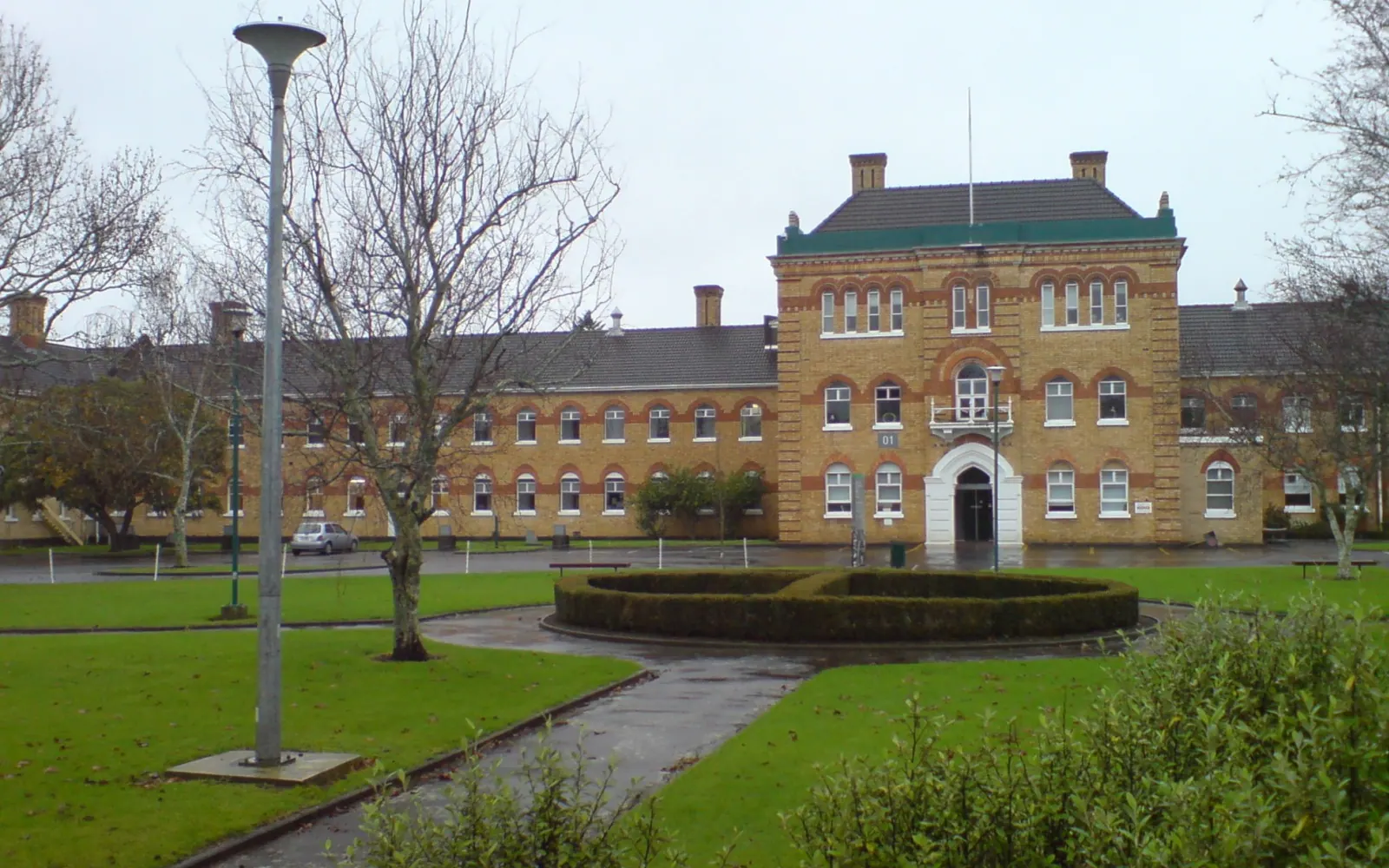
Auckland institute on two campuses, Mt Albert and Waitakere, with career-focused bachelor's degrees from…
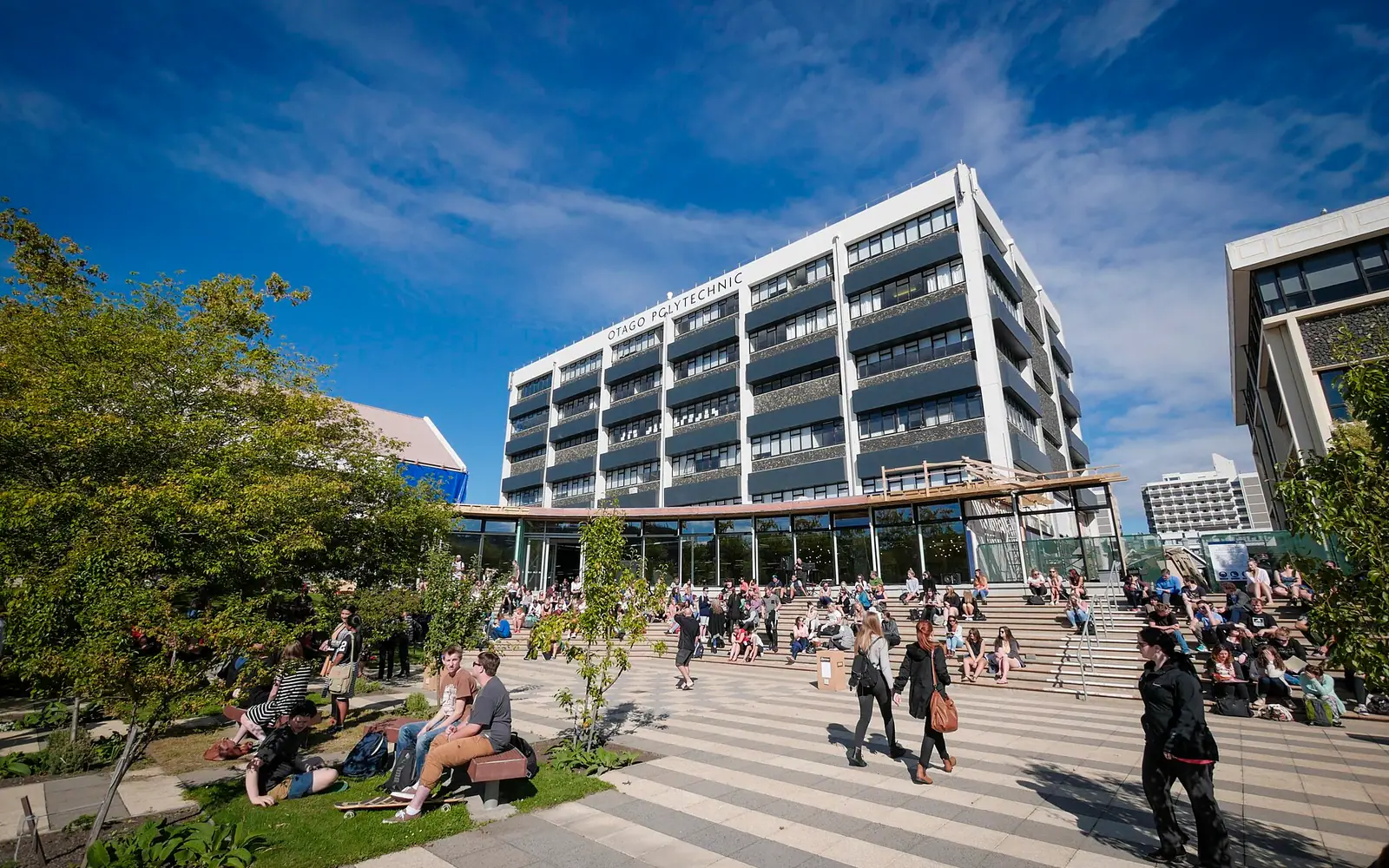
Dunedin polytechnic with an Auckland campus, teaching 17 hands-on bachelor's degrees to international students…
This browser cannot draw the globe. Every place is in the list below.
New Zealand has eight universities, all public, all teaching in English, and all using the same national rule for what counts as university entrance.
If you hold the full IB Diploma with at least 24 points, including English as Language A (or English B at Higher Level) and any mathematics subject, you have met New Zealand University Entrance - and then each degree adds its own, higher, guaranteed-entry score. Like Australia, the academic year runs from late February to November, so a May 2027 IB session leads either to a July 2027 mid-year start or to February 2028. It is smaller, cheaper and quieter than Australia, and the post-study work visa is generous: up to three years for a bachelor's graduate.
The entry rule is national, published and simple: full IB Diploma, 24 points minimum, English as Language A at SL or HL (or English B at HL grade 5), plus any mathematics.
Hemisphere timing. Finishing the IB in May 2027 means either squeezing into a July 2027 intake - not offered for every degree - or waiting until late February 2028.
New Zealand's tertiary system is small and legislated.
New Zealand's tertiary system is small and legislated. Eight universities, all public and all research-led, are the only providers NZQA does not quality assure - they assure one another instead. Everything else is assured by NZQA: the polytechnics and institutes of technology, the three wananga, and more than two hundred private training establishments. Degree-level study is not confined to the universities; polytechnics, wananga and the larger private providers award degrees too, and a level 7 bachelor's from any of them carries the same Post Study Work Visa rights. The vocational half of this was rebuilt on 1 January 2026, when ten regional polytechnics became independent again and the national body Te Pukenga, renamed NZIST, became a transitional entity due to close by 31 March 2027.
The eight universities: Auckland, Otago, Victoria Wellington, Canterbury, Massey, Waikato, AUT and Lincoln. All public, all teaching in English, all using the same University Entrance rule, and all running a three-year bachelor's degree with an optional honours year. Auckland and AUT offer conjoint degrees combining two bachelor's in about four to five years. This is the route almost all English-language advice about New Zealand is describing.
Universities are outside NZQA's programme approval because their academic quality is assured through Universities New Zealand. A student checking a provider's registration will find a polytechnic or a private provider on NZQA's register and a university nowhere on it, and that absence means nothing.
Vocational and professional education from certificates through to bachelor degrees, taught applied and usually with work placements. Cheaper than a university, smaller classes, lower entry thresholds, and a level 7 bachelor's from one carries the same post-study work rights as a university degree. Ten were re-established as standalone regional institutions on 1 January 2026 - among them Otago Polytechnic, and a merged Unitec and Manukau Institute of Technology - while four remain inside the renamed national body, NZIST.
The route to look at before concluding that a predicted total below the university thresholds closes New Zealand off. It is also the part of the system most likely to be described wrongly by anything written between 2020 and 2025, because during that period all sixteen were a single national entity.
Three legislated institutions - Te Wananga o Aotearoa, Te Wananga o Raukawa and Te Whare Wananga o Awanuiarangi - teaching in a Maori context and holding kaitiakitanga over matauranga Maori, te reo Maori and tikanga. They award degrees as well as certificates and diplomas.
It rarely appears in guidance for international undergraduates. Whether any wananga admits an international IB candidate, and in what language it teaches, is not known.
More than two hundred TEC-funded providers, mostly teaching certificates and diplomas in a specific occupational field, with the larger ones awarding degrees. Registered with and quality assured by NZQA, which is the check to run: registration is compulsory for this category in a way it is not for the universities.
Quality varies widely here. Whether a given provider can enrol international students at all, and whether the qualification sits at level 7, are the two questions to settle before anything else.
A recognised one-year programme, run either by a university or by a non-university provider on a university's behalf, admitting international students whose school qualification does not meet University Entrance and taking them into first year. Universities New Zealand names both forms as admission pathways in its own guidance.
Rarely needed by a full IB Diploma holder, because the Diploma meets University Entrance outright. Worth knowing because it is what will be offered to a student who does not complete the Diploma, and because it costs a year and a year's fees.
24 points with the full IB Diploma awarded.
Yes
24 points with the full IB Diploma awarded. This is the University Entrance standard for the IB, stated for 2027 entry on the University of Auckland's own IB page ("you must achieve a minimum of 24 points") and by Victoria Wellington and AUT; Universities New Zealand's national list gives the same rule ("A complete diploma of 24 points is required for admission"), in a document dated 2010. It is not an entry guarantee: individual programmes require more.
The University Entrance literacy requirement is met by English as Language A - literature or Language A - language and literature at Standard or Higher Level, or by English Language B at Higher Level with a minimum grade of 5. The numeracy requirement is met by any mathematics subject. Individual degrees add their own subject prerequisites and grade requirements on top.
There is no conversion, and that is the point. The universities that publish a rank score set it equal to your IB total: the University of Auckland states that a 27 gives a rank score of 27, out of a maximum of 45, and Massey states the same one-to-one rule. Nobody publishes this nationally - each university states it about itself - and not every university uses a rank score at all. There is no New Zealand equivalent of the Australian Combined Rank table, because none is needed.
How New Zealand reads an IB Diploma.
These are the pages this section was written from. None has been signed off by a person yet, so confirm anything consequential at the source.
Apply directly to each university.
Decide between a July 2027 mid-year start and a February 2028 start, and check whether your chosen degree has a mid-year intake at all.
Check that you will meet University Entrance while your IB subjects can still change: full Diploma, 24 points, English as Language A at SL or HL (or Language B at HL, at grade 5 for Auckland), plus any mathematics.
Compare your predicted IB total against each programme's published guaranteed-entry or preferential-entry score. At the universities that use one, your rank score is simply your IB total.
Apply directly on each university's own international application site. There is no central portal, no ranking of choices and no limit on how many you may hold, so apply to more than one.
Read the closing date on the programme page rather than the general how-to-apply page, and check whether the international date is earlier than the domestic one. At Auckland, for a July 2027 start, it is: 8 June against 4 July.
Accept the offer, pay or arrange tuition and take out insurance the university accepts, then apply for the Fee Paying Student Visa with proof of NZD 20,000 per year in living costs. Immigration New Zealand advises applying at least three months before you travel.
Apply for a hall of residence at the same time - first-year halls are the easiest way in and they fill up.
Entry is score-based against published thresholds for most degrees, with a small number of limited-entry programmes using portfolios, auditions, interviews or a competitive first-year selection. There is no personal statement culture and no national ranking system. Meeting University Entrance gets you into the university; meeting the programme score is what admits you to the degree.
Massey: by 31 October 2026.
Your own plan Via New Zealand university
Not published by anyone — a date worth setting yourself.
Not published by anyone, and the decision the rest of this page depends on. A mid-year start means applying before you have any results at all; February 2028 means eight months between your last exam and your first lecture. Not every degree admits mid-year, and the professional ones generally do not.
Your own plan Via New Zealand university
Not published by anyone — a date worth setting yourself.
The full IB Diploma, English as Language A at Standard or Higher Level (or Language B at Higher Level, which Auckland accepts only at grade 5 or above), and any mathematics subject. This is a check on your subject choices, so it has to happen while they can still change - which is why it is dated here and not when you apply.
Applies to: international applicants
Hard deadline
After this the door closes.
Published with its year attached as the "Deadline for international applications commencing in semester 2, 2027", and it is the earliest of the three published mid-year dates — five and a half weeks before Auckland's and more than two months before IB results exist. Otago's international application round for 2027 opened on 1 May 2026, so this is the closing day of a twelve-month window rather than a sudden date. Formal classes begin 12 July 2027 and compulsory international orientation runs 5 to 9 July 2027, which is the same week IB results are released. Otago's page gives "5 July 2026" as the recommended last day to arrive for students starting in semester 2, 2027, directly above "5-9 July 2027" for that semester's compulsory orientation, so the arrival year is probably a misprint. Plan to be on campus before 5 July 2027 so that you make the orientation week Otago does date unambiguously, and confirm the day with Otago's international office before booking flights.
Equal consideration
Applications in by this date are guaranteed to be considered. Later ones may still be read, at the institution’s discretion, against whatever places remain.
Published as "Trimester 2 (July)—application deadline 1 May", a bare day with no calendar year, as all three of Victoria's trimester deadlines are, so 2027 is expected rather than confirmed. Victoria softens it in a way the others do not: "You can apply to study at Victoria University of Wellington at any time" and "Applications received after these dates will be assessed on a case-by-case basis" — so this is a date you should not miss rather than a door that locks, and the university's own reason for it is that it gives you time to arrange a student visa and accommodation.
Applies to: applicants starting at Otago in July 2027
Priority
Later applications are considered after these.
"Deadline to apply for accommodation for semester 2 (in residential colleges or Uni Flats)", two weeks after the application itself. Dunedin is a small city built around its university and its residential colleges fill; missing this does not cost you the place, it costs you where you live, which in Otago's case is most of the first year. Applications for semester 2 accommodation open on 1 April 2027.
Hard deadline Via New Zealand university
After this the door closes.
One university's date, and the clearest illustration of the problem. It is a month before the May-session IB results are published, so a mid-year start is applied for on predicted grades or not at all. Domestic applicants for the same intake have until 4 July - the international date is nearly a month earlier, and nothing on a programme page says so. Every other university sets its own; this is not a national deadline.
Hard deadline Via New Zealand university
After this the door closes.
Five days before IB results are released, for an intake starting eight months later. If you are aiming at a competitive health programme in New Zealand, the application is written and submitted during your exam season. Otago runs its own Health Sciences First Year selection on a different basis again.
Via New Zealand university
The date the whole page bends around. Two of the milestones above fall before it. The IB has not yet confirmed the May 2027 release date; early July is the long-standing pattern.
Applies to: anyone planning to live in a hall or residential college
Priority
Later applications are considered after these.
Otago and Victoria open hall applications on the same day, 1 August of the year before you start, and both say the same thing about it: apply as early as possible. Otago opens residential college and Uni Flats applications on 1 August, Victoria opens its Trimester 1 halls on "1 August (the year before you begin your studies)". Neither publishes the year, so 2027 is expected rather than confirmed. This falls three and a half months before the application deadlines below, which is the opposite of the order a student expects — in New Zealand you apply for the room before you apply for the place.
Applies to: offshore international applicants — anyone applying from outside New Zealand
Hard deadline
After this the door closes.
Otago splits its international applicants in two and gives them different days, and the split is the trap for a student applying from Denmark. An offshore applicant — one applying from Denmark — closes on 15 November; an onshore one, already in New Zealand, has until 10 December. Take the later date and you have missed by twenty-five days. Otago published these as 15 November 2026 and 10 December 2026 for semester 1, 2027; the 2028 equivalents are not published, but Otago states that "The main international student application period is 1 May–15 November, for most studies commencing in semester 1 (February)", so 15 November 2027 is expected. Some programmes run different periods — teaching, oral health and dental technology are named — so check yours rather than assuming this date.
Equal consideration
Applications in by this date are guaranteed to be considered. Later ones may still be read, at the institution’s discretion, against whatever places remain.
Published as "Trimester 1 (February)—application deadline 8 December" with no calendar year, so for a February 2028 start 2027 is expected rather than confirmed. Applications after it "will be assessed on a case-by-case basis", which is Victoria's phrasing for every intake. Note that this is three weeks after Otago's offshore date and that the University of Auckland's Semester One 2027 equivalent is the same day, 8 December 2026 — the three universities cluster in this window without agreeing on it, and there is no body that would make them agree.
Via New Zealand university
None of the eight universities had published a dated Semester One 2028 closing date as of September 2026; Otago's recurring offshore date is 15 November and Victoria's is 8 December. For shape: Auckland's equivalent date for February 2027 is 8 December 2026, and it warns that applications arriving after 1 December are considered only if places remain. Expect mid-November to early December 2027 and check the programme page from mid-2027.
Your own plan Via New Zealand university
Not published by anyone — a date worth setting yourself.
The visa cannot start until there is an offer of place from an approved education provider and evidence that tuition is paid or payable, alongside insurance the provider accepts. There is no date on this; the sequence is the constraint.
Your own plan Via New Zealand university
Not published by anyone — a date worth setting yourself.
Advice rather than a rule, and worth reading next to the published service standard: eighty per cent of these visas are decided within eight weeks, which means one in five is not. October to March is the busy period, which is exactly when a February starter applies.
Teaching starts in July 2027. There is no national closing date and there is no central system to hold one: Universities New Zealand's own instruction is that "Applications should be made direct to the universities", so three New Zealand universities is three applications and three calendars. The three with published dates close five and a half weeks apart — Otago 30 April 2027, Victoria University of Wellington 1 May, the University of Auckland 8 June 2027 — and each has its own date in this calendar. Every one of those dates falls before IB results are released on about 6 July 2027, so a mid-year start is applied for on predicted grades or not at all. Not all degrees admit mid-year: engineering, health and most professional programmes are Semester 1 only, so verify per degree before planning around July. Canterbury, Massey, Waikato, AUT and Lincoln set their own mid-year dates; check them on each university's page.
Teaching starts in late February 2028, which for a May 2027 IB candidate means eight months between the last exam and the first lecture. This is the main New Zealand intake and the one most students applying from Denmark will take. The universities publish recurring annual closing dates rather than a national one, and Otago gives 15 November for an offshore international applicant and Victoria University of Wellington 8 December — both are their own entries below. The University of Auckland's general Semester One 2028 date is not published: its 2028 table currently lists only the four clinical health programmes, and its Semester One 2027 equivalent is 8 December 2026, given here as precedent, not as a prediction. None of the eight universities had published exact 2028 teaching dates on 23 September 2026.
Limited-entry programmes — the medicine-track health sciences, architecture, fine arts, nursing — close months before the general deadline and may require a portfolio or an interview. The worked example is the University of Auckland, whose four clinical health programmes (Medicine and Surgery, Optometry, Pharmacy, Medical Imaging) close for a February 2028 start on 1 July 2027, five days before IB results are released. Auckland also runs a separate and much earlier date for its Bachelor of Nursing (International): 1 November 2026 for a February 2027 start, five weeks before the general 8 December date, with no 2028 equivalent published. Otago names teaching, oral health and dental technology as running their own periods, and runs its Health Sciences First Year selection on a different basis again. None of these is findable by looking for a national deadline, because there is not one. Read the closing date off the page of the programme you are actually applying to, and read it twice if it is an international version of that programme.
Your own plan
Not published by anyone — a date worth setting yourself.
After you accept an offer and pay or arrange fees — there is no date, because the sequence is the constraint: the visa cannot start until there is an offer of place from an approved education provider, evidence that tuition is paid or payable, and insurance the provider accepts. Immigration New Zealand advises applying three months before you travel, which is advice rather than a rule, and it is worth reading next to the published service standard: eighty per cent of these visas are decided within eight weeks, which means one in five is not. October to March is the busy period, which is exactly when somebody starting in February applies. The visa can be granted for up to four years.
All of it. Every New Zealand university degree is taught in English.
All of it. Every New Zealand university degree is taught in English.
For IB students the University Entrance literacy requirement itself does the work: English as Language A - literature or language and literature at SL or HL, or English Language B at HL with a minimum grade of 5, satisfies it at the University of Auckland. Universities may still ask for IELTS or TOEFL in some cases; typical minimums are IELTS 6.0-6.5. Check each university.
Not for English-taught programmes
Not applicable - New Zealand has no EU/EEA fee category.
Not applicable - New Zealand has no EU/EEA fee category. Every European applicant, EU/EEA or not, pays international fees. (2026)
Example, University of Auckland: international undergraduate fees for 2026 range from NZD 40,225 for a Bachelor of Arts (excluding performance and science-based courses) up to NZD 86,561 for later years of Medicine and Surgery, for a full-time year of 120 points. Indicative 2027 figures published by Auckland run from about NZD 42,236 upwards, roughly 5% higher than 2026. All students also pay a Student Services Fee of about NZD 1,132.80 a year. Other universities are broadly similar or somewhat cheaper; check each university's own fees. (2026 (published) and 2027 (indicative))
Immigration New Zealand requires NZD 20,000 for each year of tertiary study, or NZD 1,667 a month for courses shorter than a year - about NZD 1,667 a month. That is the visa minimum, not a realistic Auckland or Wellington budget. (2026)
You need a Fee Paying Student Visa. You apply after you have an offer of place and have paid or arranged tuition, and you must show NZD 20,000 per year of living costs, good health and good character.
You need a Fee Paying Student Visa. You apply after you have an offer of place and have paid or arranged tuition, and you must show NZD 20,000 per year of living costs, good health and good character. The visa costs from NZD 850 and can be granted for up to 4 years, normally matching the period of study you have paid for, or until your passport expires if that is sooner. Source: https://www.immigration.govt.nz/visas/fee-paying-student-visa/
Fee Paying Student Visa holders may work part-time up to 25 hours a week while studying and full-time during scheduled holidays, depending on the conditions written on the visa; students aged 16-17 need extra permission. After graduating, the Post Study Work Visa lets a bachelor's-degree graduate (level 7 or higher) stay and work for up to 3 years, with no employer sponsorship required. You must apply no later than 3 months after your student visa expires, and hold at least NZD 5,000 for living expenses. Sources: https://www.immigration.govt.nz/visas/fee-paying-student-visa/ and https://www.immigration.govt.nz/visas/post-study-work-visa/
First-year students are strongly encouraged into university halls of residence, and most universities guarantee a place if you apply by their deadline - take it, because private renting from Denmark is difficult and the halls are where you meet people. Otago runs an all-in residential first year in Dunedin. Auckland and Wellington private rents are high; Dunedin, Hamilton, Palmerston North and Christchurch are much more affordable.
International students on a student visa are generally not entitled to publicly funded healthcare in New Zealand, so Immigration New Zealand requires acceptable medical and travel insurance for the whole period of study, and universities normally arrange or sell a compliant policy. The EHIC and the Danish yellow card are not valid. Budget for insurance as a separate annual cost.