
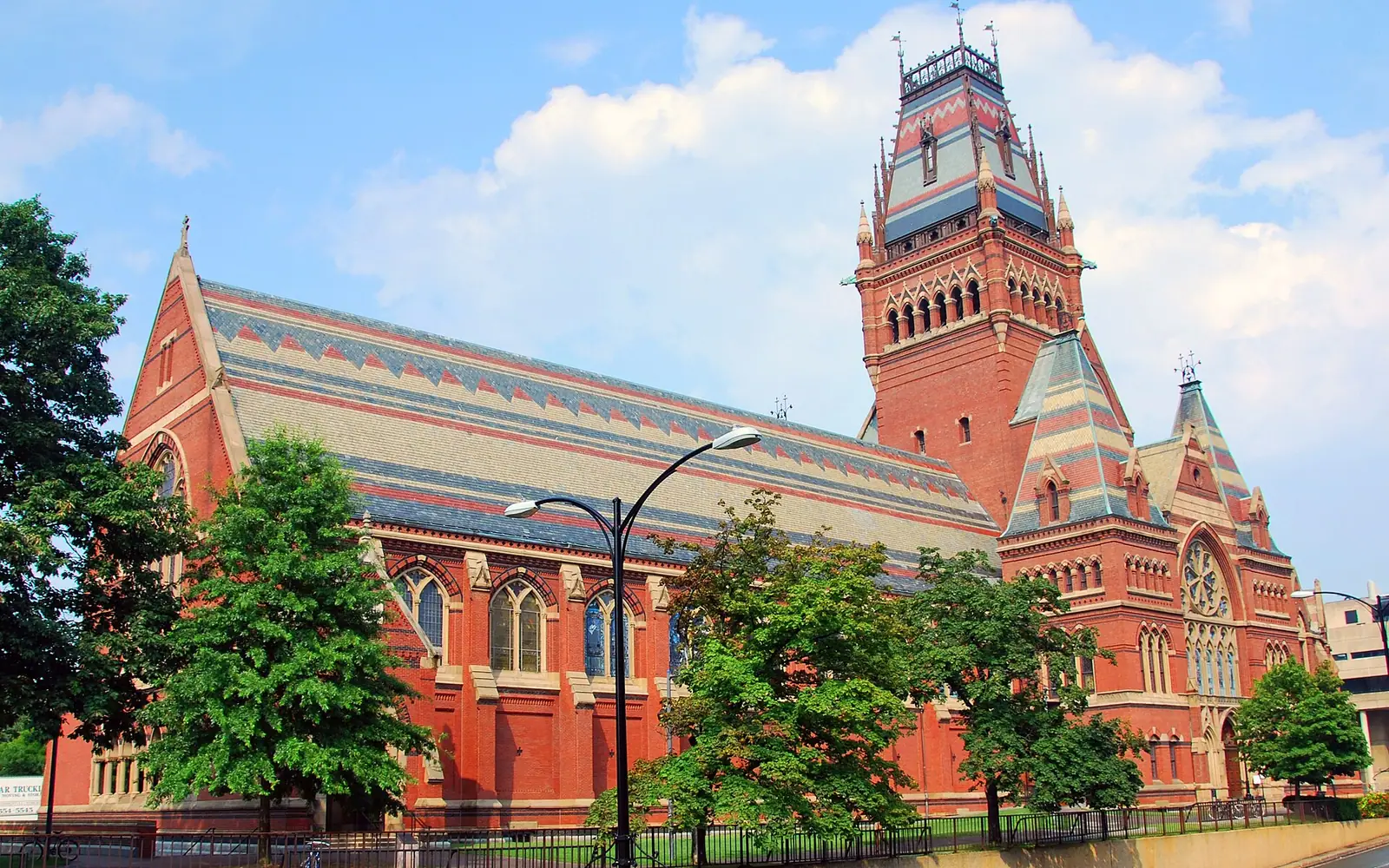
Harvard University
Harvard College in Cambridge, Massachusetts: over 50 concentrations, first-years in Yard dorms, then one…
Cambridge, MassachusettsNearly all in English
North America · May 2027 IB session · Autumn 2027 entry
Four years, no fixed major on day one, and a very wide price range
Central Park in autumn, New York
14 institutions
12 universities
12 institutions · apply via the Common App
Twelve of the fourteen institutions here, spread across all ten states covered here, on one form. A private research university in Massachusetts and a public flagship in Illinois are on exactly the same application with exactly the same submission items; what differs between them is the round they offer, the date they close and whether they require a test.
Early Decision closes between 1 and 15 November 2026 (Macalester 1st, Amherst 9th, Bowdoin and Grinnell 15th). Early Action closes on 1 November 2026 everywhere that runs one. Regular Decision closes on 1 January (Harvard), 2 January (Yale), 5 January (Stanford, Amherst, Illinois) and 15 January (Grinnell) — and Illinois wants the school's documents a further week later. Everyone replies on 1 May 2027.
SourceThis group mixes private colleges, where there is a single published price for everyone and the question is how much aid discounts it — Harvard's 2026–27 billed cost is 91,634 USD — with three public universities, Michigan, Illinois and Arizona State, where an international student pays a non-resident or international rate for all four years: 67,096 USD in tuition and fees at Michigan (first two years of LSA), 42,248–53,078 USD at Illinois and up to 42,609 USD at Arizona State for 2026–27. Application fees also vary inside the group from nothing at Colby to 100 USD (about €88) at Stanford.
SourceHealth insurance is compulsory at every institution in this group, but in Massachusetts — Harvard and Amherst here — it is a state requirement rather than an institutional one: Harvard states that Massachusetts law requires any full-time or part-time student at an institution of higher learning in the state to participate in a qualifying student health insurance programme or a plan of comparable coverage. The waiver window closes on 31 July, before a student has arrived, and comparable cover must be reasonably accessible where you are living.
SourceYale requires the ACT or SAT from every applicant and will not take IB results instead; Harvard requires it with a narrow hardship exception. New York University, Michigan and Amherst are test-optional, and Michigan and NYU ask for one teacher reference or none where others ask for two. One application form, four different sets of requirements behind it.
Source
Harvard College in Cambridge, Massachusetts: over 50 concentrations, first-years in Yard dorms, then one…
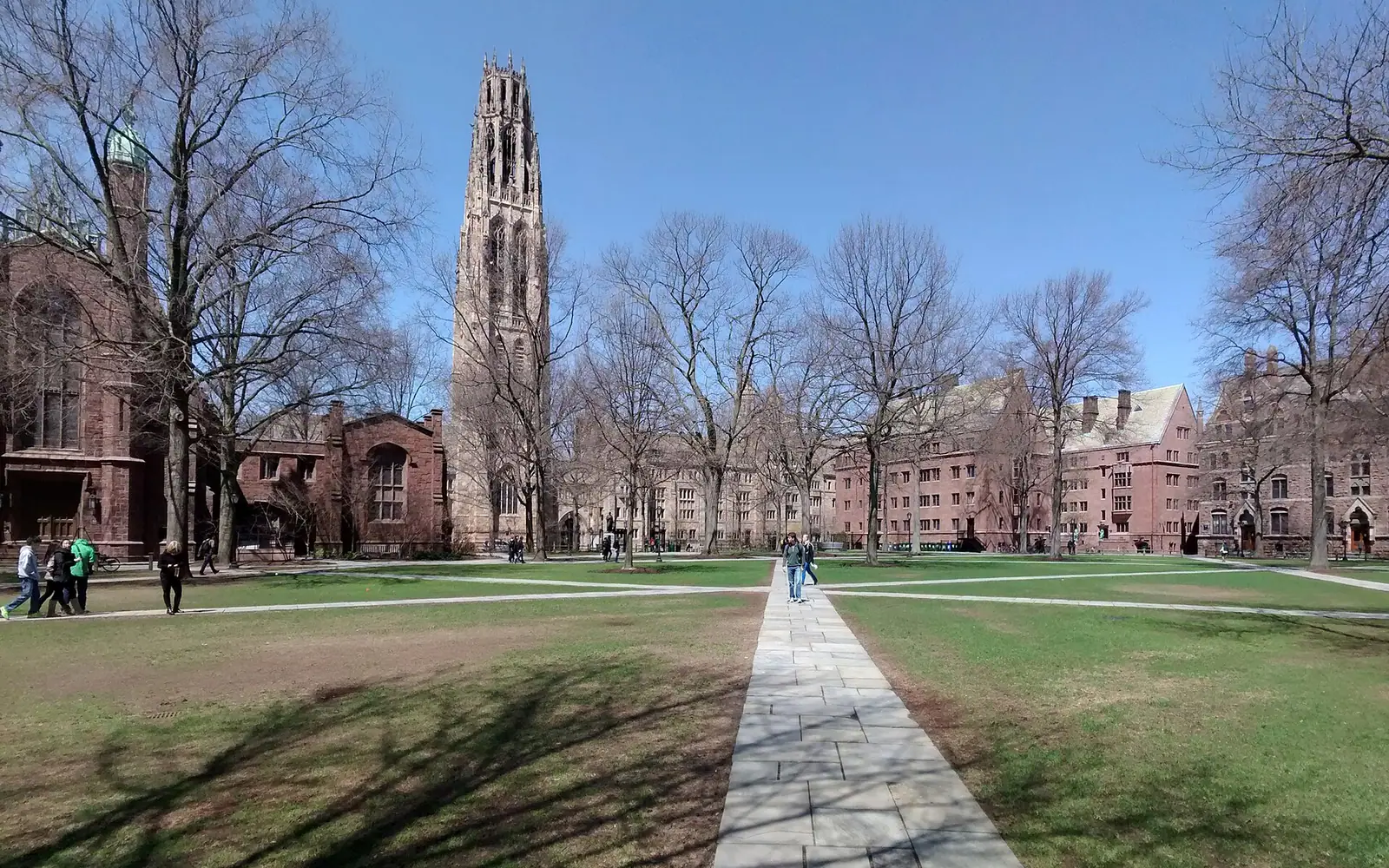
Yale College in New Haven, Connecticut: over 80 majors chosen by the end of…
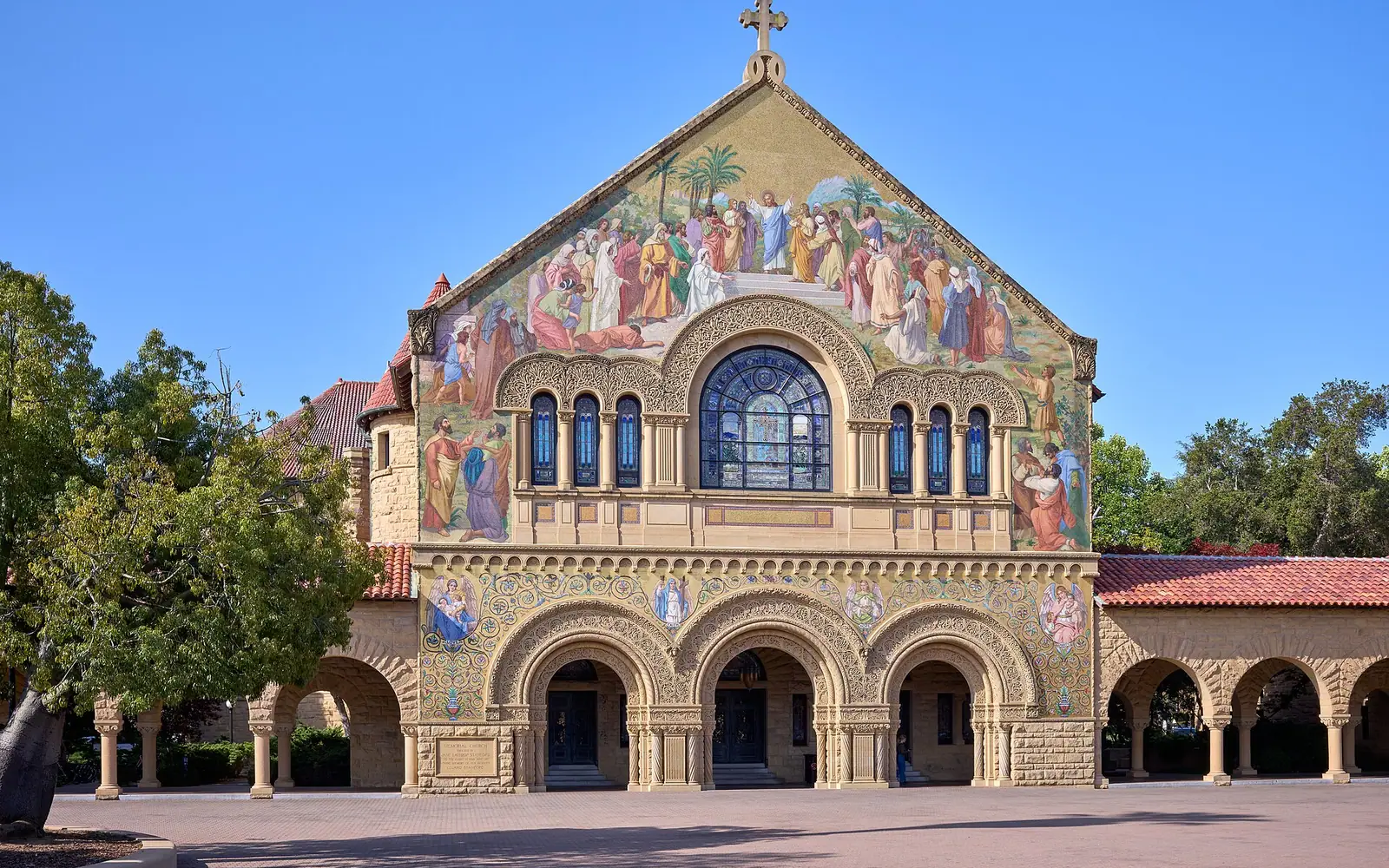
Stanford in California: undergraduates join Humanities and Sciences or Engineering; about 98% of eligible…
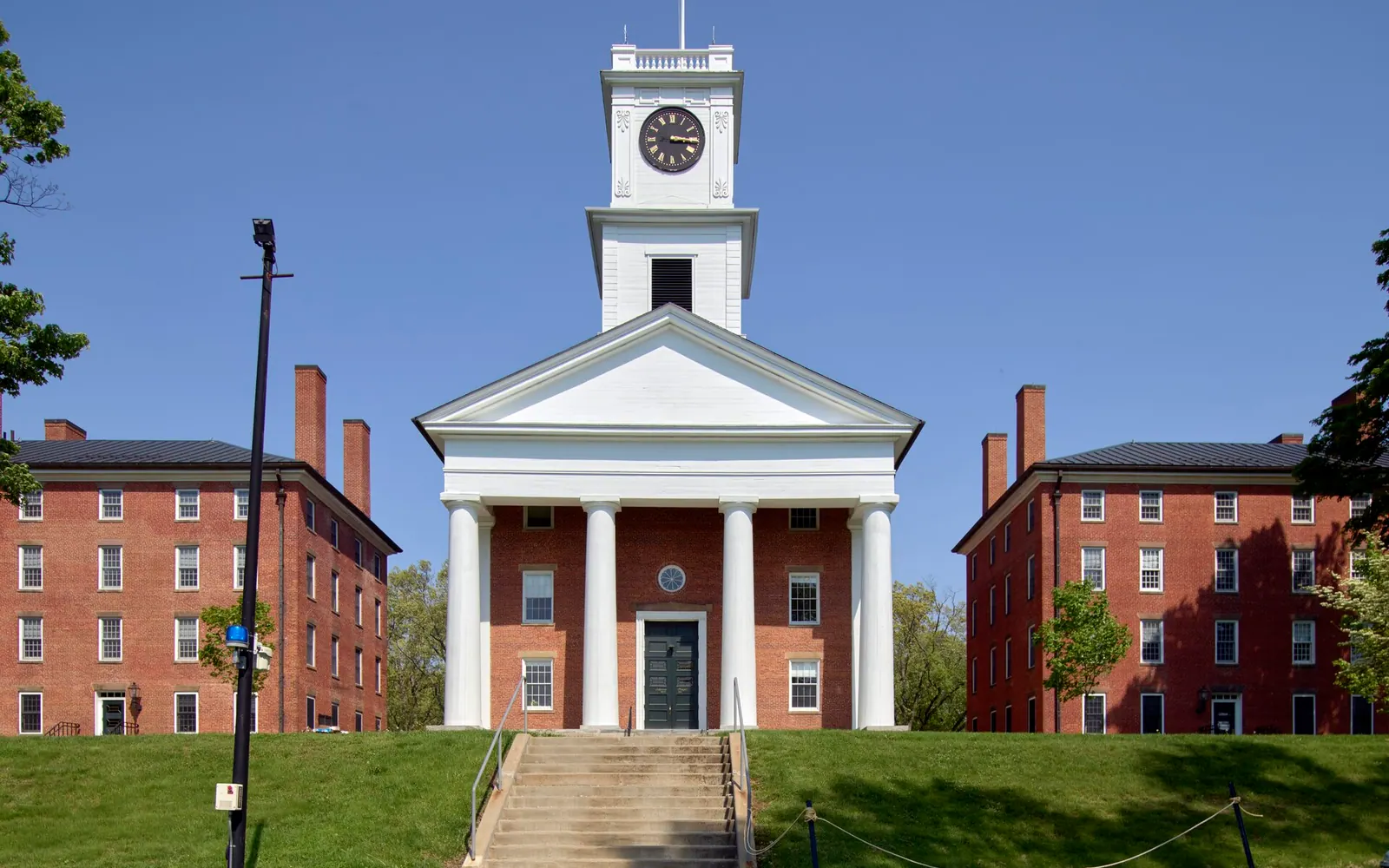
Liberal arts college in Massachusetts: 1,907 students, 43 majors, an open curriculum, a 7:1…
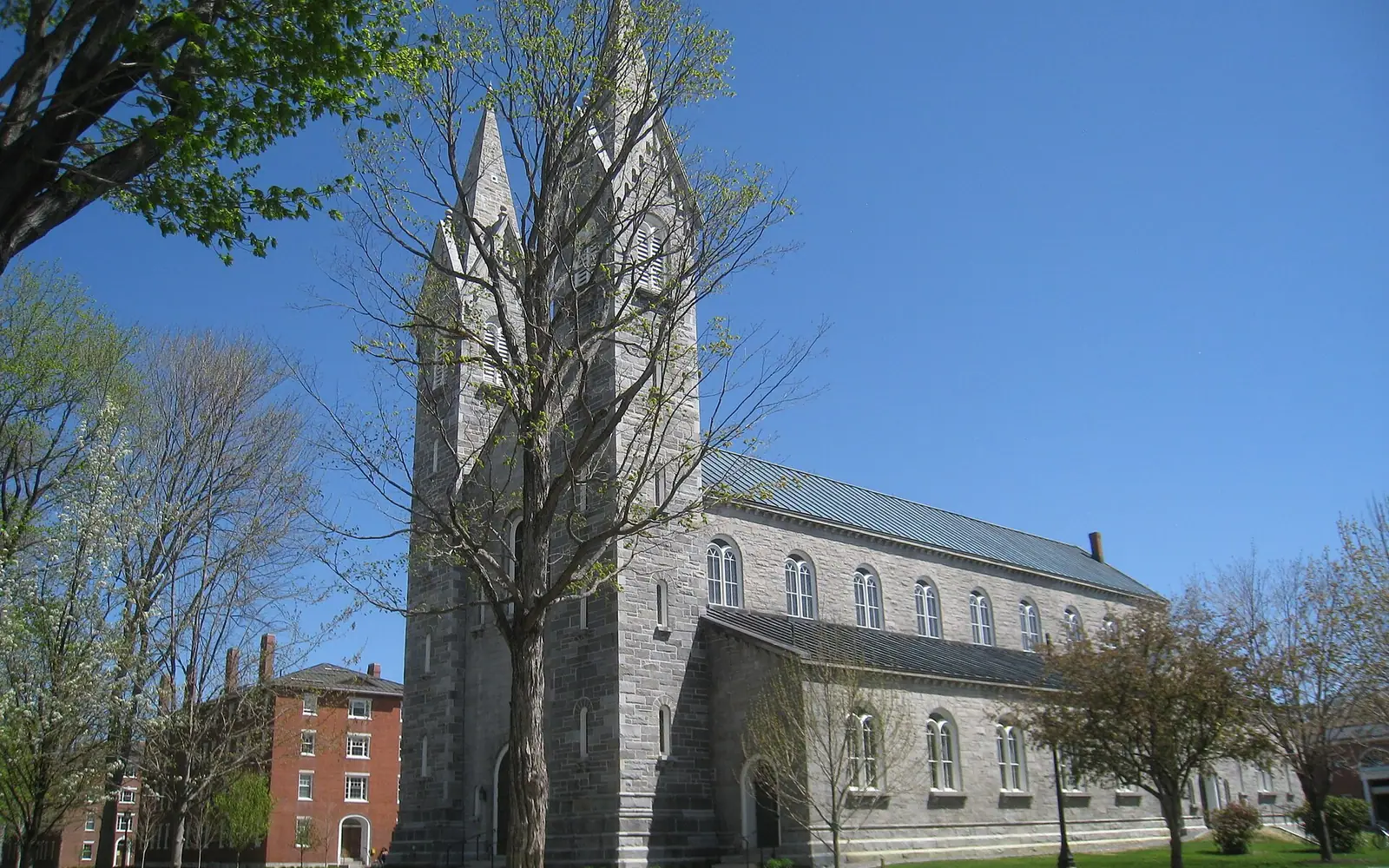
Liberal arts college founded in 1794 in Brunswick, Maine: about 1,900 students, 40+ majors…
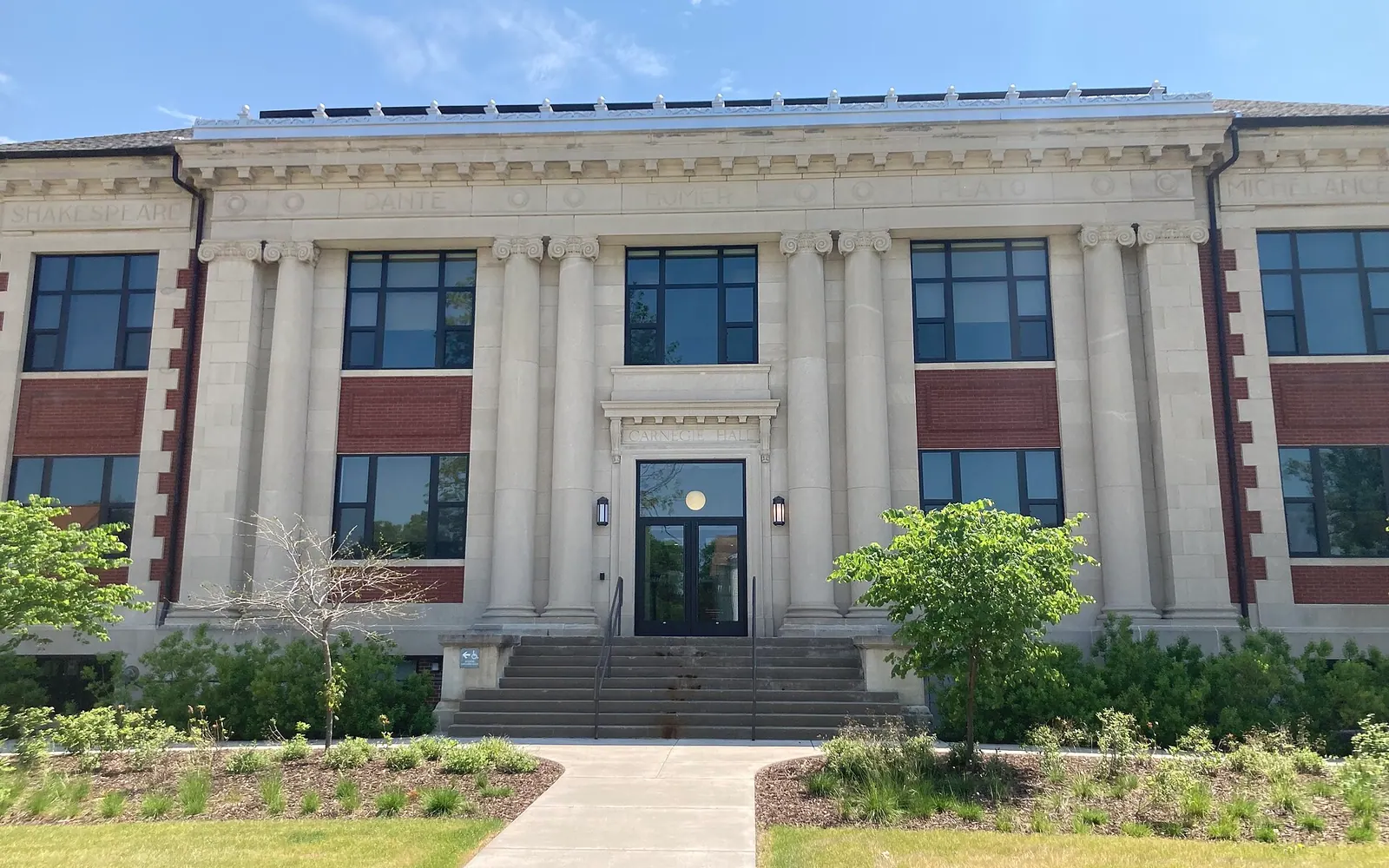
Residential liberal arts college founded in 1846 in Grinnell, Iowa: about 1,700 students, a…
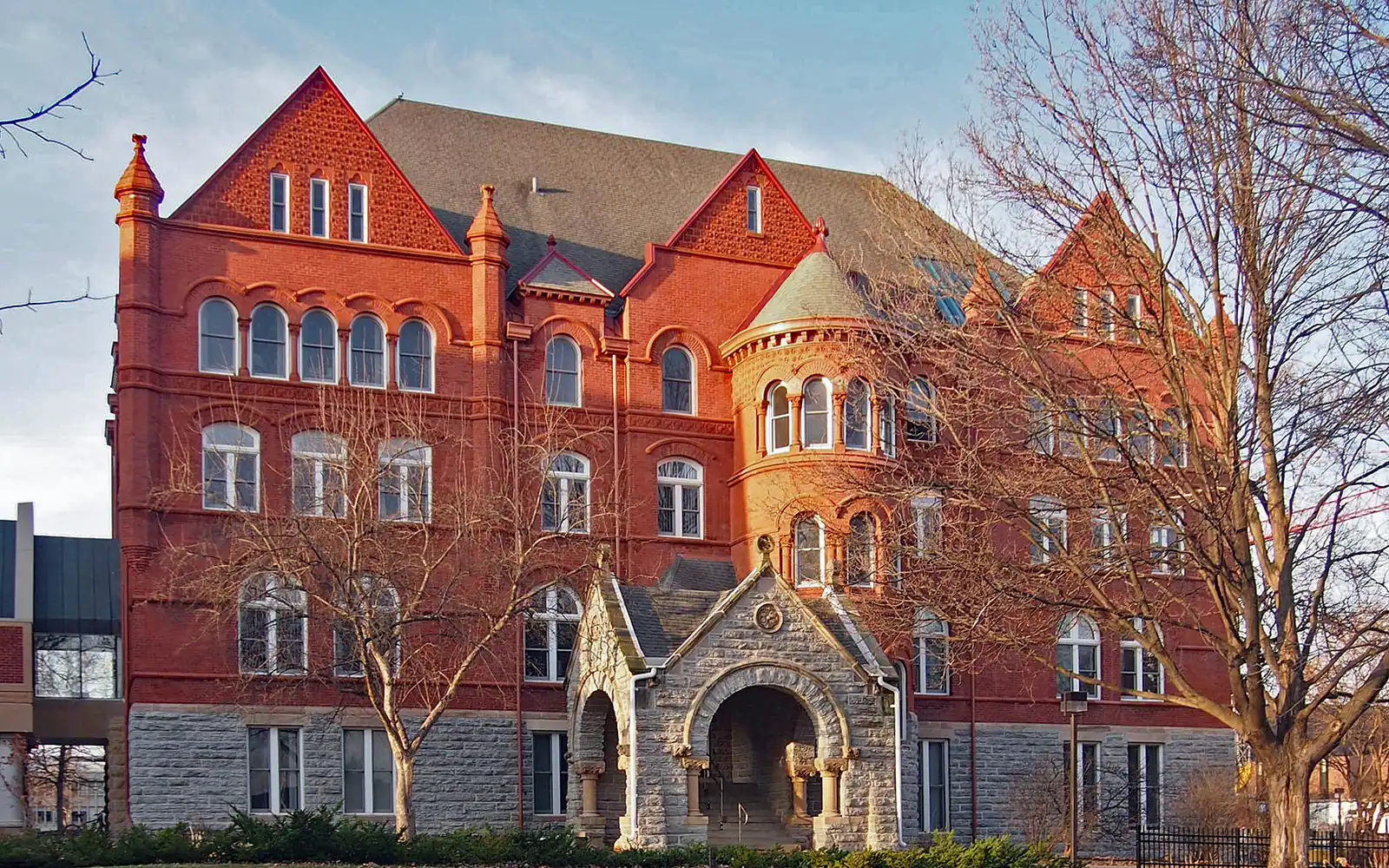
Liberal arts college founded in 1874 in Saint Paul, Minnesota: 2,068 students from 111…
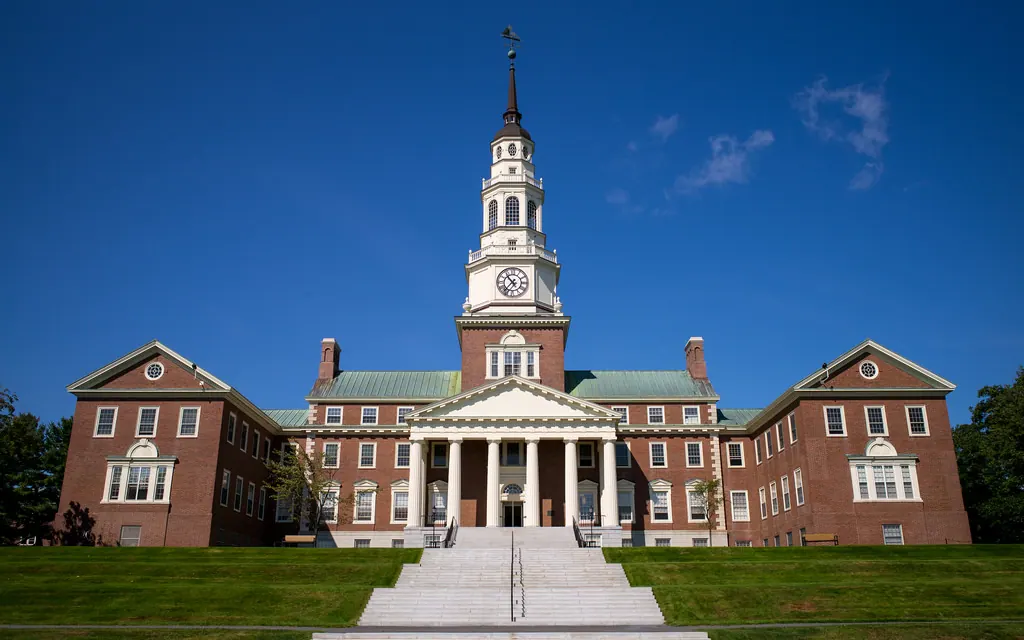
Liberal arts college founded in 1813 in Waterville, Maine: 2,400 students, 48 majors, a…
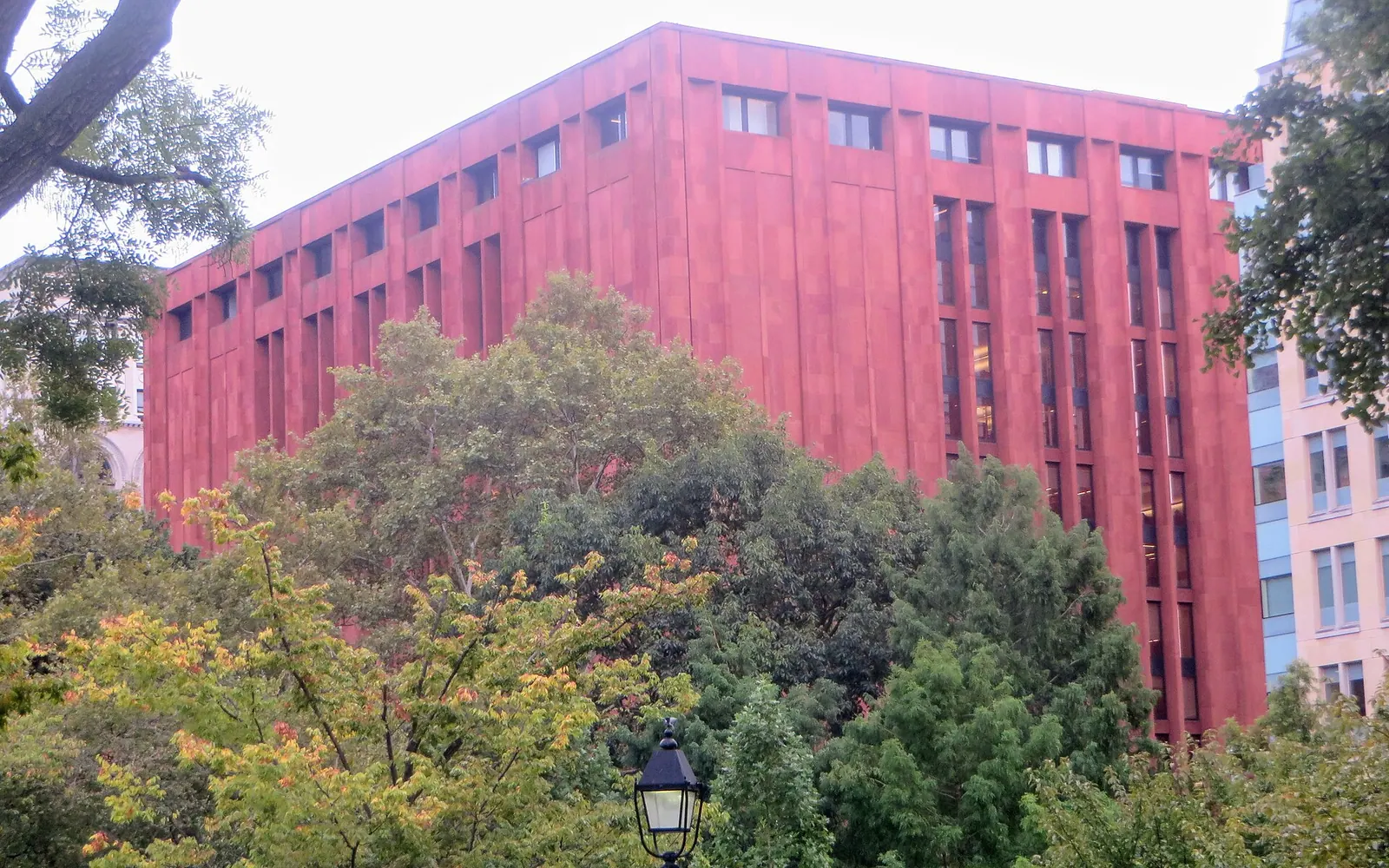
New York City campuses in Greenwich Village and Brooklyn: 270+ areas of study in…
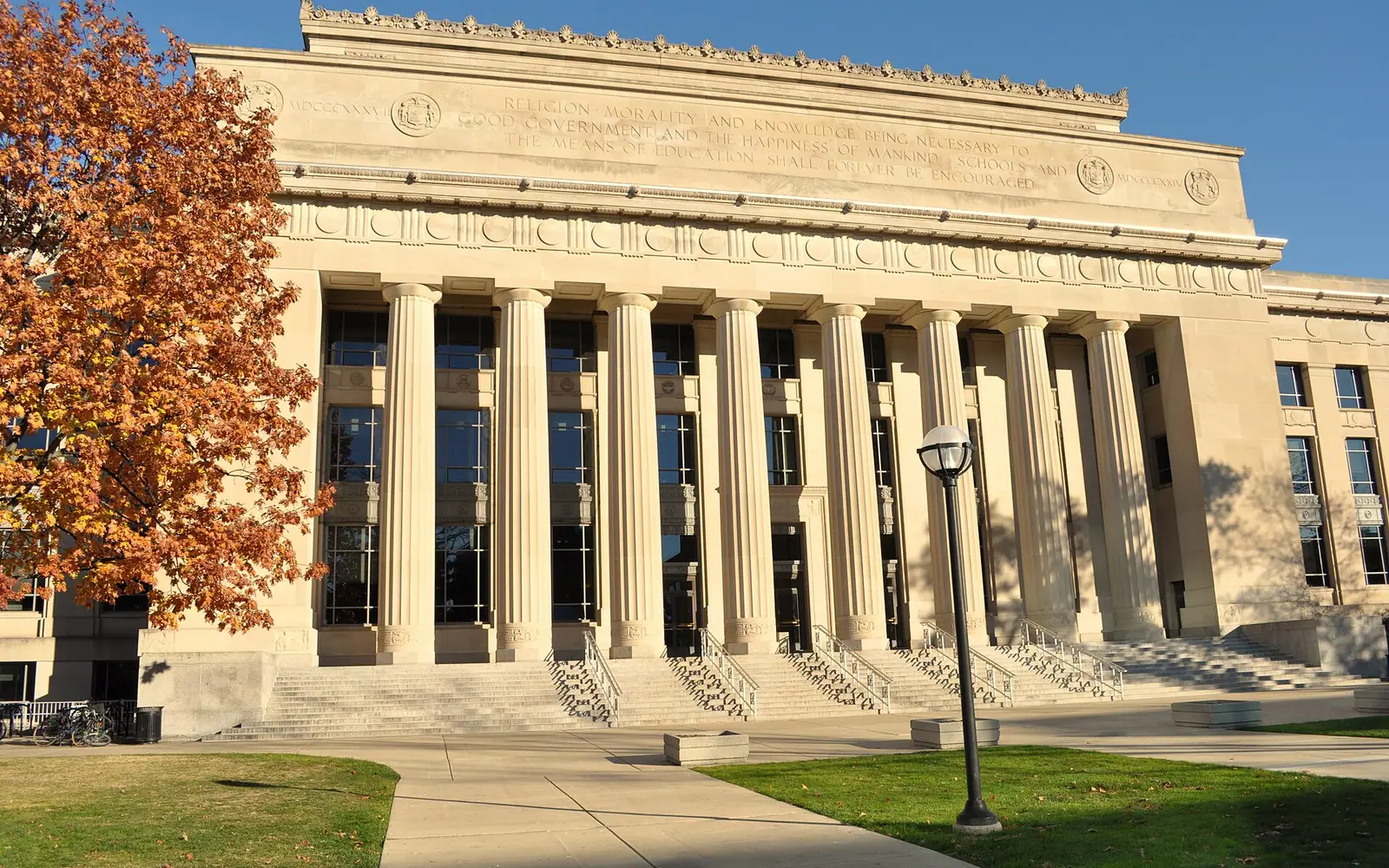
Large public university in Ann Arbor, Michigan: 280+ degree programmes in 19 schools and…
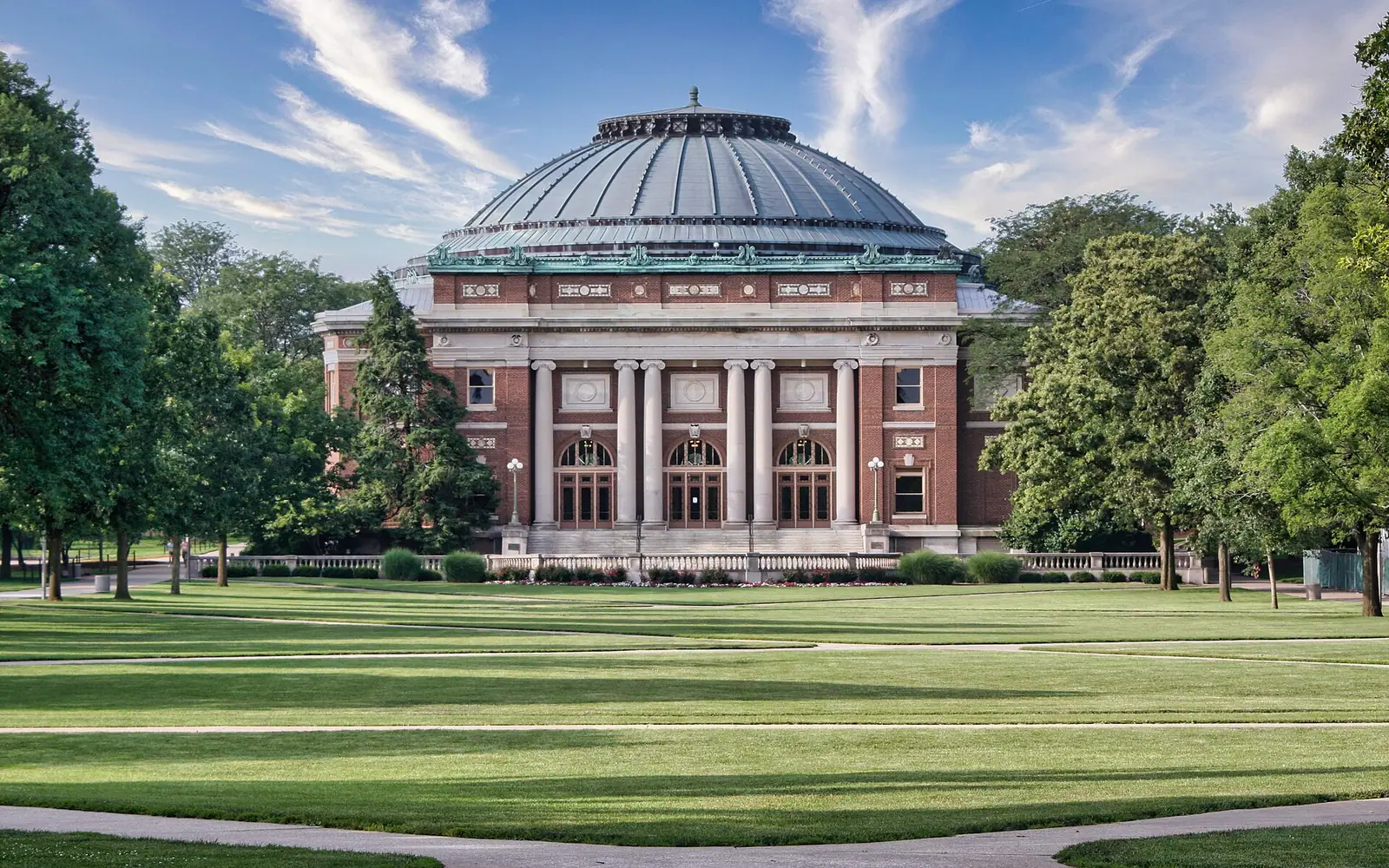
Public research university in Urbana-Champaign, Illinois: 61,000+ students, 150+ programmes; you apply directly to…
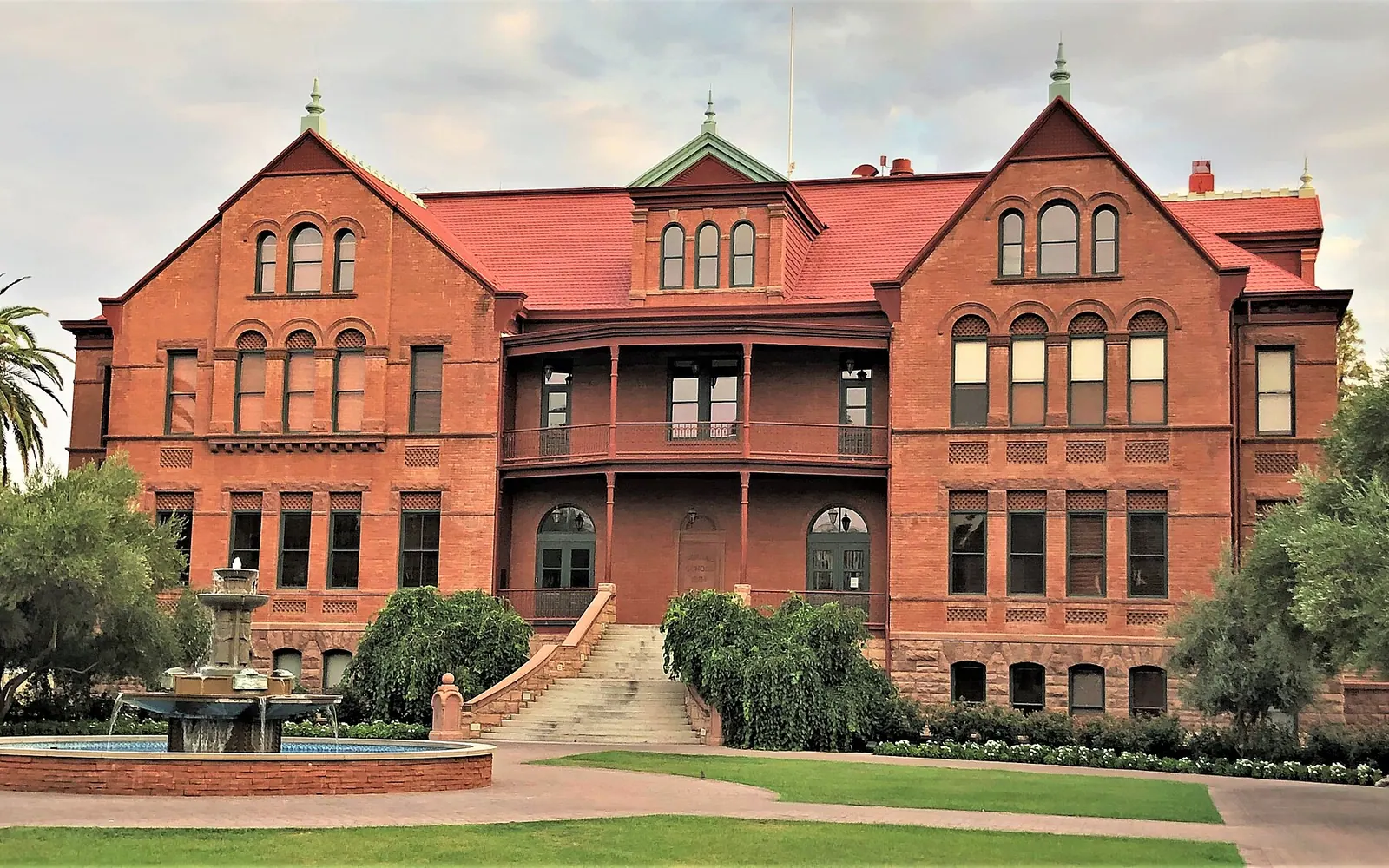
Public university with campuses in the Phoenix area, including Tempe: 15,000+ international students and…
1 university
One institution · apply via the University of California application
A genuine sub-national admissions authority: nine campuses, one application, one filing window, one set of rules set by the Regents rather than by the campus. Berkeley is the campus on this page and adding the other eight costs only the fee. Everything a student learns about applying to the Common App colleges has to be unlearned here.
The fall 2027 application opens for drafting on 1 August 2026, is filed between 1 October and 30 November 2026, and is not accepted a day either side. There is no Early Decision, no Early Action, no rolling consideration and no late round. Decisions arrive across March 2027, the Statement of Intent to Register is due on 1 May 2027, and official IB results must reach the campus by 15 July 2027 — nine days after the IB publishes them.
SourceFor 2027–28 UC publishes UC Tuition of 16,278 USD for a California resident and 57,300 USD for a nonresident, a gap of a little over 41,000 USD a year, with total on-campus costs of 49,078 and 90,100 USD. An international student is a nonresident and stays one — residency for tuition is not something an F-1 student acquires by living in California. The one piece of good news is the Tuition Stability Plan, which holds the tuition line flat for up to six years.
SourceEvery registered UC Berkeley student, international students included, is automatically enrolled in the Berkeley Student Health Insurance Plan, which cost undergraduates 2,533 USD per semester in 2026–27 and can only be left by proving comparable insurance during an annual waiver window. The 2027–28 rate is not published yet.
SourceUC does not require or read letters of recommendation at the time of application; a campus may ask later in a supplemental review. Instead of one long personal essay there are four personal insight questions of 350 words. And UC publishes what the IB is worth in credit: 6 quarter units for a diploma at 30 points or above and 8 quarter units per Higher Level exam graded 5, 6 or 7.
Source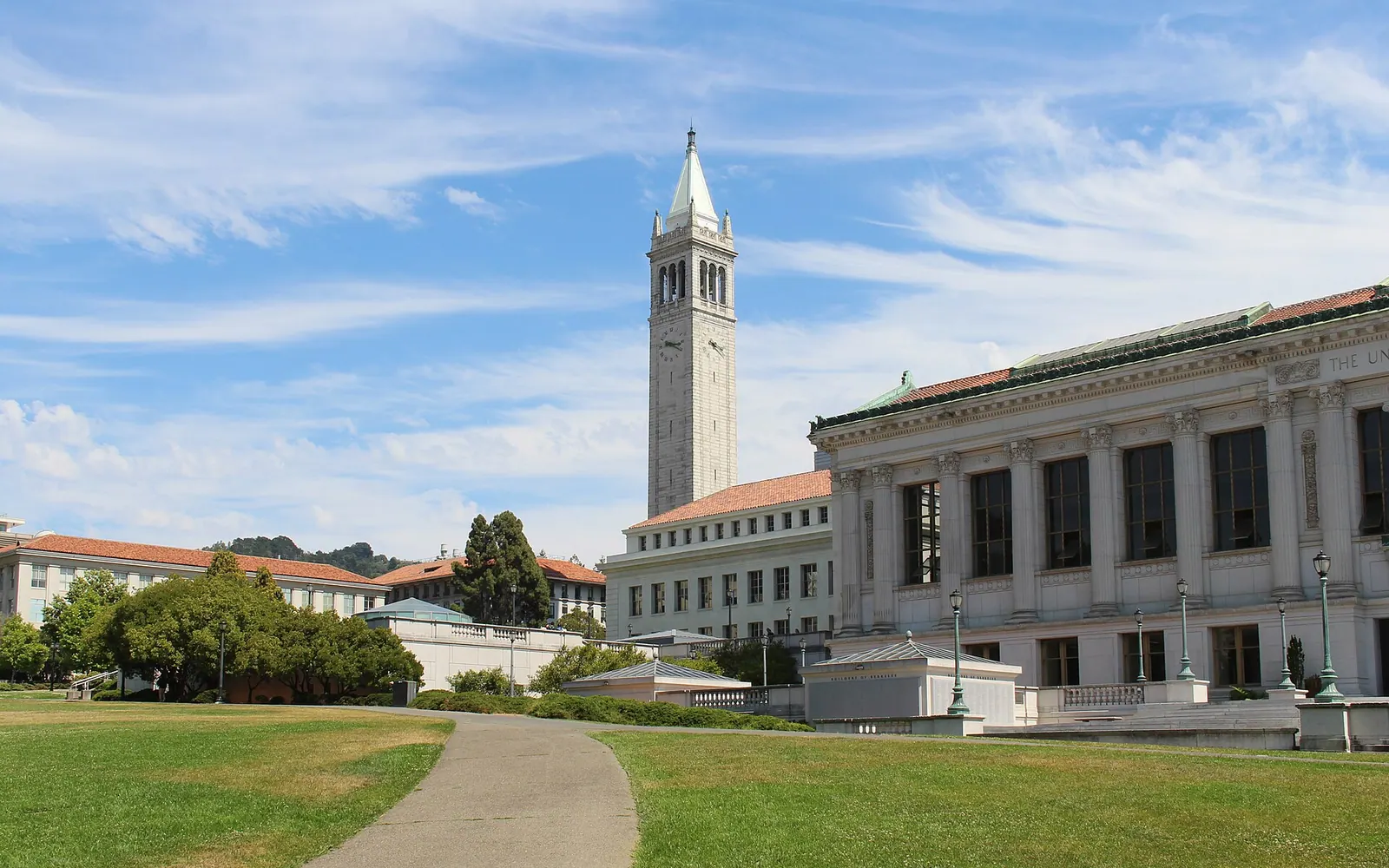
Public research university in Berkeley, California: 130+ academic departments in six colleges and one…
1 university
One institution · apply to each directly
Applying directly is a route, not the absence of one, and MIT is one: it uses its own application, not the Common App. A student who builds the whole autumn around one portal will discover in October that MIT is not in it. Only one of the fourteen institutions here sits in this group; other direct-only institutions are not covered here.
Early Action closes 1 November with decisions in mid-December; Regular Action closes 4 January, not the 1 January most American guidance quotes. The financial aid application is separate from the admissions application and falls after it — 30 November for Early Action and 15 February for Regular Action. MIT also dates its testing requirement to the sitting rather than the score report: before 30 November for Early Action, before 31 December for Regular Action.
SourceMIT requires the SAT or ACT with no IB alternative. Its credit rule is narrow: Higher Level exams only, grade 7 only, no credit at all for IB Biology, Chemistry or Information Technology in a Global Society, 18.01 for HL Mathematics at 7, 8.01 for HL Physics at 7 and nine units of unrestricted elective credit per applicable humanities, arts or social science exam.
SourceMIT is in Massachusetts, where state law requires students at institutions of higher learning to hold qualifying student health insurance or comparable cover. MIT's own plan cost, waiver terms and waiver deadline are not established here; the Massachusetts requirement is given here as Harvard states it.
Source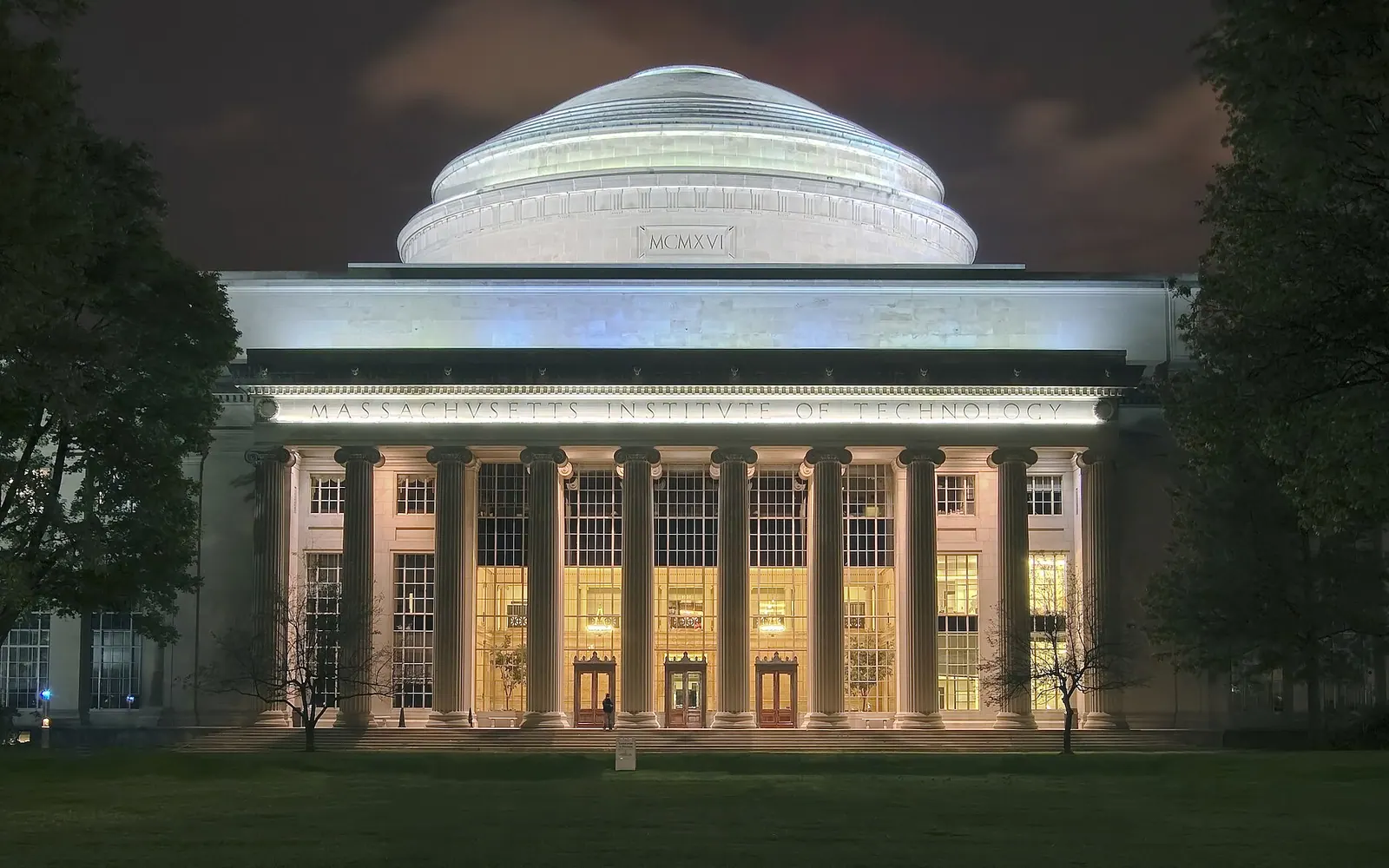
MIT in Cambridge, Massachusetts: 56 undergraduate majors in five schools, entered undeclared; about 65%…
This browser cannot draw the globe. Every place is in the list below.
An American bachelor's degree takes four years and starts broad: you take courses across several fields and usually declare a major at the end of year two.
Admission is 'holistic' - your grades matter most, but so do essays, teacher references, what you do outside school, and increasingly again the SAT or ACT. As a European student you are an international applicant everywhere, so you pay the published sticker price unless a university gives you financial aid, and only a handful of universities give internationals enough aid to make it affordable. The cost range is enormous: for 2026-27 a full year runs from about 62,000 USD (about €54,500) for an international student at Illinois to 95,000-100,000 USD (about €83,600–88,000, at the ECB rate of 24 September 2026) at Harvard before health insurance.
You do not have to choose your subject before you arrive - you can start in autumn 2027 and declare a major in 2029.
Sticker price. Harvard's published billed cost for 2026-27 is 91,634 USD for one year, and that is before health insurance and flights.
American higher education has no ministry and no national structure, so the sectors are not legal categories — they are recognisable kinds of institution with different sizes, prices, admission behaviour and purposes, and the names below are the ones Americans…
American higher education has no ministry and no national structure, so the sectors are not legal categories — they are recognisable kinds of institution with different sizes, prices, admission behaviour and purposes, and the names below are the ones Americans actually use. A full IB Diploma opens all of them. Two are easy to miss, at opposite ends: the liberal arts college, which is small, teaching-led and often generous to international students, and the community college, a much cheaper way into an American bachelor's degree that English-language advice rarely mentions.
Endowed, independent of any state government, and running graduate schools alongside the undergraduate college — Harvard, Yale, Stanford, NYU. One published price for everyone, which is very high, discounted by need-based aid that at a handful of them is extraordinarily generous to international applicants and at most of them is not offered to them at all. Admission is holistic, opaque and at some of them in the low single digits for international applicants.
The sector English-language advice is almost always describing when it says "applying to America", and the sector a realistic list cannot be built entirely out of.
Small — often 1,500 to 2,500 students — almost always residential, undergraduate only, with no graduate students competing for a professor's attention and classes taught by professors rather than teaching assistants. Amherst runs an open curriculum with no distribution requirements at all. The breadth-then-depth shape is close to the IB Diploma, and several of these colleges are more generous to international students, and cheaper to apply to, than the research universities: Colby charges no application fee.
Often mistaken for a lesser option by students who have never heard of the names. Many are highly selective, and they suit a student who wants to be taught rather than lectured.
Owned by a state and built to educate its residents — Michigan, Illinois, Berkeley, Arizona State. Large, strong in engineering and the sciences, and priced in two tiers: a resident rate and a non-resident rate that an international student pays for all four years. Institutional aid for international students is limited or absent; Michigan states that international students on temporary visas should expect to pay the full cost of attendance. These are also the institutions where the application route is least predictable, because some are on the Common App and some are on their own state system.
The sector where the difference between 16,278 and 57,300 USD a year is decided by something a foreign student cannot acquire.
Two-year institutions awarding an Associate of Arts or Associate of Science, with open or flexible admission, small classes and fees a fraction of a university's. The point for a foreign student is the "2+2": two years at a community college followed by two years at a university, leaving with the university's bachelor's degree. Six University of California campuses — Davis, Irvine, Merced, Riverside, Santa Barbara and Santa Cruz — operate a Transfer Admission Guarantee that turns the second half into a published promise rather than a hope.
A cheap route into an American degree, and a rarely mentioned one. One gap: whether an F-1 student from Denmark can hold a Transfer Admission Guarantee on the same terms as a Californian resident is not established here, and nobody should plan around it until it is.
Science and engineering institutions with a common technical core — MIT is the archetype. Everyone takes the same mathematics and physics in the first year, the pace assumes strong Higher Level mathematics, and the admission process is often run outside the shared application systems entirely.
Also a sector where an IB student may get nothing for Higher Level results. MIT grants credit only at grade 7 and none at all in Biology or Chemistry.
Independent schools of art, design, music, dance and theatre, admitting on portfolio or audition. Grades matter less, the portfolio matters more than anything else, and the calendar and the supplementary steps are different from everything else on this page — Stanford's arts-supplement deadline, for example, falls two to four weeks ahead of the ordinary one.
Not covered in detail on this site; a student who needs it will not find it in the ordinary listings.
Degree-granting institutions run as businesses, marketed heavily to international students and to adult learners, with admission requirements that are often nominal.
A student searching online will often meet it first. Its accreditation, transferability, visa status and value are not covered here, so check each before considering one.
Yes, an IB Diploma is accepted.
Yes
There is no national minimum. Selective universities look at the whole transcript and at HL subject choice rather than at a points threshold. Higher Level subjects are what earn credit; Standard Level rarely does.
There is no national IB-to-GPA conversion. Each university reads your IB predicted grades and, later, your final July results directly. The University of California publishes a credit conversion: a full IB Diploma with 30+ points earns 6 quarter units, and each Higher Level exam graded 5, 6 or 7 earns 8 quarter units (5.3 semester units), usually 24 quarter units in total.
How United States reads an IB Diploma.
These are the pages this section was written from. None has been signed off by a person yet, so confirm anything consequential at the source.
Apply directly to each university.
From spring 2026, build a list of 8-12 institutions in three groups: places that meet full need for internationals, places likely to give you merit money, and one or two you could genuinely afford at full price.
Work out which of the three application environments each one sits in. Twelve of the fourteen here are on the Common App; Berkeley is on the University of California application and closes a month earlier; MIT takes only its own.
Register for and sit the SAT or ACT in 2026 if any institution on your list requires it, and plan a retake date before November. Yale and MIT require it and do not accept the IB instead.
Create a Common App account when it opens on 31 July 2026, fill in your personal details once, and add your institutions.
Ask two teachers and your studievejleder for references in spring 2026, not in October. Your counsellor also uploads the school report and your predicted IB grades - Illinois wants those a week after the application itself.
Write the 650-word personal essay over the summer, then the supplemental essays. The University of California asks four 350-word personal insight questions instead and needs writing of its own.
File the University of California application between 1 October and 30 November 2026. It closes before every Regular Decision deadline, and there is no second round.
Submit early-round applications - 1 November for Early Action almost everywhere, between 1 and 15 November for Early Decision depending on the college - then the Regular Decision applications between 1 and 15 January 2027.
Submit financial aid forms by the same deadline as the application, not later. Macalester states that aid cannot be awarded after an offer of admission is made.
Decide by 1 May 2027, then wait for the I-20, pay the 350 USD SEVIS fee and book an embassy appointment in Copenhagen for the F-1 visa.
Arrange the compulsory student health insurance, or a waiver, before the July deadline. In Massachusetts it is required by state law.
Holistic review at most institutions: no published points threshold, no ranking table, no guaranteed entry. Committees read grades and the rigour of your subjects first, then essays, references, activities and context, and at many institutions also your ability to pay. Early Decision is binding - Amherst's wording is that you agree to withdraw your applications from other colleges and enrol - and it meaningfully raises your odds, but it removes your ability to compare financial aid offers. Early Action and Restrictive Early Action are not binding, though Stanford's and Yale's restrict where else you may apply early. The University of California does not run any early round at all, does not read letters of recommendation, and asks four short personal insight questions instead of an essay. Arizona State does not run a tournament at all: it admits against published criteria on a rolling basis. International admit rates at the most selective universities are in the low single digits; do not build a list out of them.
SAT, registration closes for the 7 November 2026 sitting: by 23 October 2026.
Your own plan Via the Common App
Not published by anyone — a date worth setting yourself.
Not a published deadline — a date worth setting yourself, worked back from the round dates. Yale requires the SAT or ACT from every applicant and states that IB results may accompany it but not replace it; Harvard requires it too and accepts IB predicted grades only where testing is genuinely inaccessible, which Copenhagen is not. Sitting it by the summer leaves a retake before the November round. NYU, Michigan and Amherst are test-optional, so the requirement is per college and has to be checked per college.
Via the Common App
The 2026-27 Common App season — the one that leads to entry in autumn 2027 — opened on 31 July 2026. Nothing is lost by starting later and a great deal is gained by starting now: the account, the college list, the essay prompts and the recommender invitations are all available from this date.
Each college's rounds and dates are listed under the Common App route. The Common App opened its 2026-27 season on 31 July 2026; that is the season that leads to entry in autumn 2027.
Via the University of California application
You can start working on the application from 1 August 2026, two months before you may file it.
Applies to: applicants to colleges that require the SAT or ACT
Hard deadline
After this the door closes.
The College Board's own dates page states that "These test dates and deadlines apply to all students—U.S. and international—taking the SAT", so a Copenhagen test centre runs the same calendar as an American one. This is the last sitting that can realistically reach a college which allows November scores into an early round; it is already after the 1 November early deadlines, so check each college's own policy on late-arriving scores before relying on it. Whether you need a test at all is a per-college question with no national answer: Yale, Harvard, Stanford and MIT require the SAT or ACT for autumn 2027 entry, and Yale states that IB results may accompany the test but not replace it; NYU, Michigan, Illinois and Amherst are test-optional. No ACT date is given here: on 23 September 2026 act.org still showed only 2024 test dates. If your colleges accept the ACT, take its dates from act.org directly and do not assume they match the SAT's.
Priority Via the Common App
Later applications are considered after these.
1 November 2026 at every institution here that runs one: Harvard, Stanford, Yale, Illinois and Macalester. Not binding — you keep the offer and every other application, and you still reply on 1 May. The catch is exclusivity rather than commitment: Stanford's restrictive version forbids applying early to any other private college, and Yale's single-choice version does the same, so this is a decision about the whole autumn taken in October. Decisions arrive in mid-December. Missing it moves you to Regular Decision; it does not shut the door.
Hard deadline Via MIT's own application portal
After this the door closes.
MIT publishes the day without a year, so 2026 is expected rather than confirmed. The application form and fee are due that day; only teachers' letters may arrive later. Early Action is not binding, but the deadline is firm.
Applies to: applicants to colleges that require the SAT or ACT
Hard deadline
After this the door closes.
5 December 2026 is the final SAT sitting of the 2026-27 calendar before Regular Decision closes; the next one is 6 March 2027, by which time every Regular Decision file in this cycle has been read. If a college on your list requires the test, this registration date is the real end of the line, not the December sitting itself. The remaining 2026-27 sittings after it — 6 March, 1 May and 5 June 2027 — are listed here only so that nobody mistakes them for a second chance at admission; they are of use for a gap year or a transfer, not for autumn 2027 entry.
Hard deadline Via MIT's own application portal
After this the door closes.
MIT requires the SAT or ACT and sets the last test date rather than the last reporting date: before 30 November for Early Action, before 31 December for Regular Action. There is no IB alternative.
Applies to: applicants asking MIT for need-based aid
Hard deadline Via MIT's own application portal
After this the door closes.
Managed separately from the admissions application and due a month after it. Easy to walk past, and there is no second chance at it.
Published on MIT's deadlines page as "November 30" with no calendar year, as every date on that page is, so 2026 is expected rather than confirmed. It falls a month after the 1 November Early Action application itself, so it is a date that is easy to miss precisely because the application is already in.
Hard deadline Via the University of California application
After this the door closes.
One filing window and nothing else. No Early Decision, no Early Action, no rolling consideration, no late round, no equivalent of Clearing. The application can be worked on from 1 August but is only accepted between 1 October and 30 November 2026, and decisions come back across March 2027. A student who treats 1 January as "the American deadline" has missed all nine University of California campuses by five weeks.
UC's first-year page gives the fall filing period as "October 1–November 30"; its dates table lists the "Fall 2027 admission application filing period" across October and November. The application itself opens on 1 August for drafting. It closes before every Regular Decision deadline, and there is no second round and no early round — the University of California runs neither Early Action nor Early Decision, does not read letters of recommendation, and asks four 350-word personal insight questions instead of the Common App essay. The University of California's three later dates — the 1 May reply, the 1 July final transcript and the 15 July IB results deadline — each have their own entry below.
Via the Common App
Mid-December at Harvard, Bowdoin and Amherst; 29 January at Illinois, which runs its Early Action decisions later than most. The date here is an indicative mid-December marker, not a published day.
Hard deadline Via MIT's own application portal
After this the door closes.
The fourth of January. Not the first.
Applies to: applicants asking MIT for need-based aid
Hard deadline Via MIT's own application portal
After this the door closes.
Published on MIT's deadlines page as "February 15" with no calendar year, so 2027 is expected rather than confirmed. MIT's Regular Action application closes on 4 January, so the aid papers are due six weeks after the application — long enough to forget about.
Via the University of California application
Notification runs through March 2027. Some campuses release earlier.
Via the Common App
Late March at Harvard and Amherst, early April at Stanford, 26 February at Illinois. An indicative end-of-March marker rather than a published day.
Hard deadline Via the Common App
After this the door closes.
The national candidates' reply date, confirmed on Amherst's page as 1 May 2027 and on Harvard's, Stanford's, MIT's and Illinois's as 1 May. Until then you may hold every offer you have and compare the aid figures; after it, the one you have not replied to is gone. An Early Decision admission is the exception — that choice was made in November.
The one date in the American calendar that every institution shares, and the only national one on this page. Until 1 May 2027 you may hold every offer you have and compare the aid figures; after it, the offer you have not replied to is gone, and your place goes to somebody on a waiting list. The University of California states it with its year attached — "Deadline for all fall 2027 admitted first-year students to submit their SIR" — and calls it the Statement of Intent to Register; MIT, Harvard, Stanford, Illinois and the Common App colleges call it the reply date and publish it as a bare "May 1". An Early Decision admission is the exception: that choice was made in November and this date does not belong to you.
Hard deadline Via MIT's own application portal
After this the door closes.
The same national reply date as the Common App colleges and UC.
Hard deadline Via the University of California application
After this the door closes.
How you accept a UC place, and it goes to one campus only. Same day as the national reply date used by the Common App colleges, so a student holding offers on both routes decides everything at once.
Applies to: applicants who have accepted a University of California offer
Hard deadline Via the University of California application
After this the door closes.
For students intending to enrol in fall 2027. Postmarked or submitted electronically by this date.
Published as "Final, official transcripts must be postmarked or electronically submitted". This is a condition of an offer you have already accepted, so missing it costs the place rather than the application. Your gymnasium sends it, not you, and a Danish school in the first week of July is a quieter place than it is in June — ask for it before the summer.
Via the Common App
Every date above falls before this one, which is the whole shape of an American application: the offer is made on predicted grades, a school report and everything else in the file, and the real results arrive after the student has already chosen. What each college does if the actual results fall short of the predictions is set by that college and is not established here. Ask before you accept.
Every American decision in this cycle is made before this date, on predicted grades, a school report and everything else in the file — which is the whole shape of an American application and the reason the calendar above stops in May. What each college does if your actual results fall short of the predictions is set by that college and is not established here; ask before you accept. The date is the IB's usual results day and is not yet confirmed by the IB for 2027. The IB result that does have a hard American consequence is not this one — it is the University of California's 15 July deadline nine days later, which is the entry below.
Applies to: IB candidates who have accepted a University of California offer
Hard deadline Via the University of California application
After this the door closes.
This is UC's answer to the July problem. The IB publishes results on 6 July; UC wants the official results by 15 July. Nine days. Request the transmission from the IB as soon as you have accepted a place, not when the results appear.
Published as "Deadline for official AP and IB examination results to be postmarked or electronically submitted". This is a deadline for IB results specifically, and a tight one: results are released on about 6 July 2027 and the University of California wants them, officially, nine days later. You request the transmission from the IB yourself, through candidate results services — it is not automatic and the university will not chase it.
Priority Via the Common App
Later applications are considered after these.
Closes somewhere between 1 and 15 November 2026 depending on the college, and there is no common date: Macalester 1 November, Amherst 9 November, Bowdoin and Grinnell 15 November. Binding in the strongest sense — Amherst's wording is that you agree not to be an Early Decision candidate anywhere else and, if admitted, to withdraw your applications from other colleges and enrol. Missing it does not cost you the college; it costs you this round, and with it the higher admit rate that is the main reason to accept the binding terms. It also ends any possibility of comparing financial aid offers, which for a family paying from abroad is usually the more expensive loss.
Priority Via the Common App
Later applications are considered after these.
Early January 2027, set by each college — Macalester 1 January, Bowdoin and Grinnell 5 January. Same binding terms as Early Decision I, in the same window as Regular Decision, and it exists for students whose first binding choice refused them in December. It is little known, and for a student who has just been turned down by their Early Decision college it is very useful.
Via the Common App
There is no American Regular Decision date. Among five institutions here it is 1 January (Harvard), 2 January (Yale), 5 January (Stanford, Amherst, Illinois) and 15 January (Grinnell) — and Illinois wants the supporting documents a further week later, on 11 January. Each college's own date is final: after a college's Regular Decision date it is finished for the year, because there is no Clearing, no late round and no second intake. Put each college's own date in your own calendar; do not carry one college's date to another.
A single American deadline does not exist. There is no ministry, no clearing house and no national closing day; every college sets its own, and four different rounds run on four different promises. The shape, from the colleges on this page: Early Action, Restrictive Early Action and Single-Choice Early Action all close 1 November 2026 (Harvard, Stanford, Yale, Illinois, Macalester) and are not binding. Early Decision I closes somewhere between 1 and 15 November 2026 — Macalester 1 November, Amherst 9 November, Bowdoin, Colby and Grinnell 15 November — and is binding; see the next entry. Early Decision II closes in early January 2027 — Macalester 1 January, Colby 4 January, Bowdoin and Grinnell 5 January — and is also binding. Regular Decision closes between 1 and 15 January 2027 — Harvard 1 January, Yale 2 January, MIT and Colby 4 January, Stanford, Amherst and Illinois 5 January, Grinnell and Macalester 15 January. The University of California closes on 30 November 2026 and has its own entry below. After a college's own Regular Decision date that college is finished for the year: there is no Clearing, no late round and no second intake. Write each college's own date into your own calendar and do not carry one college's date to another.
Applies to: anyone considering an Early Decision application
Priority
Later applications are considered after these.
What you need to know about Early Decision is not when it closes but what signing it costs you. Early Decision I (1 to 15 November 2026) and Early Decision II (early January 2027) are binding in the strongest sense the American system has. Amherst's wording is that you agree not to be an Early Decision candidate anywhere else and, if admitted, to withdraw your applications from every other college and enrol. It is a signed agreement — student, parent and school counsellor — filed inside the Common App for one college only. Two consequences follow and neither is obvious from a calendar. First, an admitted Early Decision applicant does not get the 1 May reply date: that decision was made in November. Second, and for a family paying from abroad this is usually the more expensive loss, you can never compare financial aid offers, because you will only ever hold one. Early Action, Restrictive Early Action and Single-Choice Early Action are NOT binding — you keep every offer and still reply on 1 May — but Stanford's and Yale's restrict where else you may apply early, so they still decide your whole autumn in October. Missing an early round costs you that round's higher admit rate; signing an Early Decision agreement costs you the choice.
Applies to: applicants seeking need-based aid
Each institution's aid deadline is its own, and at most of them it is the application deadline itself. Grinnell states that "All financial aid forms must be submitted by the same deadline as the Common Application". Macalester states that "financial aid cannot be awarded after an offer of admission has been made, nor at any time during their studies at Macalester" — that is a door that closes permanently, not a late penalty. Bowdoin's Regular Decision aid deadline is 1 February, a month after its application date. MIT's two aid dates, 30 November and 15 February, have entries of their own. A family that applies first and asks about money in the spring has forfeited the money. Which form: as an international applicant you file the CSS Profile, not the FAFSA. The FAFSA is the United States federal aid application and federal aid requires US citizenship or eligible-non-citizen status, which an F-1 student visa is not — so every FAFSA date you will meet on American admissions pages, including the 1 October opening and the 2 March deadline printed on the University of California's own dates page, is not yours. Grinnell asks for "the 2027-28 CSS Profile"; Macalester asks for the CSS Profile "OR the 2027-2028 International Student Application for Financial Assistance (ISAFA)" and points international applicants who cannot afford the CSS Profile fee at the free ISAFA instead, because neither college waives the CSS Profile fee for international applicants. The CSS Profile itself carries no national deadline — the colleges set them, typically 1 or 15 November for the early rounds and January to February for Regular Decision. The College Board had not published the 2027-28 opening date on 23 September 2026; the customary opening is 1 October of the preceding year. Open the CSS Profile in early October 2026 and check the date yourself.
Priority
Later applications are considered after these.
Unlike the other institutions on this page, Arizona State does not run a selection tournament: it publishes priority dates rather than closing dates and admits on a rolling basis against published criteria. On 23 September 2026 its international first-year page carried only fall 2026 (15 January 2026) and spring 2027 (1 November 2026), so do not assume a fall 2027 date from either. The most recent actual fall priority date is therefore 15 January 2026, given here as precedent, not as a prediction. Recheck from about December 2026.
Everything. The question is not whether the degree is in English but whether you must prove your English.
Everything. The question is not whether the degree is in English but whether you must prove your English.
Many universities waive TOEFL/IELTS for students who have been taught in English, which an IB Diploma from an English-medium programme normally demonstrates - but the waiver is not automatic and each university sets its own rule. Check the specific university; where no waiver applies, typical requirements are TOEFL iBT 100+ or IELTS 7.0+ at selective universities. Check each university's own threshold.
Not for English-taught programmes
Not applicable - the United States does not have an EU/EEA fee category.
Not applicable - the United States does not have an EU/EEA fee category. As an international applicant you pay the international or out-of-state rate everywhere. (2026/27)
Private universities: Harvard's published billed cost for 2026-27 is 91,634 USD (tuition 62,226, fees 6,216, housing 14,250, food 8,942), with total billed and unbilled costs of 95,134-100,134 USD plus 4,954 USD health insurance if you are not covered elsewhere. Public universities: UC Berkeley's 2026-27 tuition and fees for a new student are 18,214 USD, but new out-of-state students pay an additional Nonresident Supplemental Tuition of 39,270 USD, so an international first-year pays roughly 57,500 USD in tuition and fees and a total cost of attendance around 94,000 USD in a residence hall. Michigan's 2026-27 non-resident tuition and fees are 67,096 USD in the first two years of LSA (total budget 88,394 USD); Illinois quotes 42,248-53,078 USD in tuition and fees for international students (total 62,146-72,976 USD); Arizona State's international total for 2026-27 is 69,906 USD. (2026/27)
Harvard 95 USD; Stanford 100 USD; MIT, Amherst and Michigan 75 USD; Arizona State 90 USD for international applicants; University of California 95 USD per campus for international applicants (80 USD for domestic); Grinnell nothing. Fee waivers exist but are usually aimed at low-income US students.
Not published as a monthly figure. American universities publish an annual 'cost of attendance' that already includes housing, food, books, transport and personal expenses - see the tuition figures above. UC Berkeley's 2026-27 estimate for housing and utilities in an off-campus apartment is 14,386 USD for a nine-month academic year, about 1,609 USD a month. (2026/27)
There is no EU-style free movement. After you accept an offer the university issues Form I-20, you pay the I-901 SEVIS fee of 350 USD, complete the DS-160 form, pay the visa fee and attend an interview at the US…
There is no EU-style free movement. After you accept an offer the university issues Form I-20, you pay the I-901 SEVIS fee of 350 USD, complete the DS-160 form, pay the visa fee and attend an interview at the US Embassy in Copenhagen for an F-1 student visa. Bring the SEVIS receipt to the interview - it is required. You may enter the US up to 30 days before your programme starts. Sources: https://www.ice.gov/sevis/i901 and https://studyinthestates.dhs.gov/students/prepare/paying-the-i-901-sevis-fee
On an F-1 visa you may work on campus during your studies, subject to limits set by your university, and off-campus work generally requires prior authorisation. After your degree, Optional Practical Training (OPT) gives up to 12 months of work authorisation directly related to your major, and graduates of approved STEM degrees can apply for a further 24-month extension if the employer is enrolled in E-Verify. You cannot start OPT until USCIS approves Form I-765 and you receive the Employment Authorization Document. Source: https://www.uscis.gov/working-in-the-united-states/students-and-exchange-visitors/optional-practical-training-opt-for-f-1-students
Almost all universities house first-year students on campus and many require it. That is a genuine advantage over Europe: you do not hunt for a room, you get assigned one, and the cost is in the published cost of attendance. Harvard's 2026-27 housing and food come to 23,192 USD; Berkeley's residence hall housing and meal plan for 2026-27 are 16,640 USD and 7,000 USD. From year two, many students move off campus, which is where costs and hassle rise - Berkeley budgets 14,386 USD for nine months in an off-campus apartment.
Health insurance is compulsory and expensive, and the Danish yellow card and EHIC are worthless in the US. Universities charge their own student health plan unless you can prove equivalent cover - Harvard's is 4,954 USD and Berkeley's SHIP 5,066 USD for 2026-27 (about €4,360 and €4,460 at the ECB rate of 24 September 2026). Private Danish travel or study insurance sometimes qualifies for a waiver, but the university decides and the waiver deadline is usually 1 July. Assume you will pay for the university plan.