
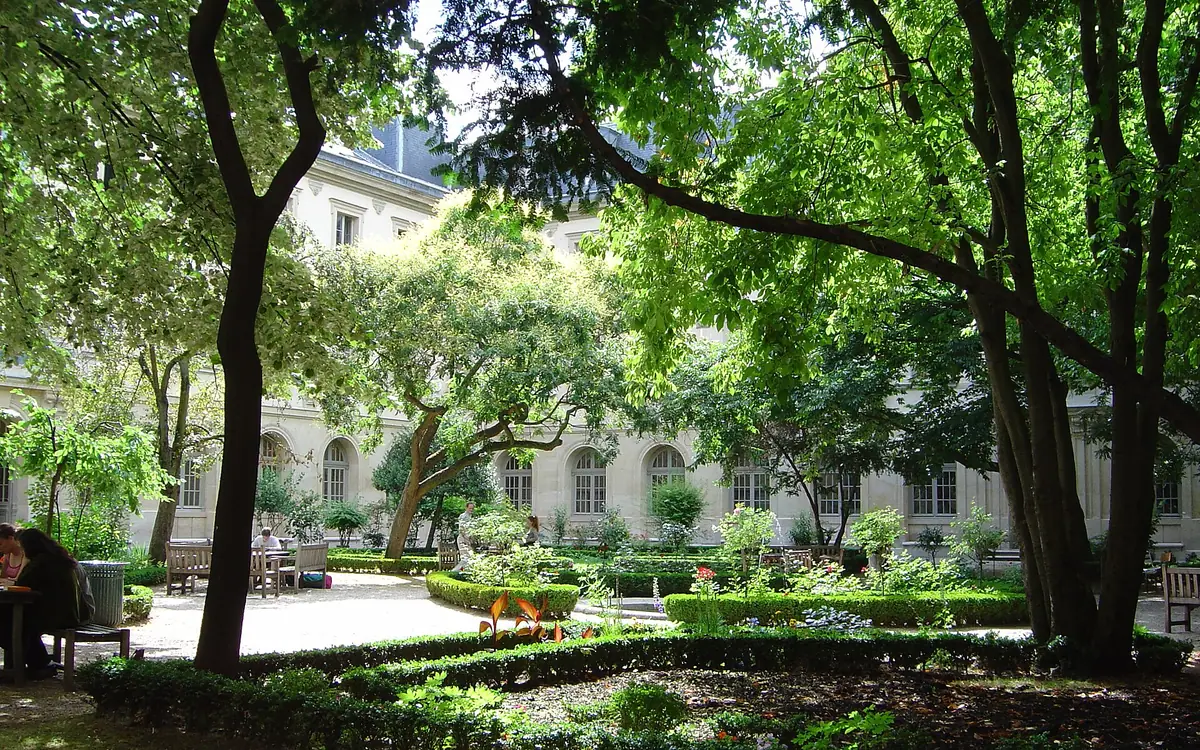
PSL — Université PSL
Collegiate Paris university (ENS, Dauphine, Mines Paris and more); two English bachelor's: AI in…
Paris2 programmes
Western Europe · May 2027 IB session · Autumn 2027 entry
Public university costs €178 a year; a private business school about 100 times that
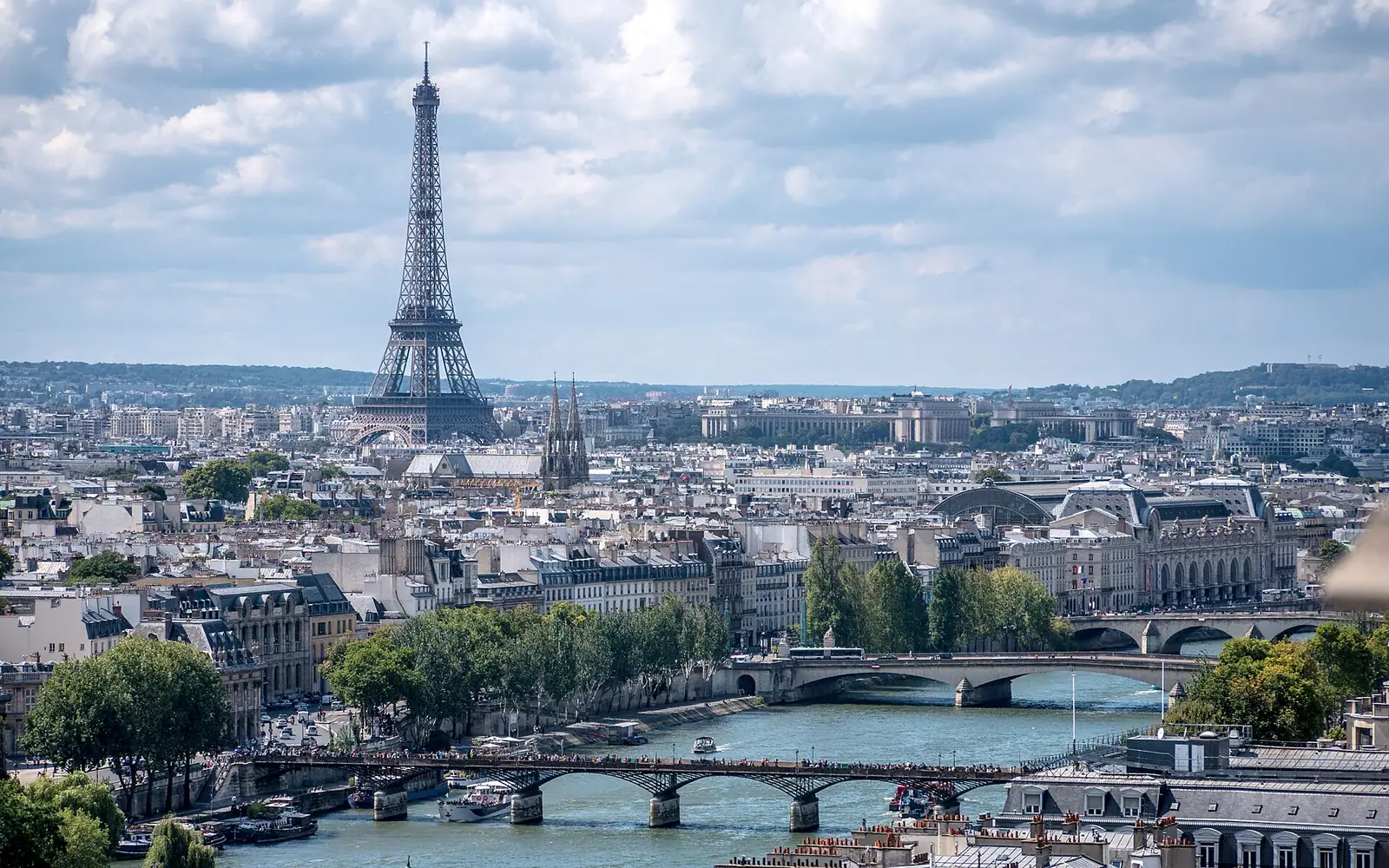
Paris and the Eiffel Tower
8 institutions
1 university
One institution · apply via Parcoursup
Sorbonne, Paris-Saclay, PSL, Grenoble Alpes and Strasbourg. EU students apply through Parcoursup: up to 10 unranked wishes, closing in March.
Collegiate Paris university (ENS, Dauphine, Mines Paris and more); two English bachelor's: AI in…
7 universities
7 institutions · apply to each directly
Sciences Po, École polytechnique, ESCP, ESSEC, EDHEC, emlyon and the American University of Paris. Each runs its own admissions, usually in rounds, with its own fees.
Sciences Po closes 4 November 2026, 13 January and 1 March 2027. École polytechnique closes 20 October 2026, 6 January and 8 February 2027 (14:00). EDHEC's first of five BBA sessions closes 3 November 2026.
Source
Social-sciences college on seven French campuses; English tracks in Le Havre, Menton and Reims…

Engineering grande école (l'X) in Palaiseau, south of Paris; one small, maths-heavy English Bachelor…
Business school on six European campuses (Berlin, London, Madrid, Paris, Turin, Warsaw); its English…
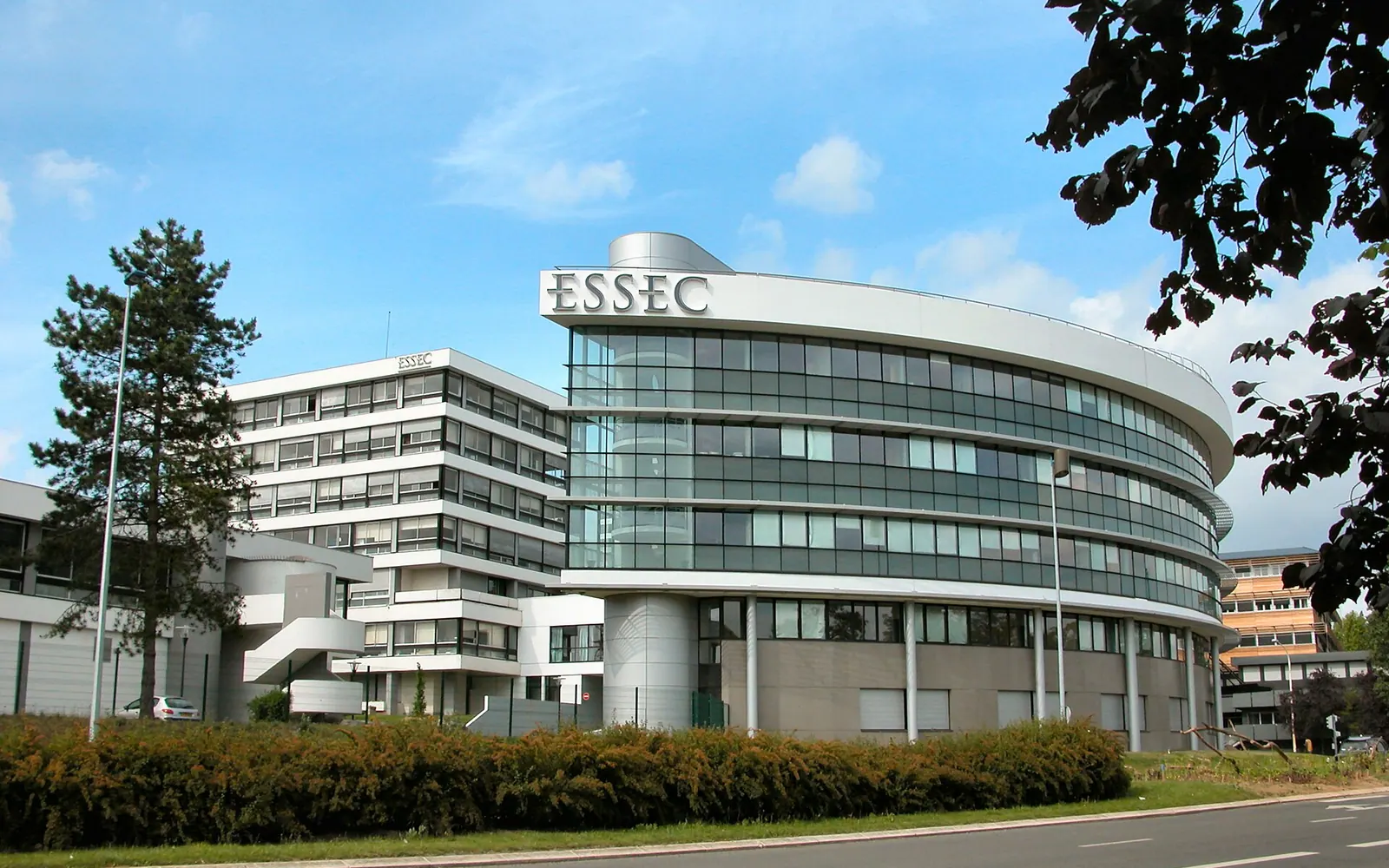
Business school at Cergy, west of Paris; a four-year English Global BBA and a…
Business school in Lille and Nice; a four-year International BBA taught in English (or…
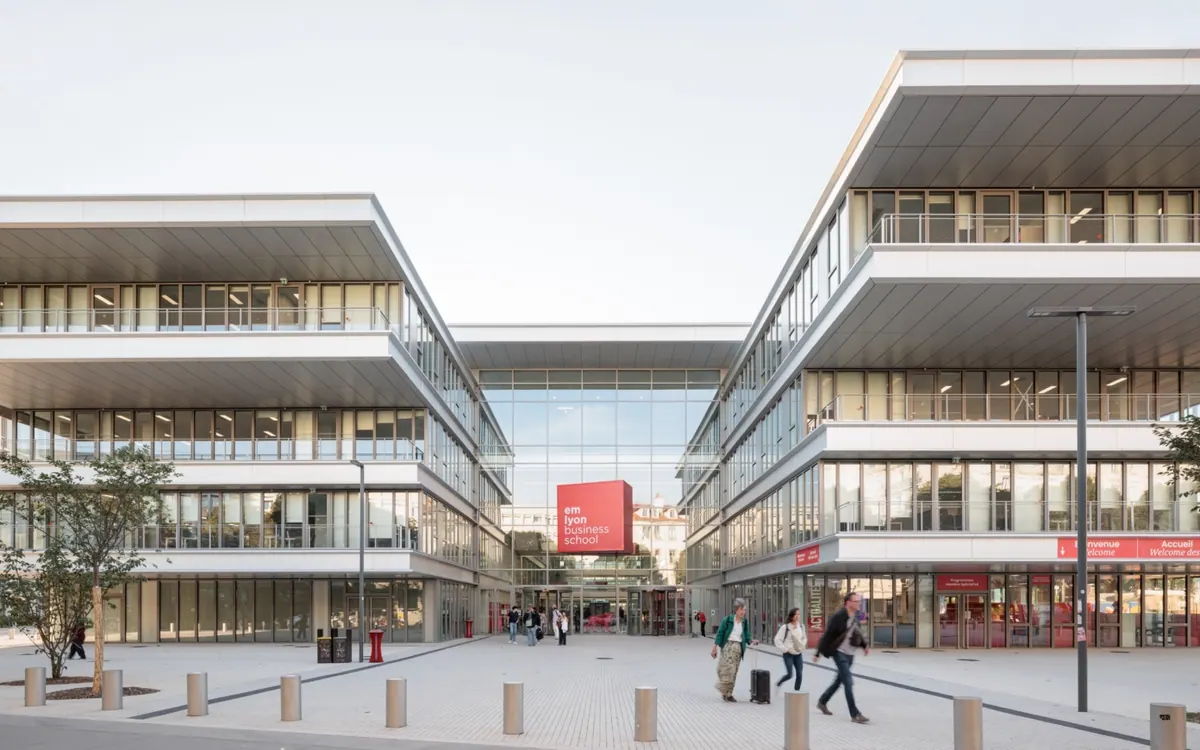
Lyon business school; a four-year Global BBA with an English track and up to…
Small American-style liberal-arts university in central Paris, all in English; 25 majors, discussion-based classes…
This browser cannot draw the globe. Every place is in the list below.
France splits sharply in two. Public universities are almost free — €178 a year for a licence in 2026/27, plus a €105 student-life contribution — and as an EU citizen you apply through Parcoursup, the national platform, in the winter…
France splits sharply in two. Public universities are almost free — €178 a year for a licence in 2026/27, plus a €105 student-life contribution — and as an EU citizen you apply through Parcoursup, the national platform, in the winter before you start. The grandes écoles and private institutions are the other France: Sciences Po, École Polytechnique's bachelor, the business-school BBAs and the American University of Paris all run their own admissions, look at your whole profile, interview you, and charge between roughly €15,000 and €27,000 a year. Almost all the English-taught bachelor's degrees sit on that second side.
Public university tuition is €178 a year for a licence in 2026/27
The English-taught options are overwhelmingly the expensive ones — the €178 public university largely teaches in French
France splits between the universités, open to any qualified applicant, and the selective écoles: grandes écoles of engineering, business and political science, most reached through two years of classes préparatoires.
France splits between the universités, open to any qualified applicant, and the selective écoles: grandes écoles of engineering, business and political science, most reached through two years of classes préparatoires. Alongside them sit short vocational routes (the BTS in lycées and the BUT in university institutes of technology), public schools of art and architecture, and thousands of private schools.
Three-year licence degrees at very low public tuition. Applied for through Parcoursup by EU students. Teaching is mostly in French.
The ministry sends EU, EEA and Swiss nationals to Parcoursup for a first-year licence.
Selective, often expensive schools. Several now run their own bachelor's degrees in English with direct entry after school: Sciences Po, École polytechnique's Bachelor of Science, the BBA and BSc programmes at ESCP, ESSEC, EDHEC and emlyon.
Foreign-diploma applicants usually apply on the school's own platform, in rounds that close from October onwards.
Two intense years in a lycée preparing for the competitive entrance exams of the grandes écoles. The traditional French route into an école, and almost unknown outside France.
Taught in French. Not covered for IB applicants on this site.
The BTS is a two-year technician diploma taught in lycées; the BUT is a three-year practical degree at a university institute of technology (IUT). Both are applied for through Parcoursup.
Not covered for IB applicants on this site.
Public post-secondary schools of art (45) and of architecture (22), separate from the universities, each with its own selection.
Not covered on this site.
Yes, an IB Diploma is accepted.
Yes
Not defined nationally. Selective programmes read HL subjects as the equivalent of French specialities — Sciences Po states there are no specific subject requirements, while the École Polytechnique Bachelor expects a strong mathematics and science background.
No national IB-to-French conversion is published. On Parcoursup and at the grandes écoles your IB record is assessed qualitatively as part of the dossier, alongside school reports and, at Sciences Po, written essays and an interview.
How France reads an IB Diploma.
These are the pages this section was written from. None has been signed off by a person yet, so confirm anything consequential at the source.
Service-Public — cost of enrolment in higher education (droits d'inscription 2026-2027 and CVEC)
CVEC — official payment portal (€105 for 2026-2027, who pays, who is exempt)
Étudiant.gouv — tuition fees in France, including differentiated fees for non-EU students
Campus France — Parcoursup 2026 (opening date, who must use it)
Parcoursup — official calendar page (French; still showing the 2026 cycle only on 24 September 2026)
Through Parcoursup
Decide which France you are applying to: public university via Parcoursup, or a grande école / private institution on its own timetable.
For a public university, create your Parcoursup account when the platform opens in January and enter your wishes before the March deadline — pre-registration on Parcoursup is compulsory for European students entering the first year of a licence.
Confirm each wish and complete your dossier by the early-April deadline, uploading transcripts, predicted IB grades and a motivation section for each wish.
For Sciences Po, École Polytechnique, ESSEC, ESCP, EDHEC or AUP, apply directly on the school's own platform in its own round — Sciences Po's 2027 rounds close on 4 November 2026, 13 January 2027 and 28 February 2027 (apply before 1 March).
Sit any interview the school requires; Sciences Po's is remote and worth half your score.
Accept an offer, pay the €105 CVEC online, then complete administrative enrolment with the institution and pay the tuition.
Apply for CAF housing assistance and set up French health cover once you arrive.
Public university licences split into non-selective (you are ranked but capacity-constrained) and selective (IUT, BTS, CPGE, art and design), all inside Parcoursup. The grandes écoles sit outside Parcoursup for foreign-diploma holders and select on dossier plus interview, sometimes plus a written test.
École Polytechnique: by 20 October 2026.
Priority Via French grande école or private institution
Later applications are considered after these.
Published as "September 17, 2026 to October 20, 2026 at 11:59 PM (CEST)", with interviews in early December and results in January 2027. Rounds 2 and 3 follow, so missing this is not fatal. You may apply once a year, either here or through Parcoursup, not both. Application fee €105.
Priority Via French grande école or private institution
Later applications are considered after these.
Four later sessions run to March; rounds 1 and 2 carry eligibility for Excellence scholarships.
EDHEC's international admissions page gives the first session as "from 1st October to 3rd November 2026", with an online English assessment and an online interview. Four later sessions run to March; applying in round 1 or 2 is what makes you eligible for its Excellence scholarships. Application fee €100.
Hard deadline Via French grande école or private institution
After this the door closes.
Results mid-January 2027. Interviews 8-18 December 2026.
Sciences Po publishes all three round deadlines as "Paris time (11.59pm)". Apply by this date and you get your result in mid-January 2027 — the school publishes only the month, not a result day. The interview window for this round is a separate entry.
Hard deadline
After this the door closes.
Published as "from 8 December 2026 until 18 December 2026". The remote interview is worth 50 of the 100 points, and Sciences Po states that missing it means rejection — so this window is a hard commitment, not a courtesy invitation. You are interviewed in this window if you applied in the 4 November 2026 round.
Priority Via French grande école or private institution
Later applications are considered after these.
Published as "October 21, 2026 to January 6, 2027 at 11:59 PM (CET)"; interviews in February-March, results in March 2027.
Hard deadline Via French grande école or private institution
After this the door closes.
Published as "Paris time (11.59pm)". Results at the beginning of April 2027 — the school publishes only the month. This is also the deadline to apply for the Émile Boutmy scholarship. The interview window for this round is a separate entry.
Hard deadline Via French grande école or private institution
After this the door closes.
Closes at 2 pm, not midnight.
Published as "January 7, 2027 to February 8, 2027 at 2 PM (CET)" - 2 pm, not midnight. Interviews in March-April, results in April 2027.
Hard deadline Via French grande école or private institution
After this the door closes.
The dual-degree pages say apply "before 1 March 2027", so aim for 28 February, 23:59 Paris time. Results in early May 2027 — the school publishes only the month. Dual degrees with Freie Universität Berlin, Hong Kong University, Keio, ESCP and Luiss also close on this date. The interview window for this round is a separate entry.
Hard deadline
After this the door closes.
Published as "from 8 March 2027 until 19 March 2027". You are interviewed in this window if you applied in the 13 January 2027 round. Missing the interview means rejection.
Hard deadline
After this the door closes.
Published as "from 13 April 2027 until 23 April 2027". You are interviewed in this window if you applied in the final round. Missing the interview means rejection.
Via French grande école or private institution
Every round above closes before this. Offers are made on predicted grades.
Applies to: EU, EEA and Swiss citizens
Via Parcoursup
Via French grande école or private institution
Each school runs its own rounds and dates. Check each school’s admissions page.
Applies to: EU, EEA and Swiss citizens
Via Parcoursup
In 2026 this was 19 January. The 2027 calendar is usually published in late autumn.
Not announced yet for 2027; in 2026 it was 19 January. The official Parcoursup calendar page (in French) published the 2026 cycle as "Du lundi 19 janvier au jeudi 12 mars 2026 : je m'inscris et je formule mes vœux". As of 29 September 2026 the page still shows only the 2026 calendar, so the 2027 opening date is not announced; the ministry normally publishes the next calendar in November or December. Context, not a milestone: the 2026 programme catalogue opened for browsing on 17 December 2025 ("Mercredi 17 décembre 2025 : je découvre la carte des formations Parcoursup 2026"), which is a browsing date rather than something you must do.
Applies to: EU, EEA and Swiss citizens
Hard deadline Via Parcoursup
After this the door closes.
In 2026 this was 12 March.
Applies to: EU, EEA and Swiss citizens
Hard deadline Via Parcoursup
After this the door closes.
In 2026 this was 1 April. An unconfirmed wish is lost.
Applies to: EU, EEA and Swiss citizens
Hard deadline Via Parcoursup
After this the door closes.
In 2026 it ran from 2 June to 11 July. Offers arrive before IB results, on your file and predicted grades.
Hard deadline
After this the door closes.
On 24 September 2026 the official Parcoursup calendar page still showed only the 2026 calendar, whose wording was "Jeudi 12 mars 2026 : dernier jour pour formuler mes vœux". No 2027 date exists yet; the ministry normally publishes the following year's calendar in November or December, so expect the 2027 date around mid-March 2027 and re-check the same page from December 2026. Aggregator sites already print 13 March 2027, but they label it prévisionnel (provisional) and no official page gives it yet, so do not plan around it.
Hard deadline
After this the door closes.
On 24 September 2026 the official Parcoursup calendar page still showed only the 2026 calendar, whose wording was "Mercredi 1er avril 2026 : dernier jour pour compléter mon dossier et confirmer mes vœux". A wish you do not confirm is lost, so this is the second hard gate and it falls about three weeks after the first. No 2027 date is published yet.
Hard deadline
After this the door closes.
Once the admission phase opens you must answer each offer within a short published window or lose it, so this is a period you have to be reachable in, not a single date. The 2026 calendar ran it as "Mardi 2 juin 2026 : début de la phase d'admission" through "Samedi 11 juillet 2026 : fin de la phase principale", with the complementary phase from 11 June 2026 to 10 September 2026 and response deadlines suspended during the baccalauréat written exams. The 2027 equivalents were not yet published on 24 September 2026.
There is no fixed national date: the CVEC portal says (in French) to pay "au plus près de votre inscription effective" and that payment must be made "préalablement à son inscription", because the attestation is what lets you enrol. In practice that means from early July once you have definitively accepted a place. Context, not a milestone: the same page gives 31 May 2027 as the close of the 2026-2027 refund campaign, which only concerns students who paid and were in fact exempt.
Concentrated almost entirely in the grandes écoles and private institutions — Sciences Po's English-track programmes, the École Polytechnique Bachelor of Science, ESCP's BSc in Management, the BBAs at ESSEC, EDHEC and emlyon, and the American University of Paris.
Concentrated almost entirely in the grandes écoles and private institutions — Sciences Po's English-track programmes, the École Polytechnique Bachelor of Science, ESCP's BSc in Management, the BBAs at ESSEC, EDHEC and emlyon, and the American University of Paris. No official national count is published.
Set institution by institution. ESCP asks for IELTS 6.5 or equivalent for its BSc in Management. Sciences Po expects high English proficiency and sets language requirements per programme. Whether IB English A or B is accepted in place of a test is not confirmed here; check with each institution.
Not for English-taught programmes
Public universities: €178 a year for a licence (reduced rate €118), €255 for a master's, €398 for a doctorate, and €2,620 for an engineering diploma.
Public universities: €178 a year for a licence (reduced rate €118), €255 for a master's, €398 for a doctorate, and €2,620 for an engineering diploma. On top of that every student pays the CVEC of €105. Grandes écoles are separate: Sciences Po undergraduate is €0–€14,900 depending on household income for EEA fiscal residents; École Polytechnique's Bachelor of Science is €15,900; ESCP's BSc in Management is €20,800 for the 2027 intake. (2026/27 (ESCP figure is the 2027 intake))
Public universities charge differentiated fees to non-EU/EEA students: €2,902 a year for a licence and €3,950 for a master's in 2026/27, set by decree no. 2026-385 of 19 May 2026; universities may exempt up to 30% of them. Grandes écoles: Sciences Po charges a flat €14,900 to students with fiscal residence outside the EEA; École Polytechnique's Bachelor is €19,200; ESCP's BSc is €26,800 for the 2027 intake. (2026/27 (ESCP figure is the 2027 intake))
Sciences Po charges €150, non-refundable and waived only for refugees. École Polytechnique's Bachelor charges €105, EDHEC's BBA €100 and ESCP's BSc €80. Parcoursup itself is free.
About €600-800 a month for housing, food and transport, according to Campus France; Paris costs noticeably more. (Campus France guidance, undated)
As an EU/EEA citizen you need no visa and no residence permit.
As an EU/EEA citizen you need no visa and no residence permit. Travel on your passport or national ID card. There is no compulsory EU registration in France, but you will need a French bank account (for CAF and rent), a French phone number and a social-security number, so start those in your first weeks. Non-EU students apply for a VLS-TS student visa through the Études en France procedure before departure.
EU/EEA citizens have full labour-market access in France with no permit and no hour cap. Non-EU students on a student residence permit may work up to 964 hours a year (60% of the legal annual working time) without a separate work authorisation (service-public.gouv.fr).
CROUS student residences are cheap but scarce and allocated mainly on social criteria. Most students rent studios or shared flats privately, and French landlords normally demand a French guarantor — the state Visale scheme exists to replace one, and is worth arranging early. Paris is very expensive and very competitive; Lille, Strasbourg, Grenoble, Lyon and Nice are far easier. Start in May or June for a September start.
Bring a European Health Insurance Card. Students staying for a full degree register with the French health system through etudiant-etranger.ameli.fr to obtain a social-security number and a carte Vitale, then usually add a mutuelle (top-up insurance) because the state reimburses only part of most costs.
If you hold French citizenship, you do not register a right of residence or prove your fee status, and France's own student grants and loans are open to you on their ordinary terms; check them, because some depend on where you have lived.
Your IB is still a foreign qualification here, so the IB entry rules still apply to you.