
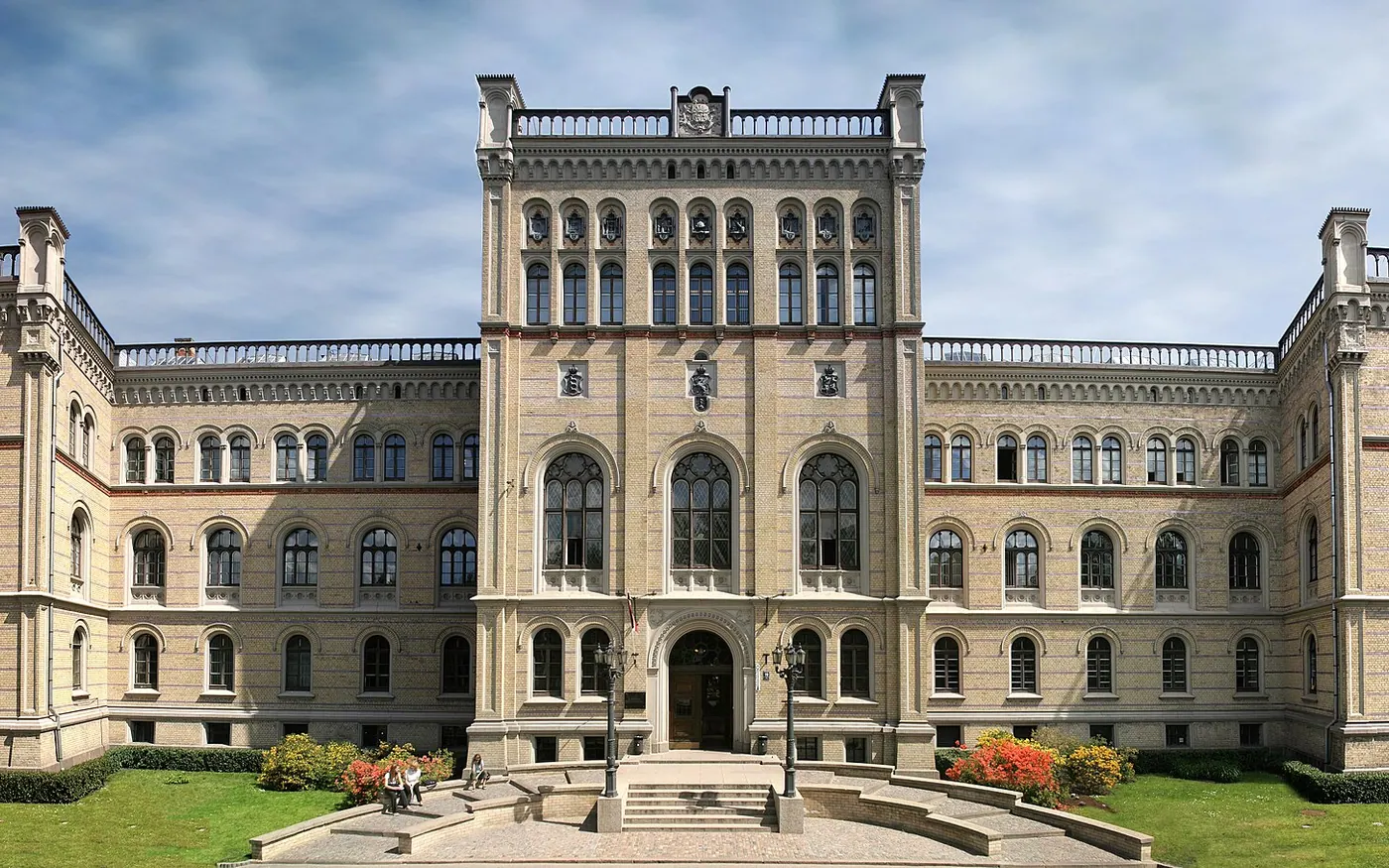
LU — University of Latvia
Comprehensive university in Riga; 10 English-taught bachelor's plus Medicine and Dentistry, with some state-funded…
Riga12 programmes
Baltics · May 2027 IB session · Autumn 2027 entry
Cheap, close to Denmark, and the Nordic route into medicine
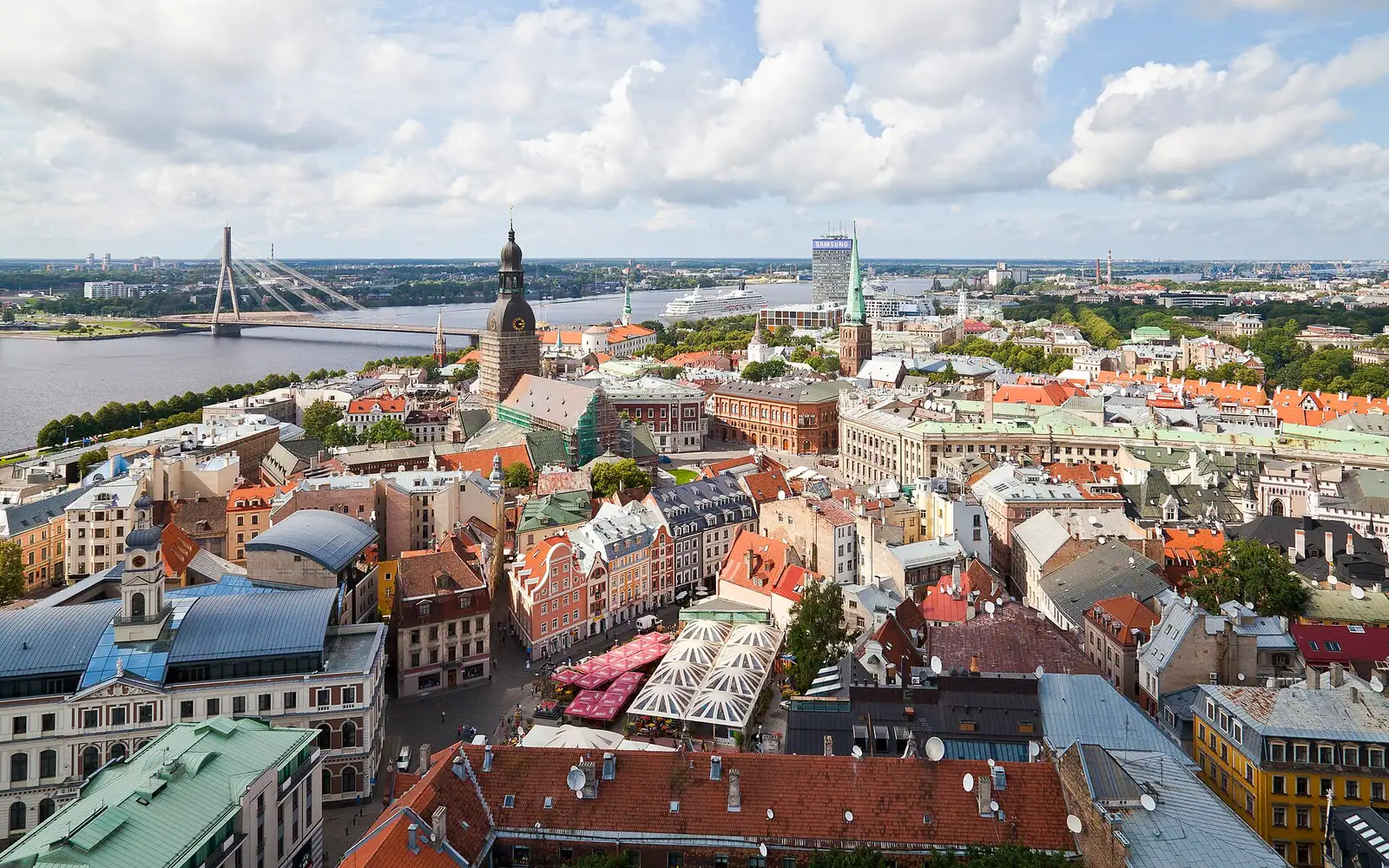
Riga from St Peter’s
9 institutions
Comprehensive university in Riga; 10 English-taught bachelor's plus Medicine and Dentistry, with some state-funded…
Technical university with 14 English-taught bachelor's in engineering, IT, business and maritime studies, on…

Riga health-sciences university with English-taught Medicine, Dentistry and a business bachelor; places are ranked…
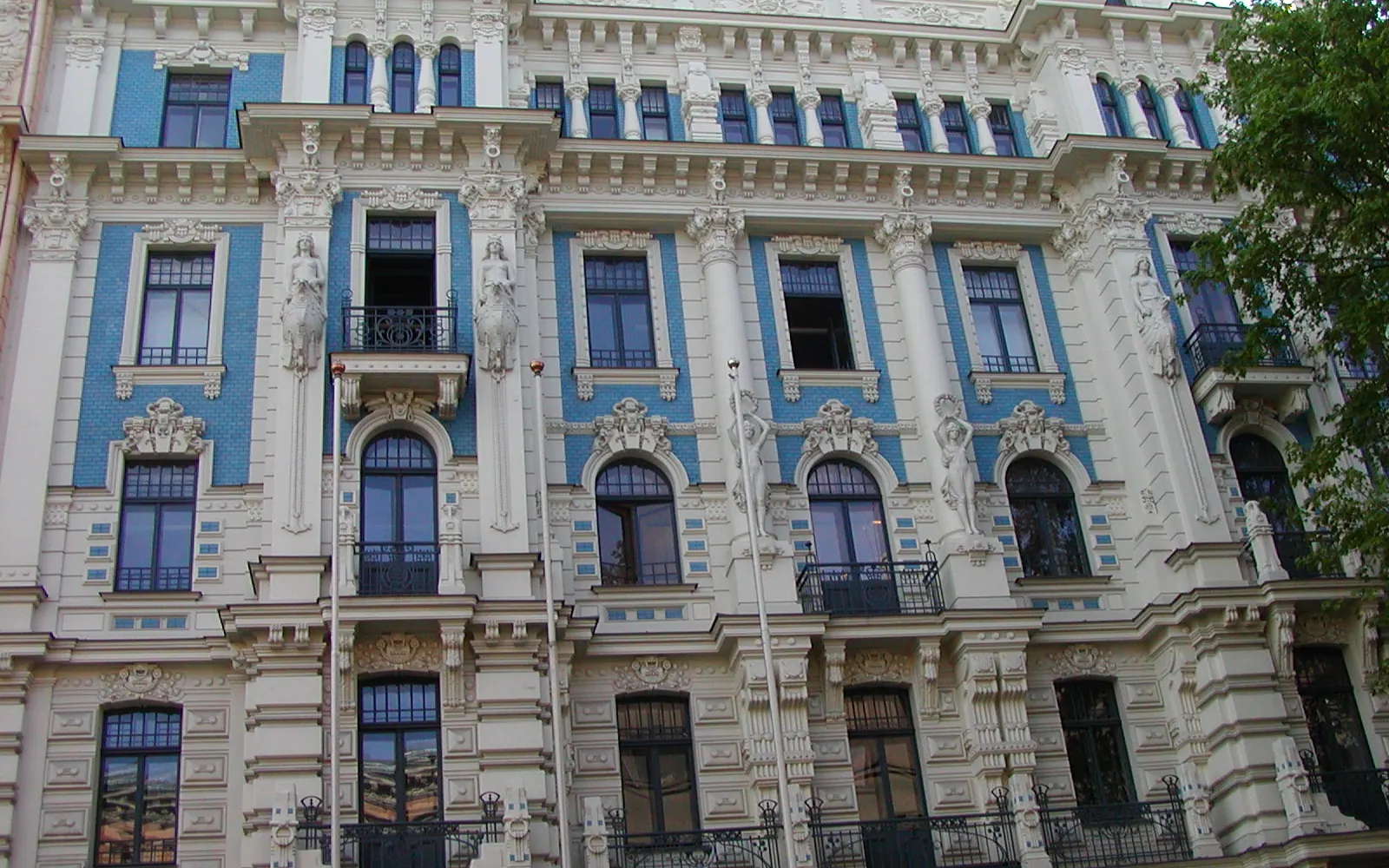
Business school in Riga, partnered with the Stockholm School of Economics; one English-taught BSc…

Riga business university with five English-taught professional bachelor's (business, logistics, communication, tourism, computer systems).
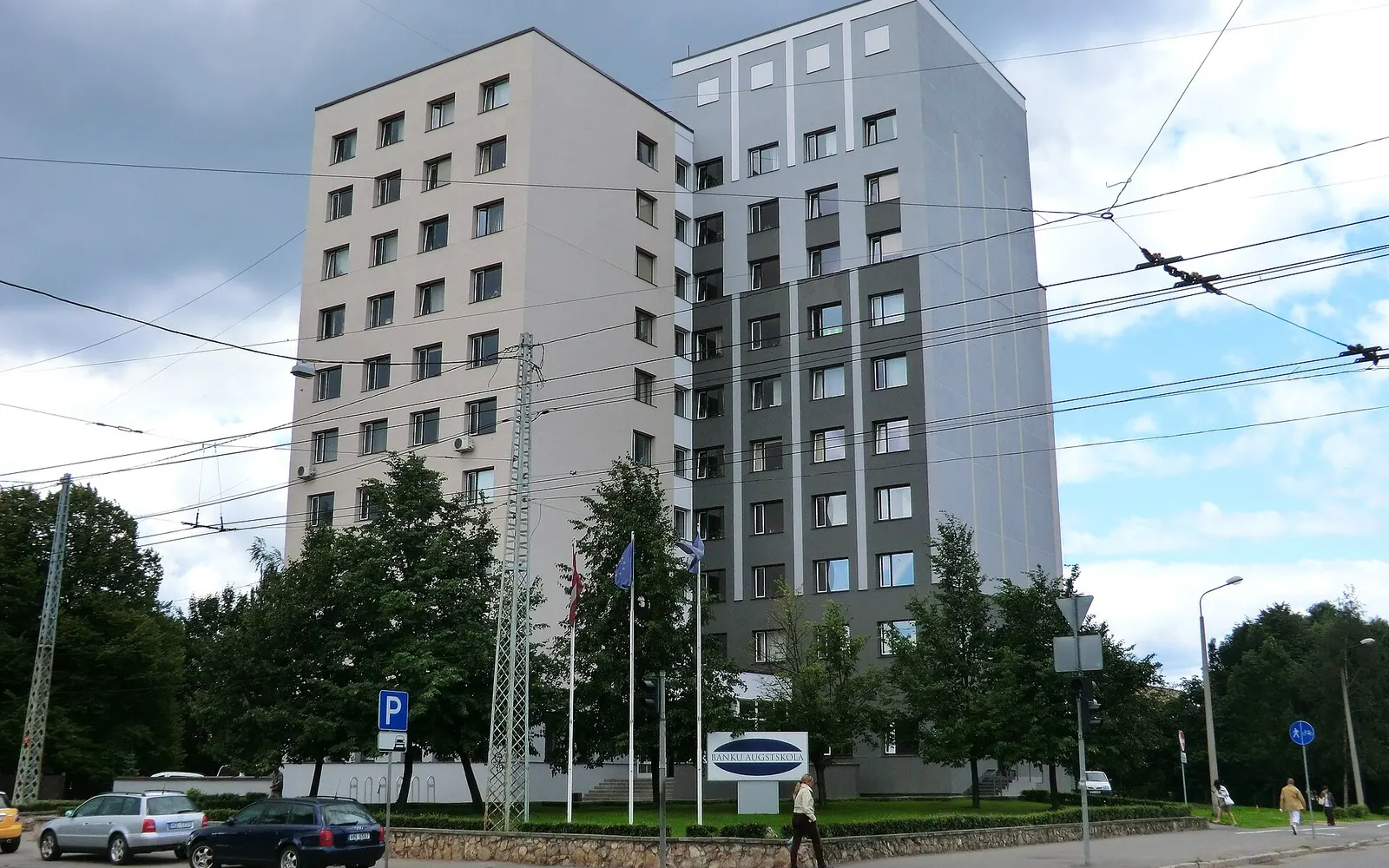
Business school of the University of Latvia in Riga; three English-taught professional bachelor's in…
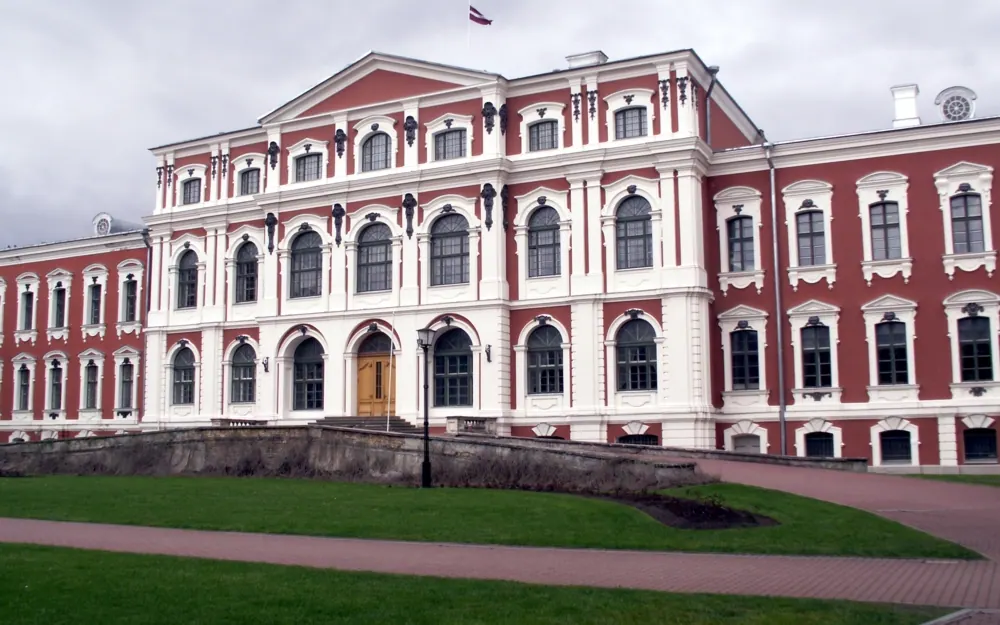
Jelgava university of life sciences and technologies with three English-taught bachelor's and a six-year…
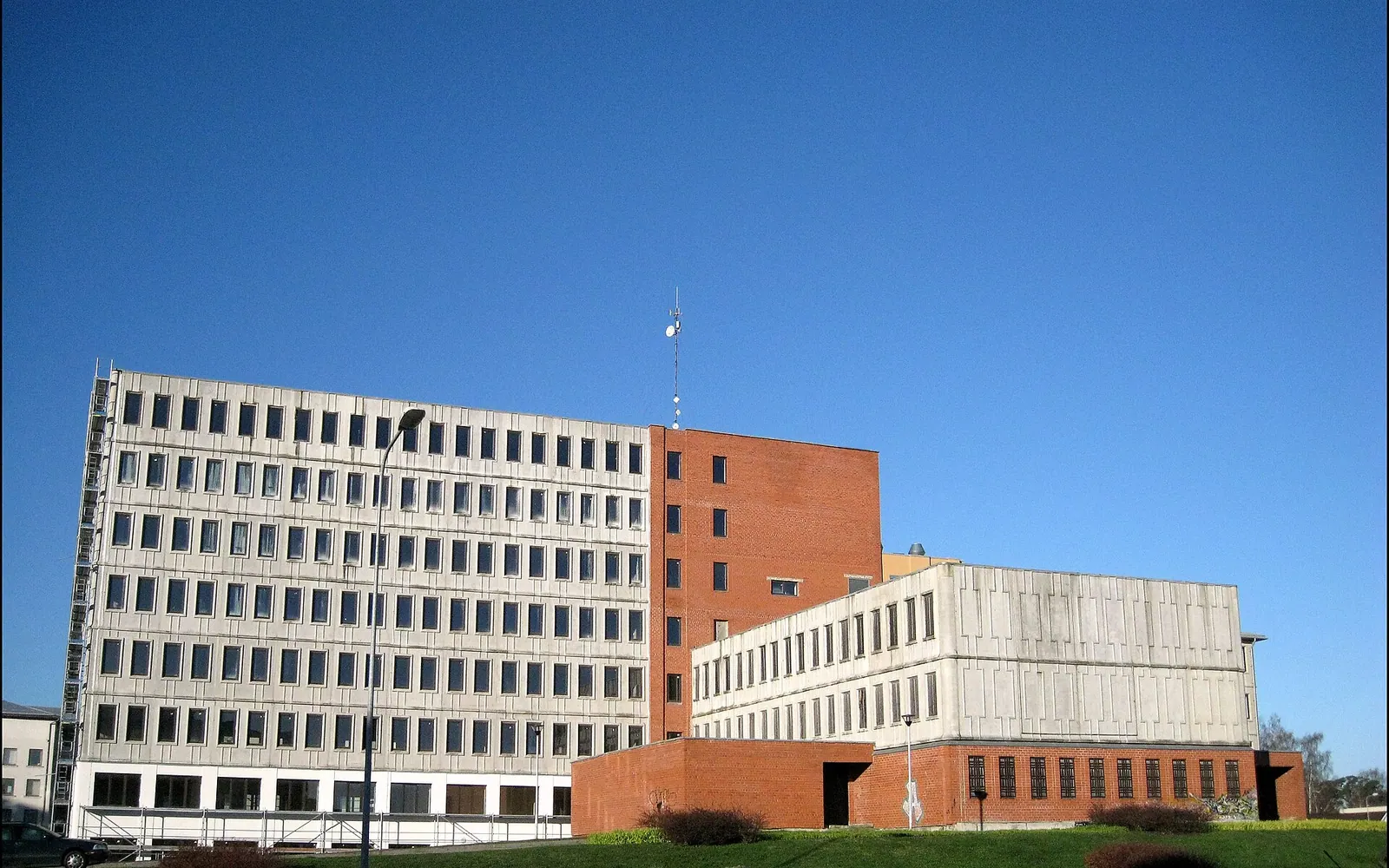
Coastal university of applied sciences in Ventspils; three English-taught bachelor's: Computer Science, Business Administration…
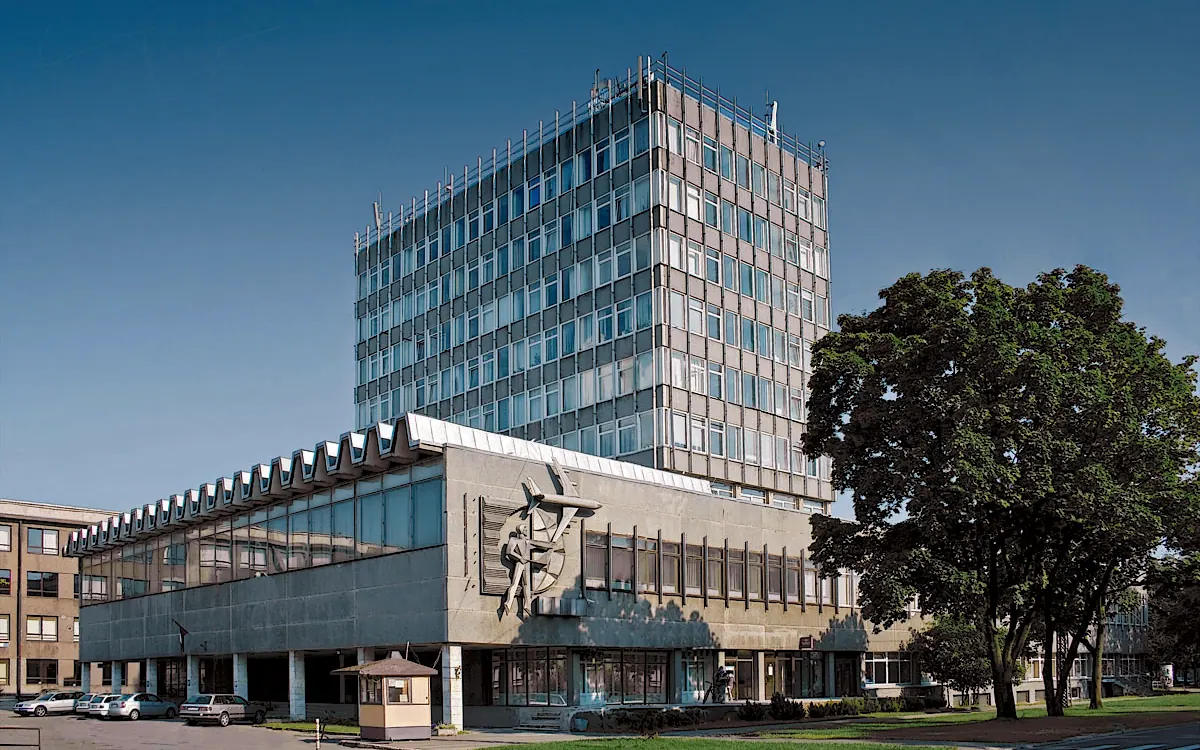
Applied university in Riga with seven bachelor's in English or Latvian: IT, electronics, robotics…
This browser cannot draw the globe. Every place is in the list below.
Latvia is a three-hour flight from Denmark, uses the euro, and charges a fraction of what the UK or the Netherlands charge.
There is no central admissions system for international students: you apply directly to each university, and the one step you cannot skip is getting your IB Diploma recognised by the Academic Information Centre. The real draw is Riga Stradins University, whose English-taught medicine and dentistry programmes take large numbers of Scandinavian students who did not get a place at home.
Tuition is low by European standards - some bachelor programmes are under EUR 1,600 a year
There is no central portal - you apply to each university separately and each has its own deadlines and fees
Every Latvian higher education institution is an augstskola.
Every Latvian higher education institution is an augstskola. The universitāte is the kind that offers academic as well as professional degrees; the other augstskolas, the akadēmijas and the koledžas offer professional programmes. The koledža is the one foreign guidance rarely mentions: a two-to-three-year first-level professional qualification that you can build on later.
Academic and professional bachelor's degrees — the University of Latvia, Riga Technical University, Rīga Stradiņš and others. Where most English-taught bachelor's and Medicine sit.
Non-university institutions teaching professional bachelor's degrees, often more applied and more regional. Several private business schools, including SSE Riga and Turība, are in this group and teach in English.
Also the umbrella word for all higher education institutions, which is confusing on first reading.
Art and music academies admitting on portfolio or audition. The Art Academy of Latvia offers no English-taught bachelor's.
Not covered in detail on this site.
First-level professional higher education, two to three years after secondary school. Qualifies you to work in the occupation or to continue into a related higher education programme.
Not covered for international applicants on this site.
Yes, an IB Diploma is accepted.
Yes
Set by each university and each programme rather than nationally. RSU's admissions system applies programme-specific subject requirements; the exact IB subject and grade rules are not published; ask the programme.
The Academic Information Centre (AIC) compares your foreign qualification with the Latvian education system and issues a recognition statement, which the university then uses as the basis for its admission decision. No IB-to-Latvian grade conversion table is published.
How Latvia reads an IB Diploma.
These are the pages this section was written from. None has been signed off by a person yet, so confirm anything consequential at the source.
Apply directly to each university.
Pick the programme first. There is no national application system for international students, so your deadlines are whatever the university says they are.
Apply to the Academic Information Centre for recognition of your IB Diploma. It costs EUR 54.60 and the university cannot admit you without a positive statement.
Submit the university's own online application with your transcript, passport and proof of English, and pay the application fee (EUR 100 at RSU, EUR 250 at Turiba).
Sit whatever the programme requires: RSU runs programme-specific assessments, SSE Riga runs a four-hour online test in April followed by interviews in May.
Accept the offer and sign the study agreement. RSU expects payment within two weeks of receiving the offer, and charges medicine and dentistry students a one-off EUR 1,800 registration administration fee.
As an EU citizen, travel to Latvia freely, then complete the registration formalities and collect a Registration Card if you are staying more than three months.
Selection is per programme. Medicine and dentistry at RSU are competitive and close earlier for non-EU applicants. SSE Riga is selective: it requires minimum grades of 6 on a scale of 10 in Mathematics and English, runs its own admissions test covering mathematical reasoning, logical thinking and English, interviews the top performers, and takes 150 students. Latvia does operate state-funded ('budget') study places, but whether an EU citizen from Denmark can compete for them is not confirmed here; ask the university.
Riga Stradins University: by 1 April 2027.
Hard deadline
After this the door closes.
RSU's table prints the opening as "1 Sep 2025", which is the previous intake's date: the master's row for the same intake reads "1 Sep 2026 – 1 Jul 2027", and the February tab opens this programme on 1 Sep 2026. So the window opened on 1 September 2026 and is open now. The date that matters is the close, 1 July 2027, which is not in doubt.
Hard deadline
After this the door closes.
Published as "From February 1 to August 1", with no year given, so this site assumes the 2027 intake. Studies begin at the end of September. Turiba also runs a winter intake, "From August 2 to December 1" for a February start; that is a different intake, which is why it has no card of its own: a May 2027 IB candidate cannot start in February 2027 and would be looking at February 2028. All Turiba programmes are available in both intakes.
Hard deadline
After this the door closes.
Non-EU applicants close earlier than EU applicants to leave time for the residence permit.
Hard deadline
After this the door closes.
Published inside the non-EU/EEA window as "1 March 2027 to 1 May 2027 (1 April 2027 for citizens of 'Additional Assessment' countries)". Non-EU applicants close earlier than EU applicants to leave time for the residence permit.
Hard deadline Via Latvian institution
After this the door closes.
Published as "April 6, 2027". Top 150 candidates are admitted.
Hard deadline Via Latvian institution
After this the door closes.
Mathematics, logical reasoning and English, about four hours. Top performers are interviewed 11–28 May.
Published as "April 17, 2027, starting at 10:00" Eastern European Time — eleven days after the application closes, so there is no time to prepare for it once you have applied. Prepare before 6 April, not after.
Applies to: applicants from outside the EU, EEA and Switzerland
Hard deadline Via Latvian institution
After this the door closes.
Hard deadline
After this the door closes.
Published as "from May 11 till May 28, 2027". Only candidates who do well in the 17 April test are invited, and the window falls squarely across the May 2027 IB examination session — so if SSE Riga is on your list, expect to be interviewed during your exams and plan for it now rather than in May.
Via Latvian institution
A month before IB results.
Published as "June 8, 2027" for applicants from EU countries; applicants from non-EU countries hear four days earlier, on 4 June 2027, which is context rather than your date.
Applies to: EU, EEA and Swiss citizens
Hard deadline Via Latvian institution
After this the door closes.
Medicine, Dentistry and International Business & Start-up Entrepreneurship. Five days before IB results.
Published as "1 Mar – 1 Jul 2027". Worth knowing before you plan around the July closing date: RSU allows IB graduates, alongside German Abitur holders and applicants from Italy, Portugal and the Netherlands, to send their school graduation documents after the deadline provided every other application document is in by it. That concession is published on this page with the previous cycle's year on it ("graduating during the summer of 2026 … submitted by 1 July 2026") and RSU had not restated it for 2027 by 23 September 2026, so confirm it with RSU admissions before you rely on it.
Via Latvian institution
Hard deadline
After this the door closes.
Published as "July 25, 2027" for applicants from EU countries. This is the day an offer stops being yours: you have from 8 June to register, and a place you have not registered by this date is gone. Non-EU applicants must register by 20 June 2027, over a month earlier, to leave time for a residence permit — not your deadline, but it explains why the EU date is the later one. Studies begin 23 August 2027.
Hard deadline Via Latvian institution
After this the door closes.
Published as "February 1 to August 1" with no year. The only window here that stays open after IB results.
Via Latvian institution
There is no central application for international students. Check each programme page.
This intake starts in February 2027, before a May 2027 IB Diploma is awarded, so a May 2027 candidate cannot use it.
Moderate. Concentrated in medicine and health at RSU, business at SSE Riga, Turiba and BA School of Business and Finance, and engineering/IT at RTU.
Moderate. Concentrated in medicine and health at RSU, business at SSE Riga, Turiba and BA School of Business and Finance, and engineering/IT at RTU. Outside those areas the choice thins out quickly. No exact national count is published.
Each university sets its own standard. Turiba requires its own English test unless you hold a certificate, and accepts IELTS 5.5, TOEFL iBT 72, TOEFL PBT 513, TOEIC 605, Cambridge FCE/CAE/CPE 160, PTE Academic 51, Linguaskill 160, Duolingo 100 or LanguageCert ESOL B2. SSE Riga requires B2, certified by an international testing authority for applicants educated outside the EU. Whether IB English A or B is accepted in place of a test is not confirmed here - ask the programme directly.
Not for English-taught programmes
Varies entirely by university. Study in Latvia states tuition 'range from less than EUR 1 600 per year for certain bachelor's degree programmes (3-4 years of studies)' upwards.
Varies entirely by university. Study in Latvia states tuition 'range from less than EUR 1 600 per year for certain bachelor's degree programmes (3-4 years of studies)' upwards. SSE Riga charges EU/EEA/EFTA students EUR 5,200 a year after an automatic EUR 2,400 Baltic-EU scholarship is deducted from the EUR 7,600 list price. RSU does not distinguish EU from non-EU rates. (Study in Latvia figure undated on its page; SSE Riga figure current as published on 2026-09-22)
RSU 2026/2027: Medicine EUR 13,500 a year (6-year programme), Dentistry EUR 15,500 a year (5-year programme), International Business & Start-up Entrepreneurship EUR 3,300 a year - the same rates apply to EU and non-EU students. SSE Riga: EUR 7,600 a year for non-EU/EEA/EFTA students, EUR 22,800 over the three-year programme. (2026/2027)
RSU EUR 100 (EUR 30 for Latvian citizens), plus a one-off registration administration fee of EUR 1,800 for Medicine and Dentistry. Turiba EUR 250, non-refundable.
EUR 450-700 a month, covering food, housing, utilities, transport and everyday costs, depending on accommodation and lifestyle (Undated on the source page (as of September 2026))
As an EU/EEA citizen you can travel to Latvia freely and stay three months with no immigration procedure at all.
As an EU/EEA citizen you can travel to Latvia freely and stay three months with no immigration procedure at all. For a longer stay you complete registration formalities with the Office of Citizenship and Migration Affairs and receive a Registration Card. Non-EU students must obtain a residence permit before arriving in Latvia, arranged through the university's international office. After finishing a bachelor's degree, non-EU graduates get four months to find further study or work.
A full-time bachelor's student at a Latvian university may work up to 20 hours a week during term and up to 40 hours a week during holidays. Master's and doctoral students have no restriction. The Study in Latvia FAQ does not distinguish EU from non-EU students on this point, but non-EU students additionally need a work permit arranged with the employer.
Universities run dormitories and most international offices help arrange a room; RSU's 'Your Start in Riga' pages cover this. Private rental in Riga is cheap by Nordic standards and there is no housing shortage of the kind you see in Copenhagen or Amsterdam. Arrange it once you have accepted an offer.
As an EU citizen bring your European Health Insurance Card (EHIC, the blue card) from the country where you are insured for necessary care. Latvia's public system covers emergencies; most international students also take out private insurance. Non-EU students must arrange insurance as part of the residence permit application.
If you hold Latvian citizenship, you do not register a right of residence or prove your fee status, and Latvia's own student grants and loans are open to you on their ordinary terms; check them, because some depend on where you have lived.
Your IB is still a foreign qualification here, so the IB entry rules still apply to you.