
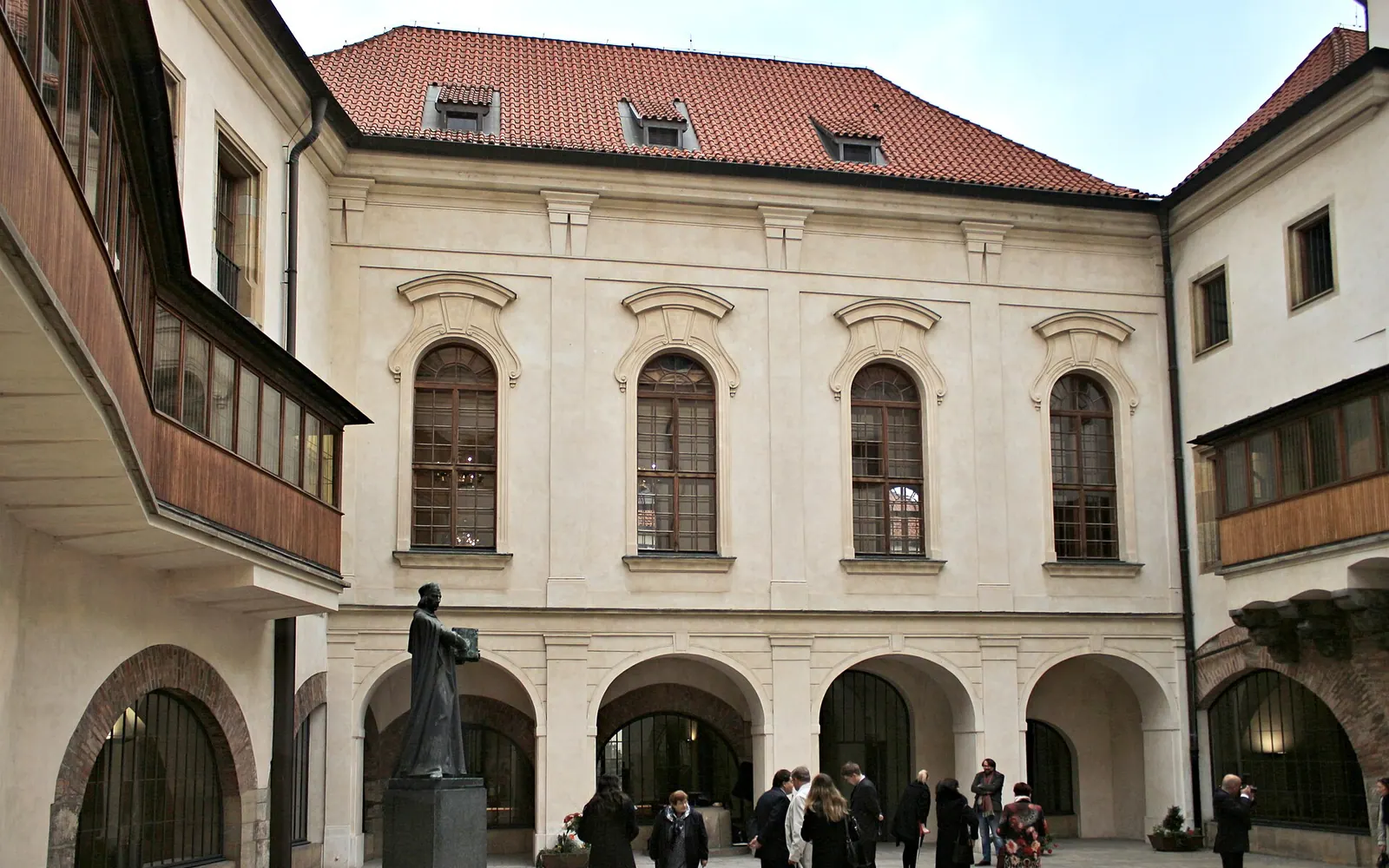
CU — Charles University
Prague university where each faculty admits its own: English bachelor's in social sciences, CS…
Prague16 programmes
Central Europe · May 2027 IB session · Autumn 2027 entry
Your IB skips the paperwork everyone else has to do
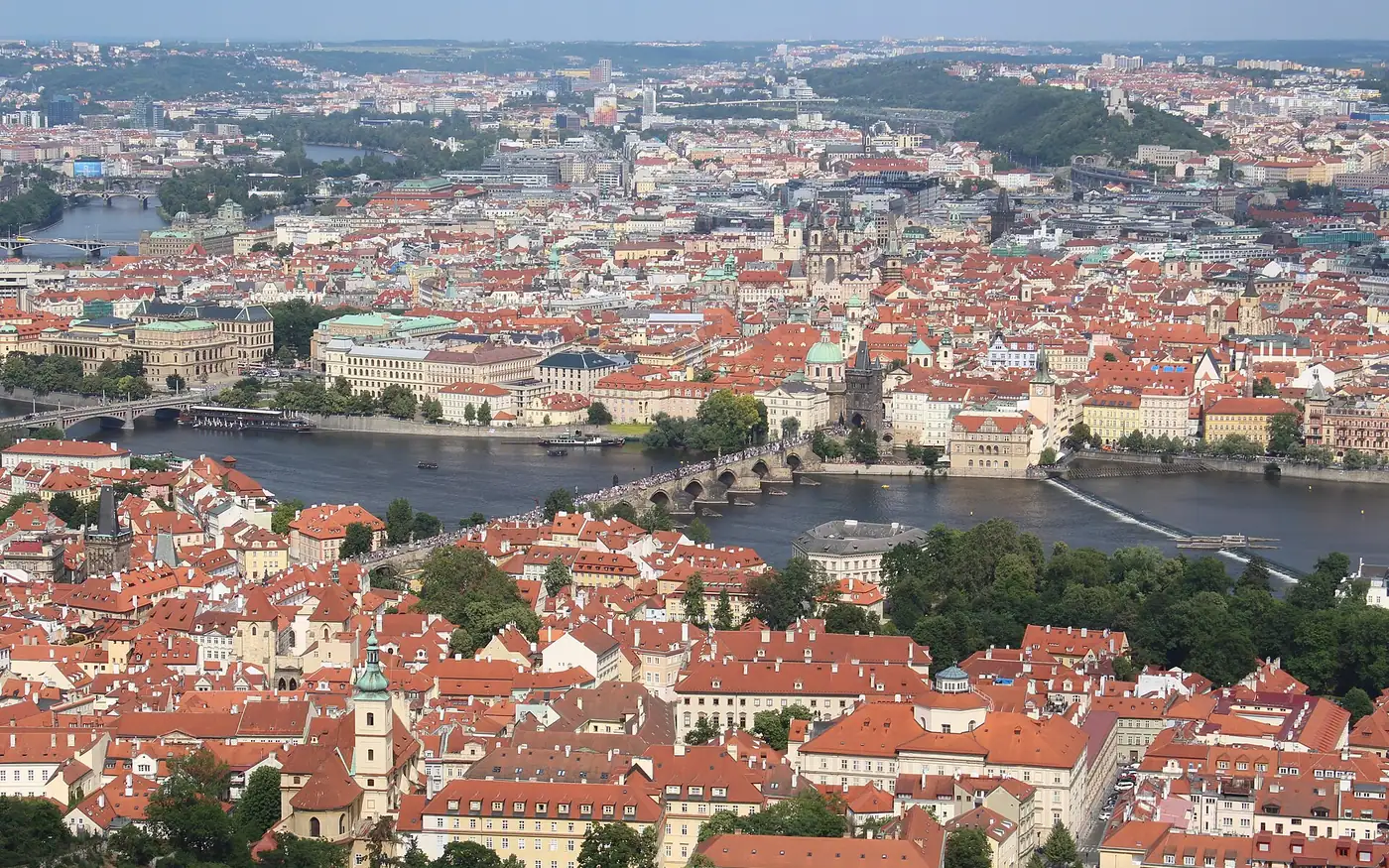
Prague from Petřín
13 institutions
Prague university where each faculty admits its own: English bachelor's in social sciences, CS…
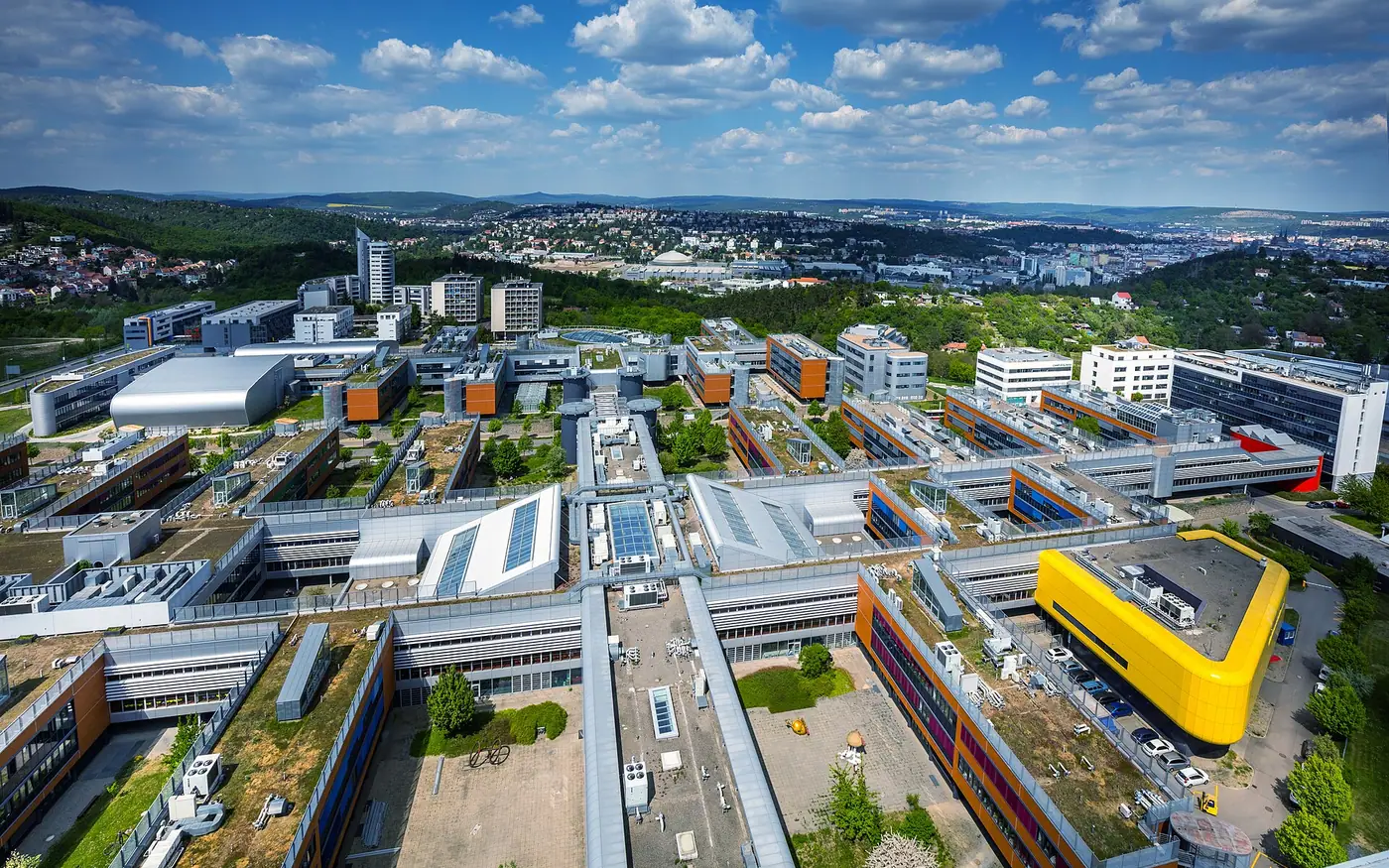
Public university in Brno with 11 English-taught bachelor's across five faculties, plus General Medicine…
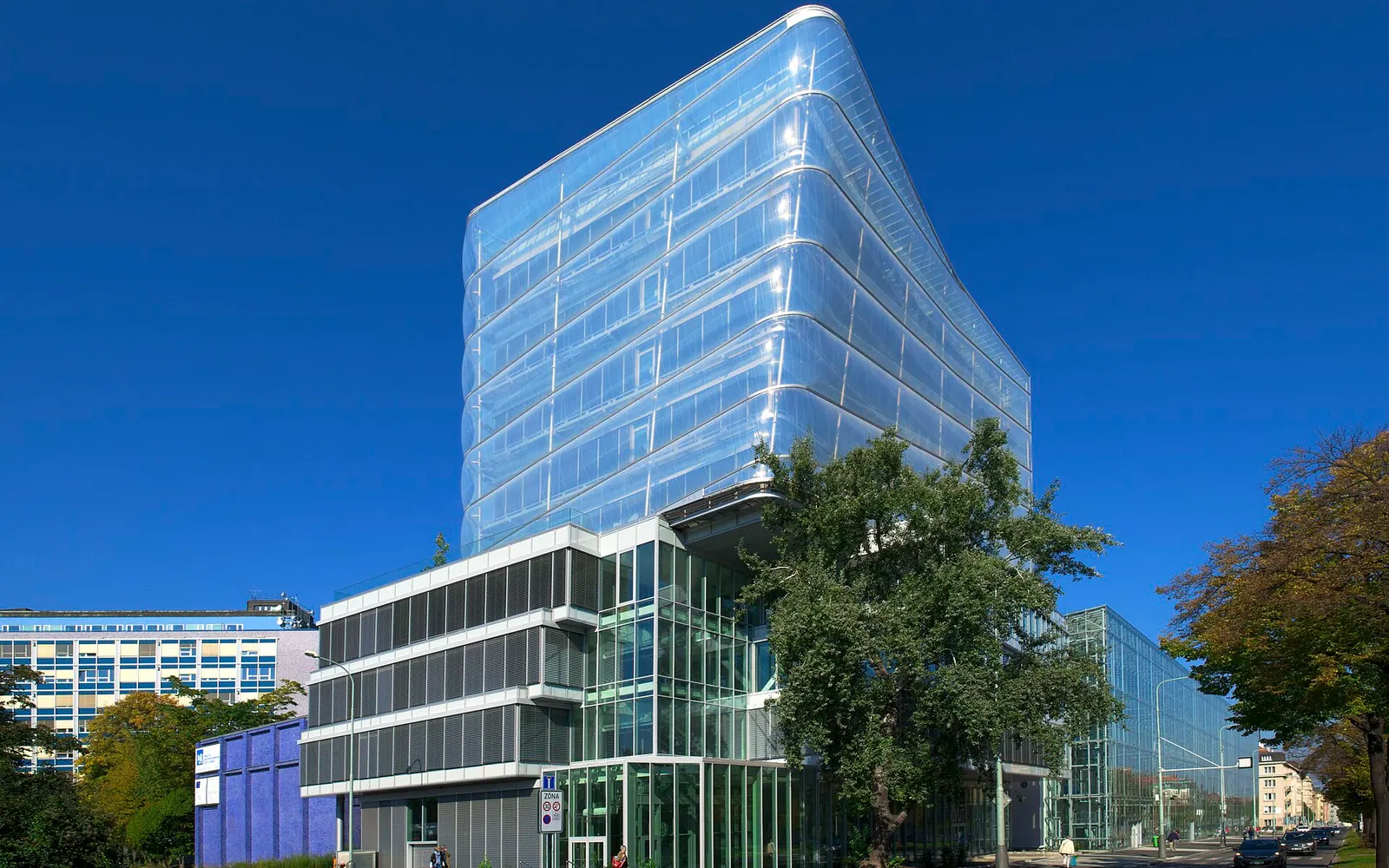
Prague technical university: 11 English bachelor's in seven faculties and an institute, from civil…
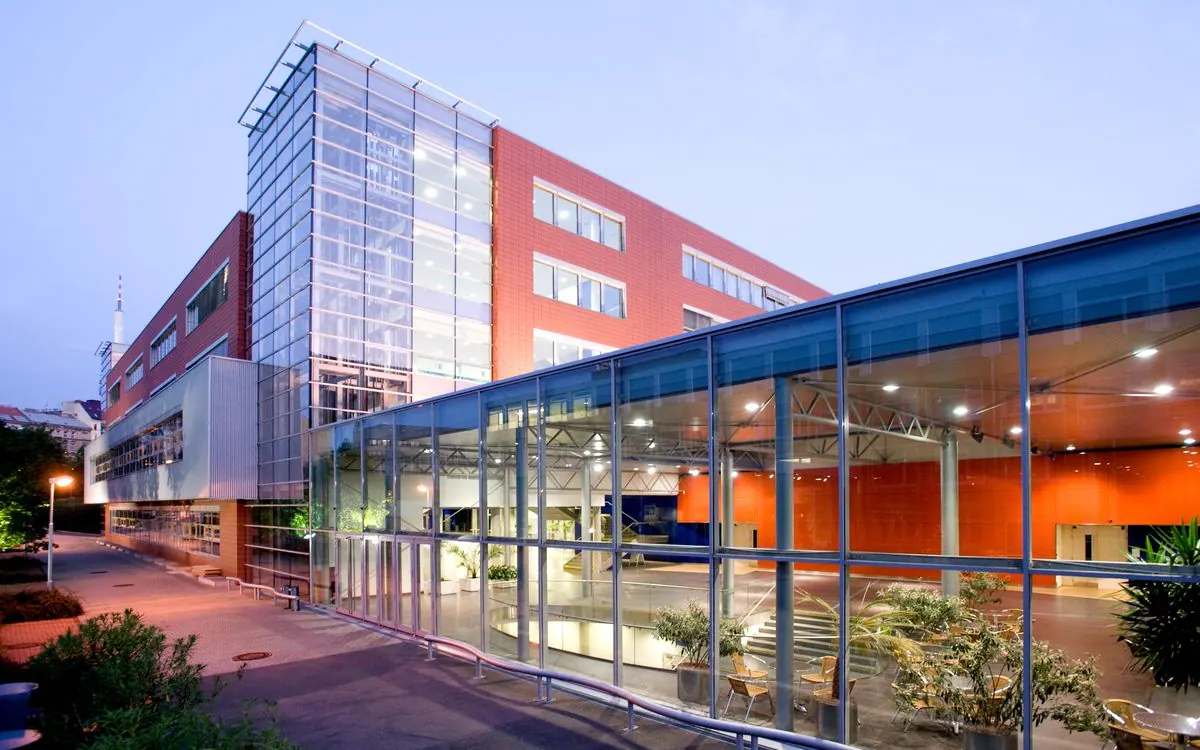
Economics and business university in Prague's Žižkov, founded 1953; 8 English bachelor's chosen by…
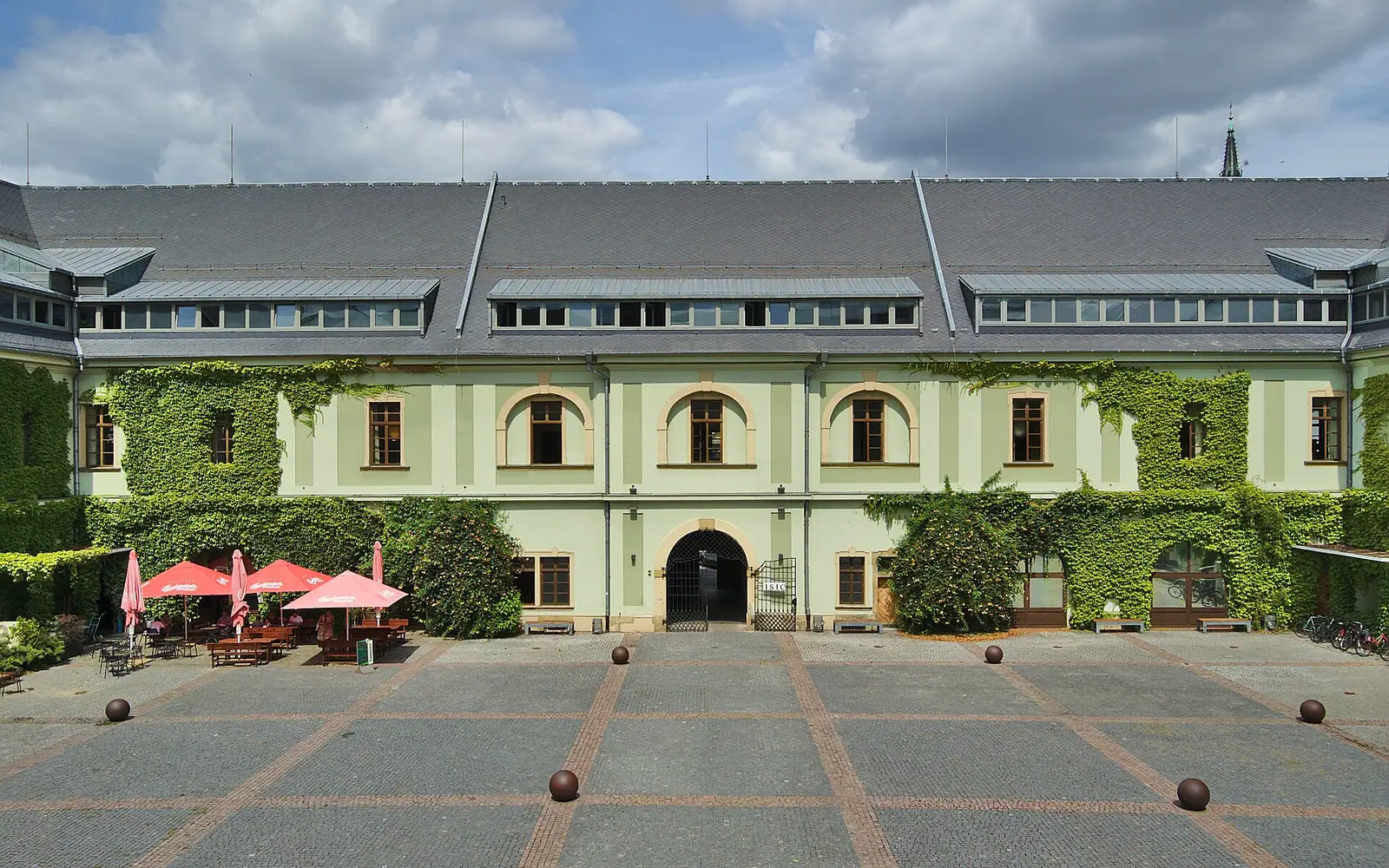
Founded in 1573 in Olomouc; seven English-taught degrees in five faculties, from English and…
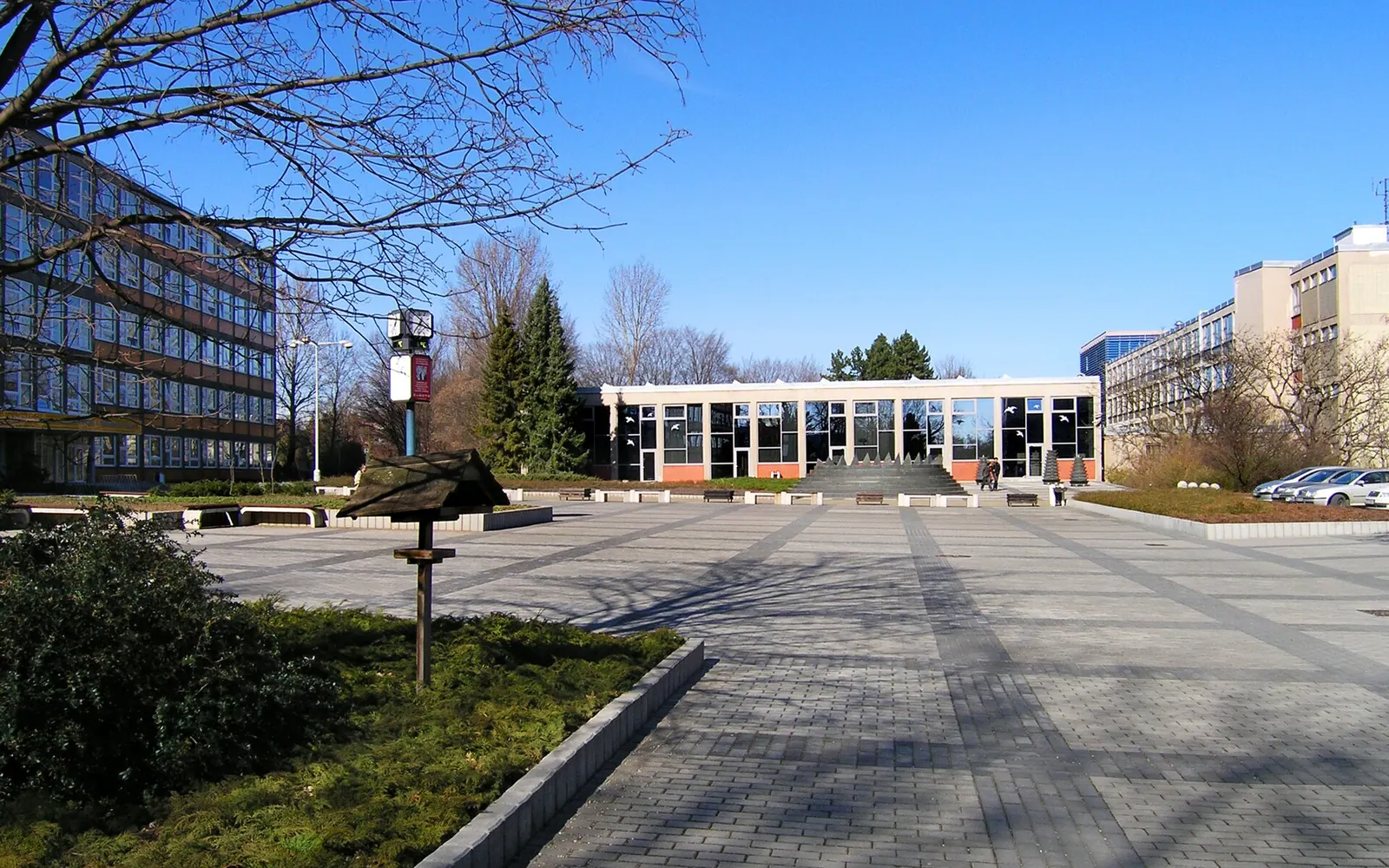
Prague life-sciences university on one green campus, teaching since 1906; ten English bachelor's in…
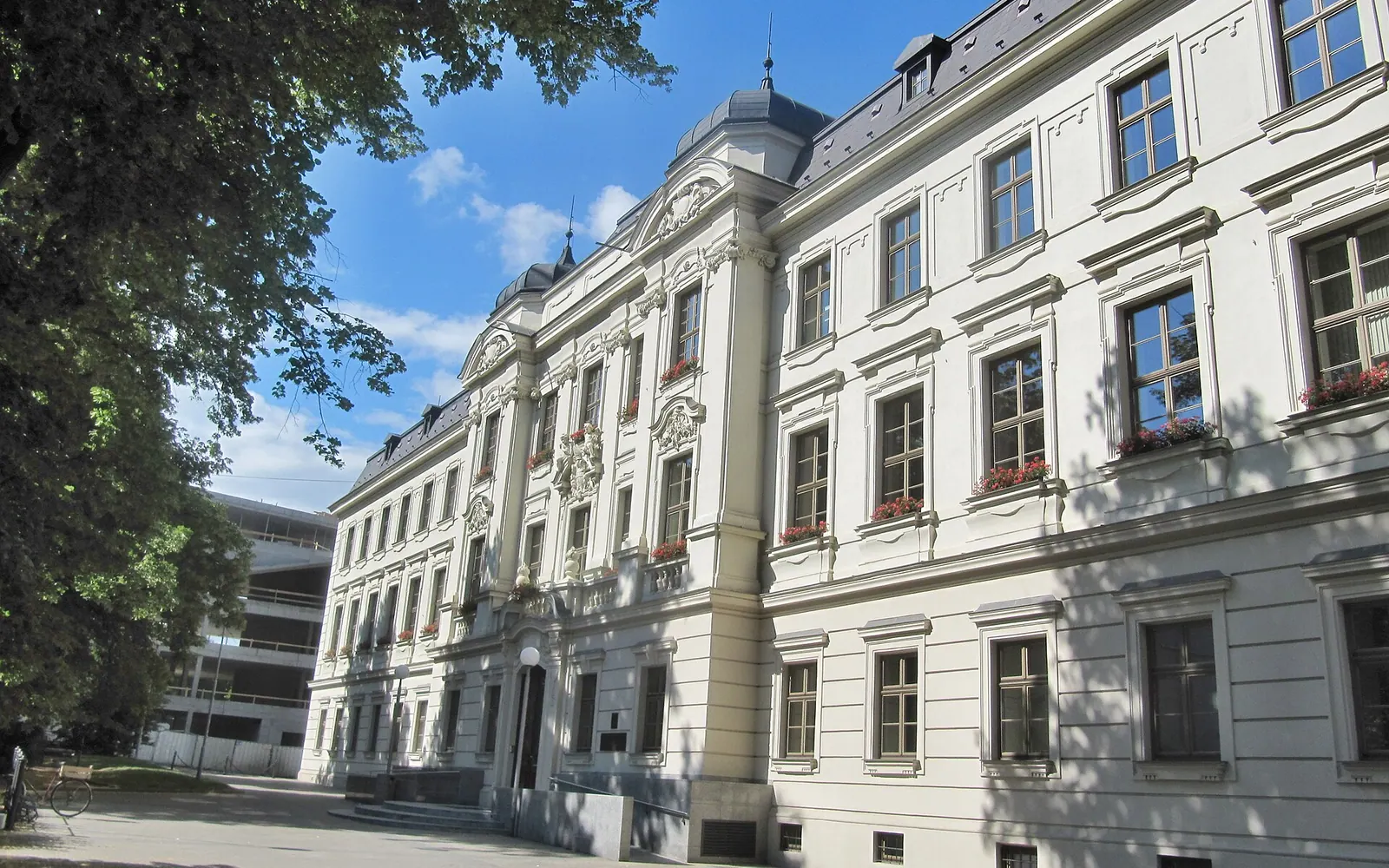
Technical university in Brno with five English-taught bachelor's: civil, electrical and mechanical engineering, architecture…
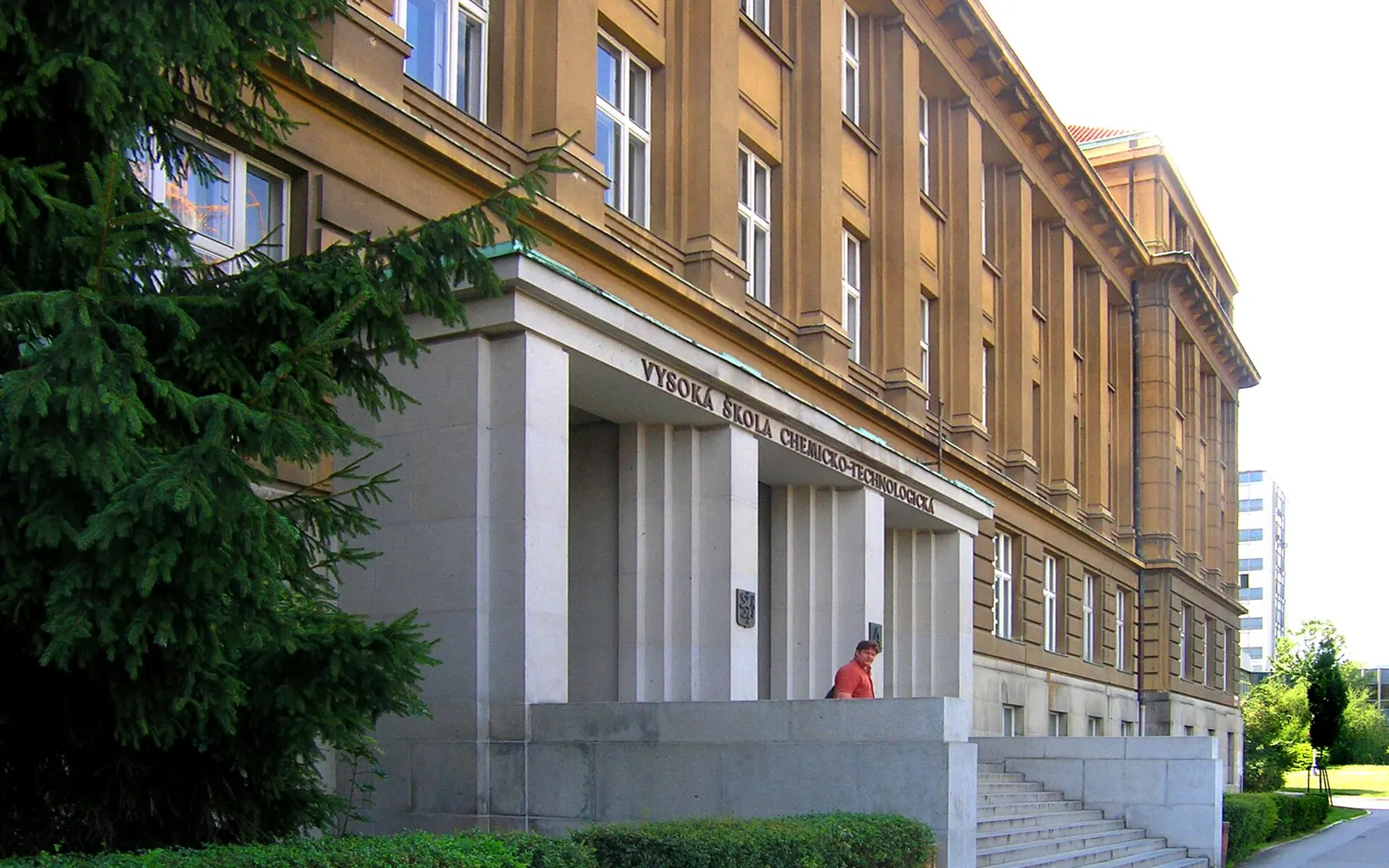
Prague chemistry university: two English chemistry bachelor's with specialisations, plus Economics and Management; your…
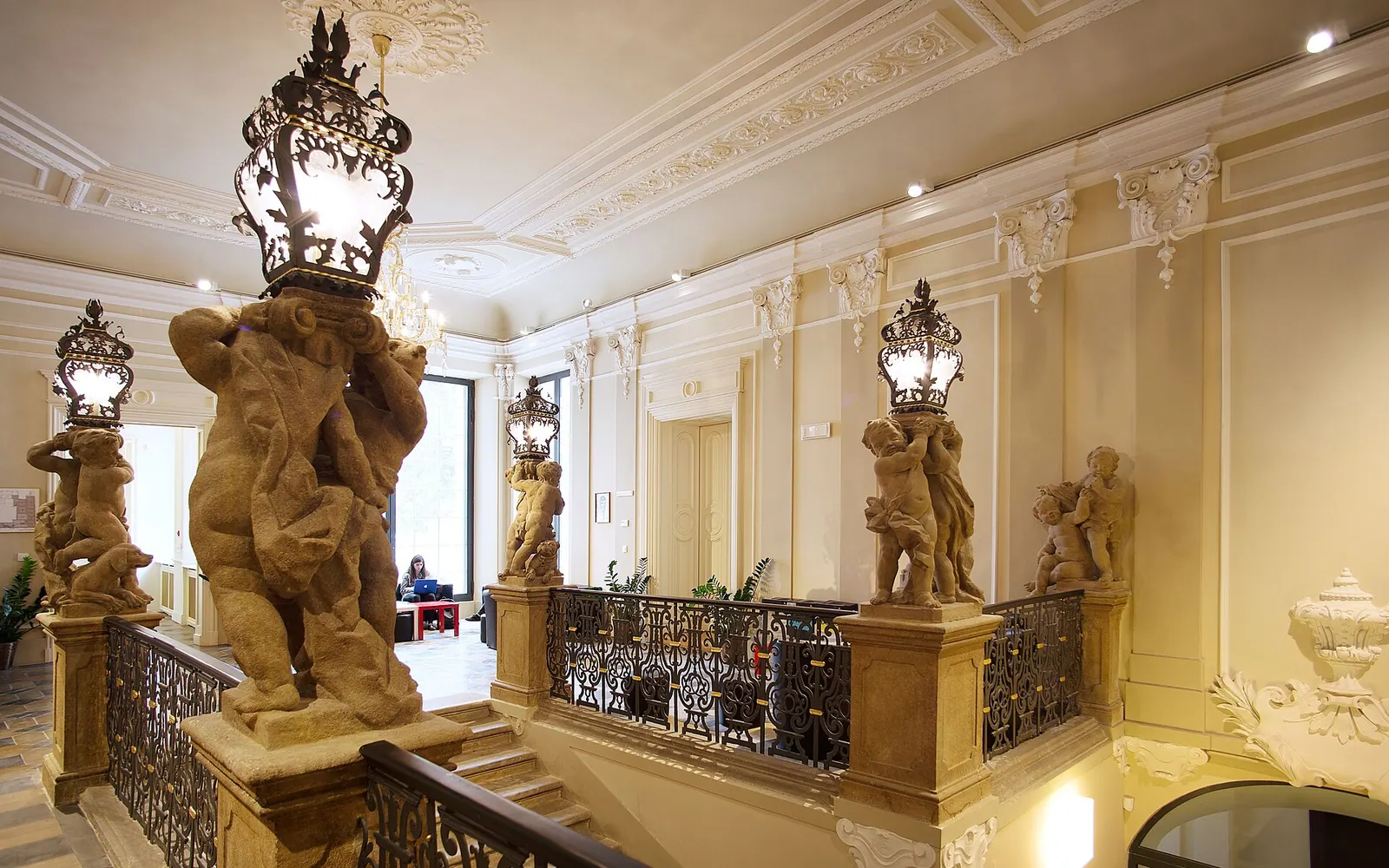
Private English-language university in central Prague, founded 1990; 7 three-year BA majors with US…
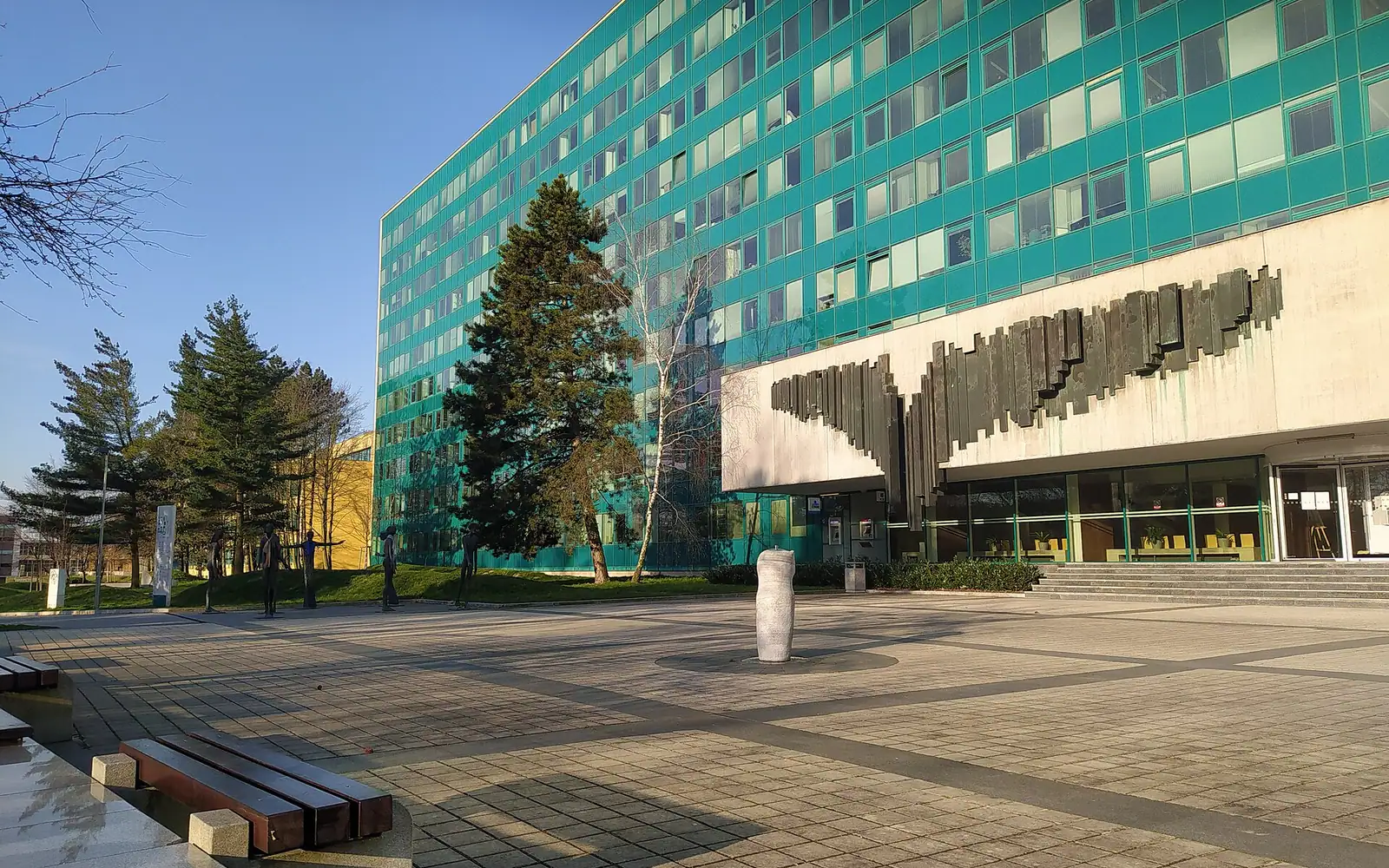
Ostrava technical university with 175+ years behind it; 16 English-taught bachelor's across geology, materials…
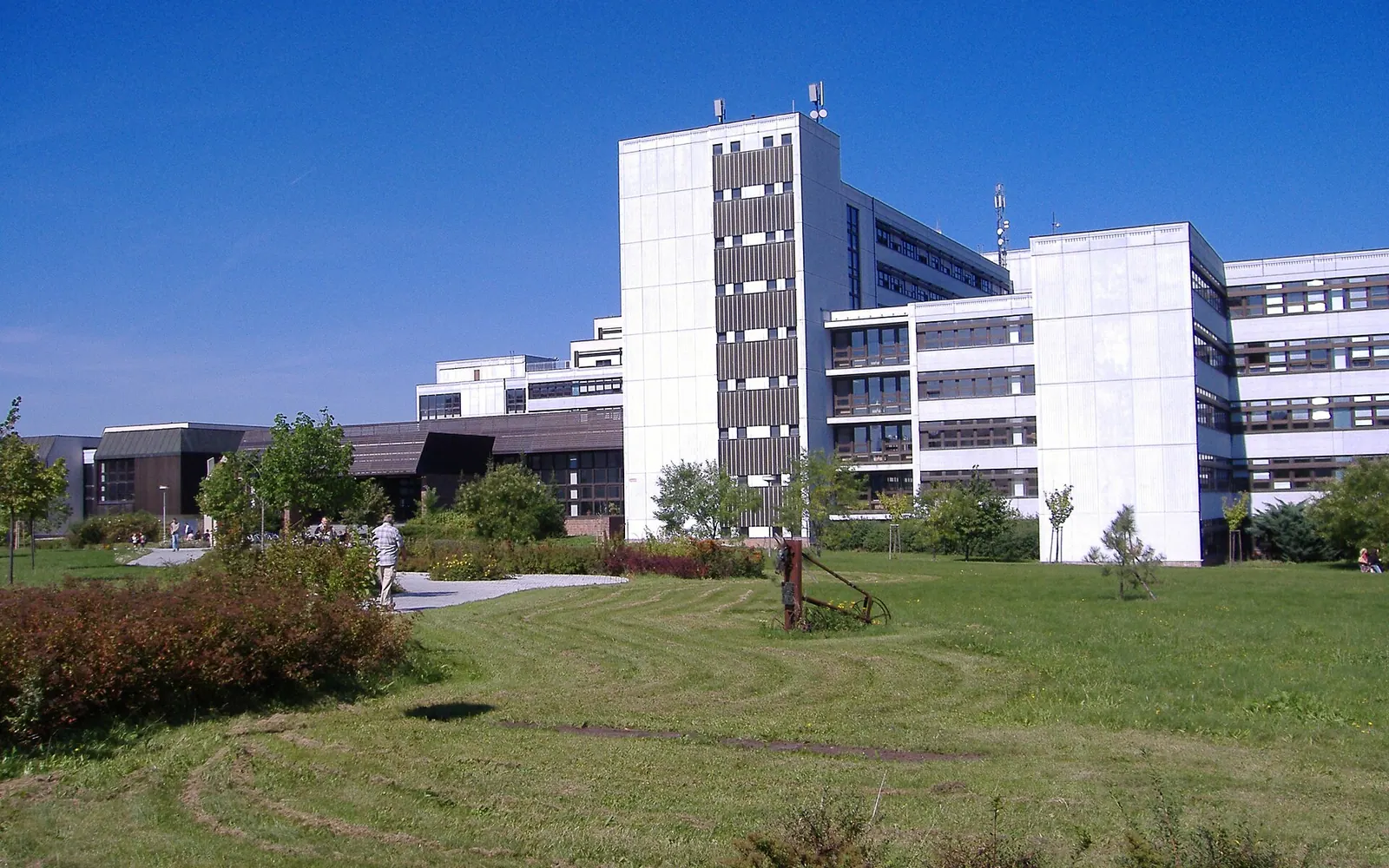
Founded in 1991 in Plzeň; one English bachelor's, a four-year double degree in management…
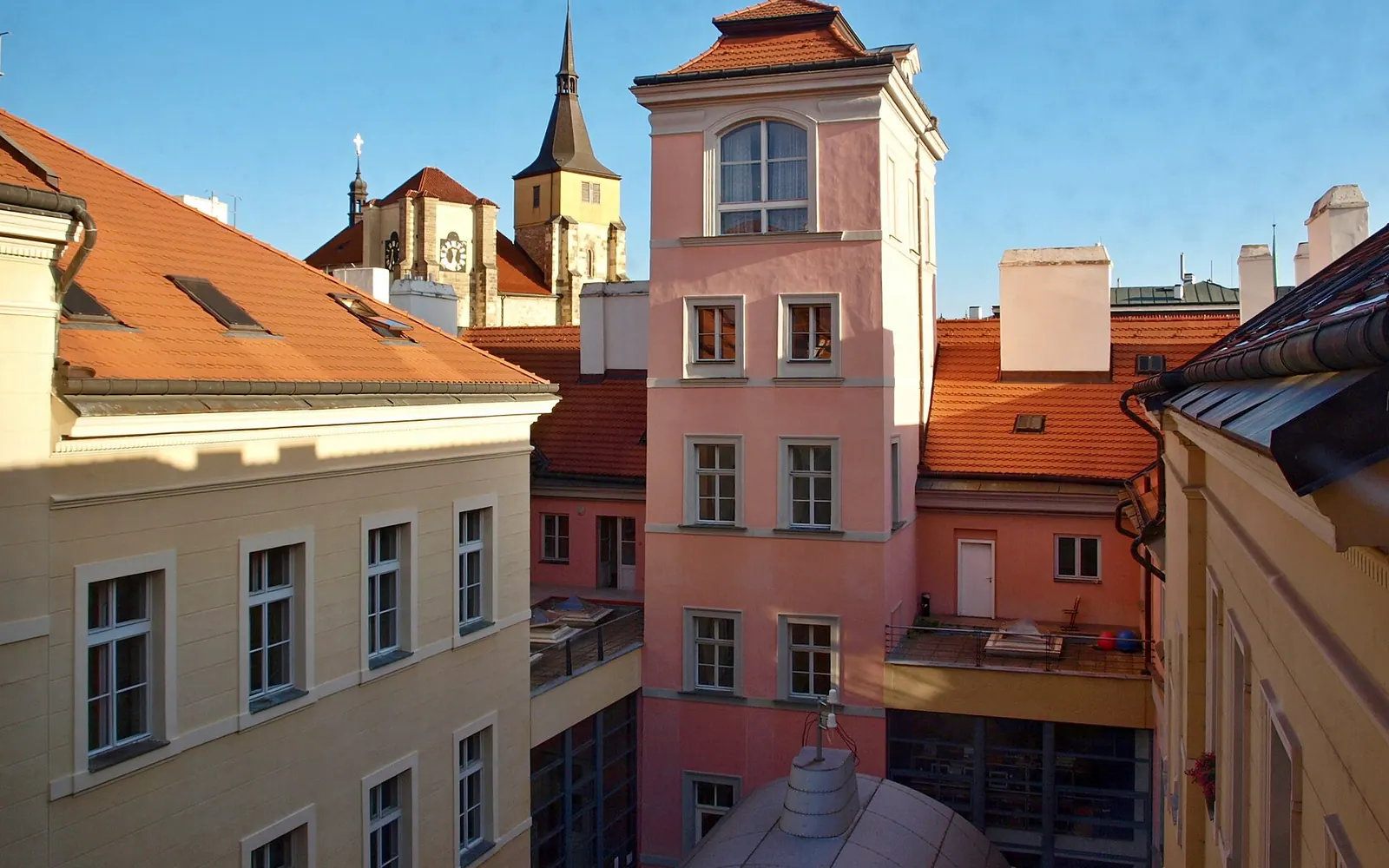
Performing-arts academy in Prague, founded 1945 and home of the FAMU film school; English…
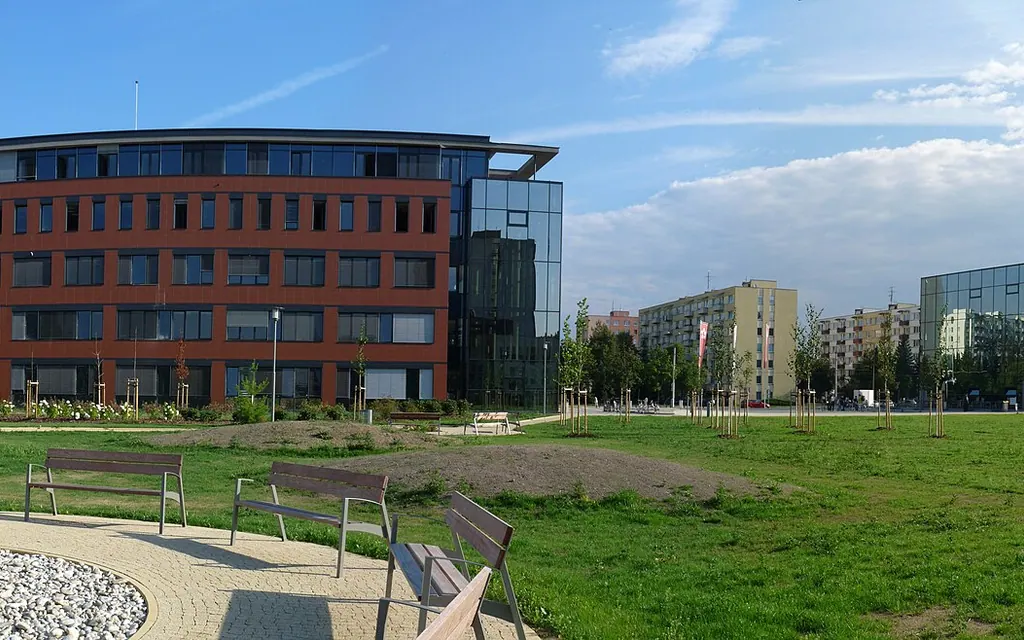
Founded in 1991 in České Budějovice; one English bachelor's, Biological Chemistry, a double degree…
This browser cannot draw the globe. Every place is in the list below.
Since 1 March 2025 an IB Diploma is exempt from nostrification in Czechia by law.
That matters more than it sounds: a Danish studentereksamen is not on the automatic-equivalence list and would have to go through a regional authority or pay a university assessment fee, while your IB Diploma is simply accepted. The other thing to know is that studying in Czech is free for everyone, regardless of nationality — the fee depends on the language of instruction, not on your passport. English-taught tuition runs from around 500 euros a year at the agricultural university to 24,250 for medicine at Charles.
The IB Diploma is a statutory route to prove secondary education.
There is no central application portal. Every university, and in practice every faculty, runs its own application with its own deadline, fee and exam.
Czech higher education institutions (vysoké školy) are either university-type (univerzitní) or non-university-type (neuniverzitní), and public, state or private.
Czech higher education institutions (vysoké školy) are either university-type (univerzitní) or non-university-type (neuniverzitní), and public, state or private. Below them sit the vyšší odborné školy, tertiary professional schools outside the Higher Education Act.
Charles, Masaryk, CTU and the other public universities: bachelor's, master's and doctorates, with English-taught programmes in many faculties, especially medicine, engineering and business.
Institutions offering bachelor's and master's but not doctorates, many of them private and several teaching in English, such as Anglo-American University.
Three-year practical programmes under the Education Act rather than the Higher Education Act, ending in a diploma rather than a degree.
Not covered on this site; almost certainly taught in Czech.
Yes, an IB Diploma is accepted.
Yes
Set per faculty, and the pattern for medicine is clear: HL Biology plus HL Chemistry, with the third subject varying. Charles 2nd Faculty accepts Maths (AA or AI) or Physics at either level. Masaryk requires Physics specifically. Charles 3rd Faculty requires HL English as the third. For maths and computer science at Charles MFF the requirement is grade 6 in HL Maths, either AA or AI, and your total score is not considered at all.
How Czechia reads an IB Diploma.
These are the pages this section was written from. None has been signed off by a person yet, so confirm anything consequential at the source.
Act No. 111/1998 Coll. on Higher Education Institutions (sections 48 and 58)
Act No. 52/2025 Sb. — the amendment adding the IB exemption, in force 1 March 2025
Charles University — recognition of foreign secondary education (IB automatically accepted)
CTU — assessment of education for applying to CTU (IB exempt)
Charles University — tuition fees for foreign-language study
Charles MFF — admission requirements for bachelor's programmes in English 2026/27
Apply directly to each university.
Work out which faculty you want, not just which university. In Czechia the faculty sets the fee, the deadline, the exam and the IB rules, and they differ enormously inside one institution.
Check whether your target faculty offers an IB-based exemption from the entrance exam. At Charles 2nd Faculty and Masaryk this can remove the exam entirely, and at Charles 2nd Faculty predicted grades count.
Apply directly to each faculty through its own system, during autumn 2026 or early 2027. Most windows open between October and January.
Pay the application fee, which ranges from 500 CZK at the agricultural university to 285 euros at Charles 1st Faculty of Medicine.
Tick the box declaring that you hold an IB Diploma so the faculty applies the section 48(4)(c) route and does not charge you an assessment fee.
Book your entrance exam at the nearest workable venue. For medicine that realistically means Oslo through Interstudium for Masaryk, Göteborg for Charles Plzeň, an online sitting at Palacký or Hradec Králové, or London (2 July) or Berlin (13 July 2027) for Charles 2nd Faculty.
If your results come out better than expected in early July, look again at the faculties that are still open — Charles 1st Faculty, Masaryk medicine, Palacký and VSB Ostrava all accept applications after results day.
Once admitted, register your stay within 30 working days of arriving, unless your dormitory handles it for you, and apply for a hall place immediately because places are limited and not guaranteed.
Almost every programme runs its own entrance exam. Medicine is typically a written multiple-choice paper in biology and chemistry plus a third subject, followed by an interview: Charles 1st Faculty uses five multiple mini-interviews of ten minutes each; Charles 2nd Faculty asks 75 questions in 90 minutes and then interviews the top scorers; Masaryk sets three separate 50-minute papers with a 60 percent pass mark for General Medicine. Caps are tight — around 90 places at Charles 2nd and 3rd Faculties, 105 at Hradec Králové, about 80 at Palacký. Outside medicine, CTU's Faculty of Information Technology runs a maths test or accepts SCIO online tests, CTU's Faculty of Electrical Engineering uses an online interview, and VŠE's International Business has no written test at all — just an online interview scored 50 points for motivation and 50 for English.
VSB-TUO: by 31 January 2027.
Hard deadline
After this the door closes.
The earliest of Masaryk's faculty windows to open, and the first Czech deadline of the cycle. Published as "Bachelor's programme: 1 October-31 March". Masaryk publishes this window with a day and a month but no year at all, and no academic-year heading anywhere on the page, so the year here is projected onto the September 2027 intake. Where the page's summary table and its per-faculty sections disagree, go by the faculty section, which gives the opening dates the table leaves out.
Hard deadline
After this the door closes.
The one genuinely 2027/28 row on VSB's whole application-dates table, published in Czech as "bakalarske | anglictina | 2027/2028 | 01. 10. 2026 - 31. 01. 2027 | 1. kolo". Read the Czech page: the English mirror of the same table has not been updated for this faculty and still shows the closed 2026/27 window. The university homepage carries a banner saying "APPLICATIONS for AY 27/28 open on 1 October", but it names no faculty, no year digit and no closing date, so go by the faculty table rather than the banner.
Via Czech university or faculty for September 2027
Hard deadline
After this the door closes.
A genuine 2027 date: "Applications are accepted from 1 November 2026 to 30 April 2027." Registration for the entrance exam closes the same day but is a separate item on the faculty's table, and it has its own entry.
Hard deadline
After this the door closes.
Published as "September intake: 1 November-15 May", the same window for bachelor's and follow-up master's. A February intake also exists, running 1 July to 31 October. Masaryk publishes this window with a day and a month but no year at all, and no academic-year heading anywhere on the page, so the year here is projected onto the September 2027 intake. Where the page's summary table and its per-faculty sections disagree, go by the faculty section, which gives the opening dates the table leaves out.
The faculty page is still written for September 2026 enrolment and has not rolled over. The opening day was 1 November in the 2026 cycle, so 1 November 2026 is the expectation, not a published fact.
"The application will be open on 1 November, 2026." One of the very few Czech pages that names the 2027/28 cycle explicitly, and it is maintained - stamped last updated 14 August 2026.
Hard deadline
After this the door closes.
Published as "Submit your application during this period: 1 December-30 April". A February intake for the follow-up master's runs 1 June to 30 September. Masaryk publishes this window with a day and a month but no year at all, and no academic-year heading anywhere on the page, so the year here is projected onto the September 2027 intake. Where the page's summary table and its per-faculty sections disagree, go by the faculty section, which gives the opening dates the table leaves out.
Hard deadline
After this the door closes.
Published as "1 December-31 July (for EU residents)". Non-EU residents get a shorter window closing 31 May. As an EU citizen living in Denmark you have the longer one, which runs well past your IB results. Masaryk publishes this window with a day and a month but no year at all, and no academic-year heading anywhere on the page, so the year here is projected onto the September 2027 intake. Where the page's summary table and its per-faculty sections disagree, go by the faculty section, which gives the opening dates the table leaves out.
Hard deadline
After this the door closes.
Published as "September intake: 15 December-30 April". A February intake also exists, closing 30 October - note that Informatics prints 30 October where Economics and Social Studies print 31, and the page repeats it, so it is not a one-line typo. Masaryk publishes this window with a day and a month but no year at all, and no academic-year heading anywhere on the page, so the year here is projected onto the September 2027 intake. Where the page's summary table and its per-faculty sections disagree, go by the faculty section, which gives the opening dates the table leaves out.
Hard deadline
After this the door closes.
Published as "September intake: 15 December-30 April". A February intake runs 15 June to 31 October. Masaryk publishes this window with a day and a month but no year at all, and no academic-year heading anywhere on the page, so the year here is projected onto the September 2027 intake. Where the page's summary table and its per-faculty sections disagree, go by the faculty section, which gives the opening dates the table leaves out.
Hard deadline
After this the door closes.
Published as "for exams via representatives: 2 January - 31 July", and that qualifier matters: it is the only window the page gives for Medicine, and it is scoped to candidates sitting the entrance exam through one of the university's representatives. The summary table at the top of the page shows Medicine simply as "31 July" and drops both the opening date and the qualifier. Masaryk publishes this window with a day and a month but no year at all, and no academic-year heading anywhere on the page, so the year here is projected onto the September 2027 intake. Where the page's summary table and its per-faculty sections disagree, go by the faculty section, which gives the opening dates the table leaves out.
Hard deadline Via Czech university or faculty for September 2027
After this the door closes.
Published as "Submit your application during this period: 1 November-28 February". Masaryk publishes this window with a day and a month but no year at all, and no academic-year heading anywhere on the page, so the year here is projected onto the September 2027 intake. Where the page's summary table and its per-faculty sections disagree, go by the faculty section, which gives the opening dates the table leaves out.
Hard deadline
After this the door closes.
Published as "Application Deadline: February 28th, 2027", and repeated in the official Conditions of admission for 2027/2028. The 100 EUR fee must be credited to the university by the same day, and it is not refundable.
Published only as a month - "Exam Date: March 2027" - with the prose adding that interviews are scheduled "in the beginning of March". No individual day is published, so the whole month is shown. The exam is a single online interview over MS Teams, 50 points for motivation and 50 for English, with a minimum of 25 in each part. The decision follows: the faculty says only that it "is usually made around the mid of March", with no year and no committed day, so that is customary practice rather than a date to plan against.
Hard deadline Via Czech university or faculty for September 2027
After this the door closes.
From the official Conditions of admission 2027/2028: "Should the second admission round be announced, the application deadline will be April 30th 2027, and the exam will be held in May 2027." The Dean announces it only if the first round does not fill the programme, so it is a real dated fallback that may never open. A second-round application must be submitted separately.
Hard deadline
After this the door closes.
The faculty publishes it as a separate "Registration deadline" column against each Prague exam date, and it applies to both the regular and the alternative sitting - so registering late does not buy you the July date. It happens to fall on the same day as the application deadline. The page says nothing about what happens if you miss it, and there is no late-registration provision anywhere on it.
A genuine 2027 date. The written paper is 75 questions in 90 minutes - 20 biology, 20 chemistry, 20 physics, 15 logic - worth 225 points, with up to 90 more from an interview. Sitting it in Prague on this date means travelling before your IB results arrive.
London on 2 July 2027 is one of the two dated overseas sittings nearest Denmark; the other is Berlin on 13 July. The London sitting falls four days before IB results are released on 6 July. The faculty publishes no registration deadline for its overseas sittings, so ask the organiser when you must sign up.
Via Czech university or faculty for September 2027
Run through the agency Medical Doorway, and with London (2 July 2027) the nearest dated sitting to Denmark - reachable in a day. Oslo, nearer still, has no date yet. Unlike the Prague sittings, the faculty publishes no registration deadline for Berlin, so ask the agency when you must sign up.
The second Prague sitting, and the one that falls after IB results are released on 6 July 2027. You still have to register for it by 30 April.
Hard deadline
After this the door closes.
The deadline that decides whether an IB candidate can actually take the place up. VSE requires the physical documents by "31st July, 2027", stated twice on its required-documents page. IB results are issued on 6 July 2027, which leaves about three weeks to obtain, certify and post the diploma. One older page on the same site, last updated nine months earlier, says "at the latest by 1st July" - the two disagree; go by the later page, but confirm with the programme office before relying on either.
Hard deadline
After this the door closes.
This is the outer boundary, not the deadline you work to. The faculty states twice that a complete application, documents uploaded and fee paid, is due "two weeks before the selected entrance exam at the latest". Since the 2027 examination dates are not published, the operative deadline cannot be calculated yet. The application fee is 80 EUR and is not refundable.
Via Czech university or faculty for September 2027
Each university, and usually each faculty, sets its own deadline, fee and exam. Most close between February and April; some medical and technical faculties close after IB results.
The faculty lists about twenty overseas locations for 2027. The dated ones nearest Denmark are London (2 July 2027) and Berlin (13 July 2027), each with its own entry here; the others with dates are further away - Dubai, Tel-Aviv, Doha, New Delhi and Bangkok. Oslo, run through EduPlanet and the nearest sitting of all, is still "TBA", as are Frankfurt, Vienna, Munich, Vechta, Lisbon, Athens, Limassol, Istanbul, Toronto and Seoul. The page warns "Dates will be updated soon." and was last updated on 23 September 2026. No overseas registration deadline is published - the registration column exists only for the Prague sittings.
The waiver is the most IB-specific thing this faculty offers, and its 2027 dates are now published: apply electronically by 30 April 2027, you are told by the end of May 2027, and the fallback Prague sittings are 3 June or 22 July 2027. The thresholds: at least 35 points including EE and TOK, at least 19 from HL Biology and HL Chemistry together, plus HL or SL Maths or Physics, with results obtained no earlier than the 2024/25 year and a maximum of 25 waivers shared across the IB, EB and BS group.
Not published: the faculty's table is headed "Entrance examination dates and venues for 2026" and has not rolled over. Two features of the 2026 list matter enough to carry forward. First, four sittings late in the season - 18, 19, 25 and 28 August 2026 - were marked as open only to applicants who are EU citizens or hold a valid residence permit, which is an advantage you have as an EU citizen and a non-EU candidate does not. Second, the examination can be taken only once per academic year, so the date you pick is the only attempt you get.
The Faculty of Economics does not publish a five-round structure. Its own admissions page sets out three bachelor rounds, and those are for the Czech-taught programme; the number five appears only as a label on one row of the university dates table, "5. kolo" against the 2026/27 English-taught bachelor intake, which opened 5 August and closed 14 August 2026. The table only ever shows the currently open round per programme, so earlier rounds are never visible. Nothing at all is published for 2027/28, and the faculty pages are imperfectly maintained - one section prints 2025 document deadlines against its own 2026 round dates.
The central page carries only a range - English-taught bachelor's and master's deadlines "vary for each faculty (from February till June/July)" - and it is stamped as last changed in May 2023, so it is three years stale and names no faculty. Mathematics and Physics closed 30 April 2026; the Third Faculty of Medicine 15 April 2026; Plzen 30 April 2026; Hradec Kralove works differently, with 30 April 2026 for its online sitting and 7 May 2026 for sittings held abroad rather than one global deadline; and the First Faculty of Medicine ran to 5 September 2026. For 2027/28 the Faculty of Social Sciences has published its windows (early bird 28 February, regular 30 April 2027, opening 1 November 2026) and Psychology (1 October 2026 to 31 January 2027); the other faculties publish theirs on their own sites, typically from November. Charles also states that it has no rolling admissions and grants no individual extensions.
Rolling
Considered as they arrive, until places run out.
Published as "We have rolling admissions, therefore, you can submit your applications all year round." A realistic safety option if your plans change late. The application fee is 1,000 CZK and the admissions office says it decides one week after your interview, so the turnaround is short as well as the deadline absent.
Wide, but concentrated. Study in Czechia quotes more than 1,000 degree programmes in English across all levels (2023 figure).
Wide, but concentrated. Study in Czechia quotes more than 1,000 degree programmes in English across all levels (2023 figure). At bachelor's level, counts include VŠE with 8 (two of them opening in September 2027), UCT Prague with 8, Czech University of Life Sciences with 10, Masaryk with around 11, the Academy of Performing Arts with 3, Brno University of Technology with effectively 1, and West Bohemia and South Bohemia with 1 each. Charles and CTU publish no bachelor's-only count.
Varies widely. Charles MFF accepts IB English at grade 6, or IELTS 6.5 or TOEFL iBT 85. Anglo-American University waives the test for any IB Diploma holder. VŠE's International Business requires no certificate at all and assesses English inside the interview. Charles 1st Faculty of Medicine required no English certificate at all for 2026/27. CTU's Faculty of Electrical Engineering wants TOEFL iBT 70, IELTS 6 or TOEIC 800 and does not accept Duolingo. Palacký wants Cambridge FCE, IELTS 6, TOEFL 87 or PTE 59, or its own test, unless your secondary education was in English.
Not for English-taught programmes
Free if you study in Czech. For English-taught bachelor's degrees: Czech University of Life Sciences 500 euros a year at its Faculty of Engineering (2025/26), Brno University of Technology 1,000 euros (2026/27), Masaryk 3,000 euros for most science programmes up…
Free if you study in Czech. For English-taught bachelor's degrees: Czech University of Life Sciences 500 euros a year at its Faculty of Engineering (2025/26), Brno University of Technology 1,000 euros (2026/27), Masaryk 3,000 euros for most science programmes up to 14,000 for Data Analytics, UCT Prague 84,500 CZK with the entry-year rate locked for the whole degree, Charles MFF 4,200 euros, VŠE 5,000 euros, CTU 110,000 to 128,000 CZK depending on faculty, VSB Ostrava about 4,000 euros, West Bohemia 3,000 to 4,000, Anglo-American University 125,489 CZK a semester. English-taught medicine: Palacký Olomouc 12,500 euros a year, Masaryk 380,000 CZK, Charles Plzeň 390,000 CZK, Charles 2nd and 3rd Faculties 420,000 CZK, Charles 1st Faculty 24,250 euros. (mostly 2026/27; CZU 2025/26; South Bohemia's range is 2023/24 and stale)
Often the same, but not always — several universities give EU citizens a lower rate. Examples: Charles MFF 4,200 euros for EU against 7,100 for non-EU; Brno University of Technology 1,000 against 4,500; Czech University of Life Sciences 500 against 1,000; Anglo-American University 125,489 CZK a semester against 144,404. The medical faculties at Charles, Masaryk and Palacký publish a single figure per programme with no nationality split, but none of them states equality in so many words. (2026/27)
No national rule — it varies by faculty. Examples: 500 CZK at CZU and West Bohemia, 600 at VSB Ostrava, 700 at Brno University of Technology, 800 at Masaryk's Faculty of Science, 940 at Charles 3rd Faculty and Plzeň, 950 at CTU, 1,000 at Anglo-American University, 1,500 at Charles MFF, 2,500 at Charles 2nd Faculty and Hradec Králové, 80 euros at Palacký, 100 euros for VŠE International Business and 285 euros at Charles 1st Faculty.
500 to 800 euros a month for basic living. Food and drink 150 to 230; a student canteen meal 4 euros; a yearly student transport pass 50 to 100 euros. Prague sits at the top of the range and Olomouc, Plzeň and Ostrava at the bottom — a city-centre flat is 1,060 euros in Prague, 870 in Brno and around 620 to 635 in Olomouc, Plzeň and Ostrava. (2026, city comparison dated May 2026)
No visa and no residence permit. You enter on a valid passport or national ID card.
No visa and no residence permit. You enter on a valid passport or national ID card. If you are staying more than 30 days you must register within 30 working days of arriving — much gentler than the three working days non-EU students get. In practice the obligation often does not apply if your accommodation provider, such as a student dormitory, registers you, so confirm with your hall. Whether an EU student should also obtain the optional certificate of temporary residence is not confirmed here; ask your university.
As an EU citizen you have the same access to the Czech labour market as a Czech citizen and need no work permit. There is no immigration-law cap on hours. The contract types matter more: a DPP agreement is capped at 300 hours a year per employer, a DPČ at about 20 hours a week, and a standard employment contract has no such limit. The minimum wage in May 2026 was 134.40 CZK an hour or 22,400 CZK a month, and student part-time work typically pays 150 to 200 CZK an hour.
Halls of residence, called koleje, cost roughly 160 to 330 euros a month for a shared room and 250 to 450 for a single, with utilities and Wi-Fi often included. Places are limited and not guaranteed. At Charles the queue order matters: returning residents extend their contracts in May, international students who need a visa apply from mid-April, and the general electronic application only opens in mid-June — which puts EU students with no visa need in the last and most competitive queue. Apply the day it opens. A room in a shared private flat runs 250 to 500 euros a month. Prague and Brno are markedly more expensive than Hradec Králové, Olomouc or Liberec.
Bring your EHIC. It gives you medically necessary care from public providers on the same terms as a Czech insured person. The national portal is clear that the EHIC is not travel insurance — it generally does not cover private clinics, repatriation or travel losses, so supplementary cover is sensible. Whether an EU student also needs to register with a Czech health insurer such as VZP is not addressed on the official pages; ask your university.
If you hold Czech citizenship, you do not register a right of residence or prove your fee status, and Czechia's own student grants and loans are open to you on their ordinary terms; check them, because some depend on where you have lived.
Your IB is still a foreign qualification here, so the IB entry rules still apply to you.