

HÍ — University of Iceland
Reykjavík university that teaches mostly in Icelandic; two of its BAs run in English…
Reykjavík2 programmes
Nordics · May 2027 IB session · Autumn 2027 entry
Barely any bachelor's degrees in English
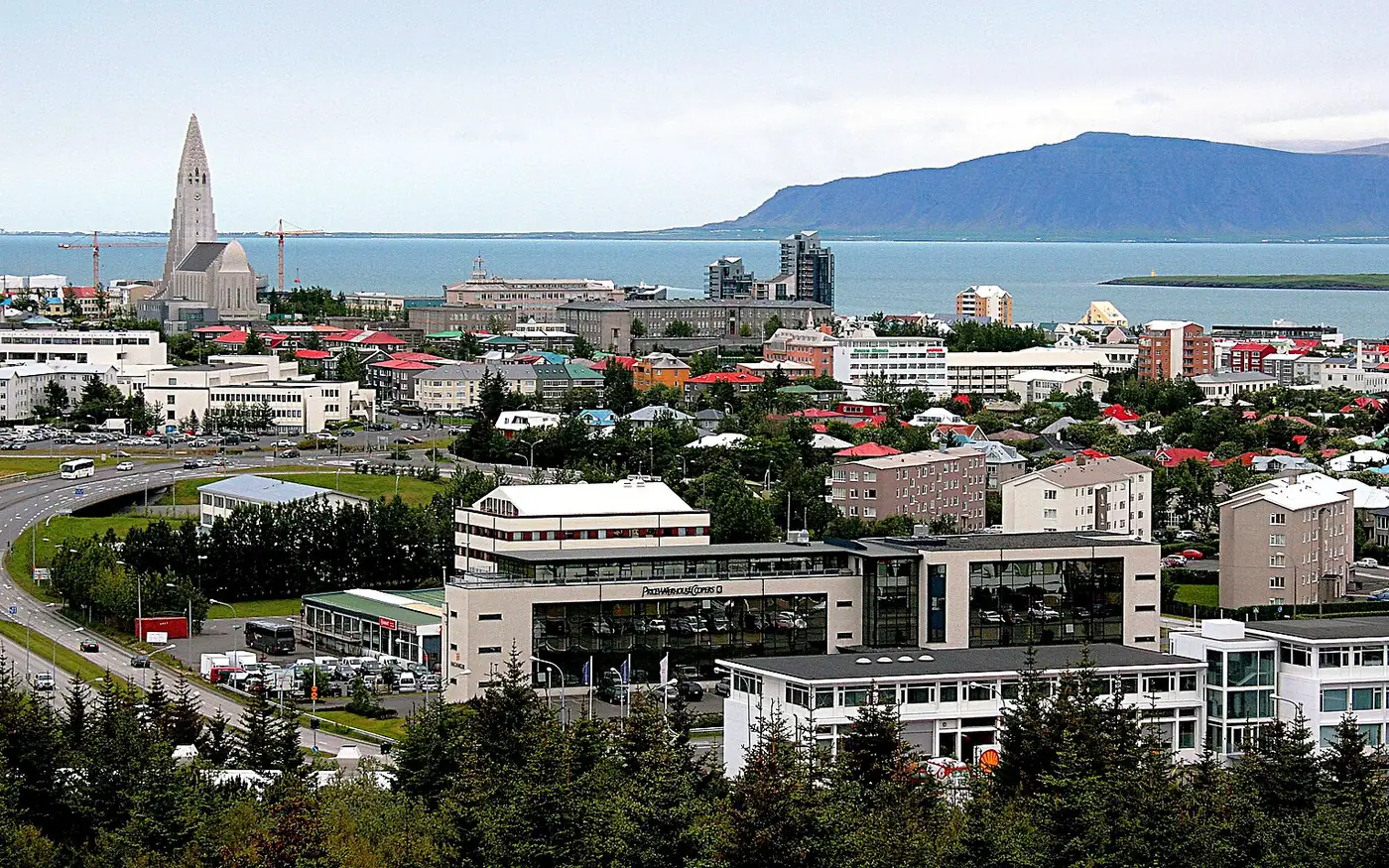
Reykjavík
2 institutions
Reykjavík university that teaches mostly in Icelandic; two of its BAs run in English…

Arts university in Reykjavík with about 600 students; one BA is taught in English…
Across Iceland's six universities only three bachelor's degrees are described as taught in English: International Studies in Education and English Studies, both BAs at the University of Iceland, and Contemporary Dance Practices, BA at the Iceland University of the Arts.
Every other bachelor's programme in Iceland is taught in Icelandic, and several explicitly demand Icelandic proficiency or refuse applications from abroad altogether. Iceland is a realistic destination for an exchange semester or a master's degree, and only a very narrow one for an undergraduate degree in English.
As an EEA citizen you pay no tuition at five of the six universities — Reykjavik University is the exception — just a registration fee, ISK 100,000 a year at the University of Iceland, about 720 euros.
Only three English-taught bachelor's degrees nationally: two at the University of Iceland (International Studies in Education and English Studies), and Contemporary Dance Practices at the Iceland University of the Arts.
Every Icelandic institution is a háskóli, and there is no separate applied sector.
Every Icelandic institution is a háskóli, and there is no separate applied sector. Instead the split is between the large comprehensive universities and small specialised ones, and between three public and three private institutions. Private can mean tuition. Hólar University now belongs to the University of Iceland, as Háskóli Íslands á Hólum.
The University of Iceland in Reykjavík, and the University of Akureyri in the north. Registration fee only for EEA students.
Reykjavík University and Bifröst University. Privately run, and they may charge tuition: Reykjavík University does, to EEA students too.
Neither publishes an IB-specific page. Not covered in detail on this site.
The Iceland University of the Arts (private) and the Agricultural University of Iceland (public, in a rural setting). Small, single-field, and with their own admission rules. Hólar, the third, is now part of the University of Iceland.
Not covered in detail on this site.
Yes, an IB Diploma is accepted.
Yes
The IB Diploma is treated as equivalent to the Icelandic stúdentspróf. The IBO's recognition database records the University of Iceland as accepting it 'as Icelandic general High School diploma'. No points-to-grade table is published.
How Iceland reads an IB Diploma.
These are the pages this section was written from. None has been signed off by a person yet, so confirm anything consequential at the source.
Apply directly to each university.
Accept early that your realistic target is one of three English-taught programmes: International Studies in Education or English Studies, both BAs at the University of Iceland, or Contemporary Dance Practices, BA at the Iceland University of the Arts, which you apply to separately. The steps below are for the University of Iceland; check your programme's page before you plan anything else.
Apply directly to the university — there is no central portal and no way to apply to several institutions on one form.
Get your application in by 1 February 2027, with all supporting documents the same day. Do not assume the June Nordic deadline applies to you.
Ask your IB coordinator to send your transcript to transcript@hi.is through the IB's own service.
If you apply to International Studies in Education and it is oversubscribed past its 60-place cap, selection looks at prior higher education, work experience in education, your CV and a personal statement — so write the statement properly.
Pay the ISK 100,000 registration fee by 4 July 2027. It is non-refundable.
Apply for student housing through studentagardar.is the moment you are admitted, and register your domicile with Registers Iceland to get a kennitala once you arrive.
Admission at the University of Iceland is by matriculation examination or equivalent, with requirements varying by faculty. International Studies in Education is capped at 60 students, split roughly 30 international and 30 domestic, and if oversubscribed it ranks on prior study, relevant work experience, CV and personal statement rather than on grades alone. Reykjavik University assesses each applicant individually on grades, further education, work experience, extracurricular participation and stated interests, and requires two references on institutional letterhead plus a letter of intent of at most 300 words.
Iceland University of the Arts: by 25 January 2027.
Hard deadline Via n Icelandic university
After this the door closes.
Printed as "1 February" with no year. The university's own pages disagree on whether a Nordic citizen may instead use 5 June; work to 1 February unless the university confirms otherwise in writing.
Published as "1 February" with no year; this site assumes the 2027 intake. Certified academic transcripts and previous degree diplomas must reach the university by the same day. The application period opens "around mid December", published without a precise day, so there is no opening date here to count down to. Both the deadline page and the FAQ agree that 1 February is the date for an international applicant — and those are the same two pages that contradict each other about 5 June, which is why this is the deadline to use: it is the one for every non-Nordic applicant, and the safe one for Nordic citizens (Danish, Finnish, Icelandic, Norwegian or Swedish).
Published as "February 5th" with no year; this site assumes the 2027 intake. Nothing can be submitted to Reykjavik University before this day.
Hard deadline Via n Icelandic university
After this the door closes.
Opens 5 February; printed with no year.
Published as "April 30th" with no year; this site assumes the 2027 intake. The window opens on 5 February, which is its own entry. Non-EU/EEA residents run a separate and much earlier cycle — open 5 October, close 31 January, autumn semester only — which does not apply to you as an EU/EEA citizen living in Denmark.
Hard deadline Via n Icelandic university
After this the door closes.
Open from the beginning of March; printed with no year.
Published as "open at the beginning of March until June 5th" with no year; this site assumes the 2027 intake. The March opening is published without a day, so there is no opening date. Akureyri says "EU/EEA residents" where the University of Iceland says "Nordic citizens", and unlike Iceland it says the same thing in one place only — there is no second Akureyri page to contradict it. Non-EEA applicants have earlier deadlines, 1 March for Polar Law and 1 April for everything else, and pay a 50-euro application fee; neither applies to an EU/EEA citizen.
Hard deadline
After this the door closes.
Published as "The fee needs to be paid by the due date of 4 July", with no year; this site assumes the 2027 intake. The fee is ISK 100,000 for a full academic year. The rule on the fees page is the one that matters: if the registration fee is not paid by the due date, the student is considered to have withdrawn from the programme. The University's Help Centre article on the registration fee (https://thjonusta.hi.is/hc/en-gb/articles/21426087664667-Registration-fee) describes a late-payment surcharge and a later, more expensive payment date, but neither figure could be confirmed, so none is given here. Do not plan around paying late.
Via n Icelandic university
Via n Icelandic university
Each sets its own date. Check the institution's page.
The University of Iceland's own two pages disagree about who can use 5 June. The deadline page (https://english.hi.is/study/apply/application-deadline) lists the autumn undergraduate deadline of 5 June under "Icelandic and Nordic citizens", which would include any Nordic citizen (Danish, Finnish, Icelandic, Norwegian or Swedish) applying from Denmark; if you are not a Nordic citizen, 1 February is your deadline either way. The FAQ (https://english.hi.is/faq/when-application-deadline) gives the same 5 June only to "International students who have lived in Iceland og are living in Iceland" and does not mention Nordic citizens; the untranslated Icelandic "og" suggests it is a partial translation that has fallen out of step with the deadline page. Both pages were live on 23 September 2026. If you rely on 5 June and the stricter reading is the right one, you lose a year, so no date is counted down here. Apply by 1 February 2027, which both pages agree is open to you, and if you want to use 5 June, get it confirmed in writing by admission@hi.is before you rely on it.
Three. At the University of Iceland, International Studies in Education, BA (180 ECTS over three years, all teaching in English) and English Studies, BA (180 ECTS, every course taught in English); and Contemporary Dance Practices, BA at the Iceland University…
Three. At the University of Iceland, International Studies in Education, BA (180 ECTS over three years, all teaching in English) and English Studies, BA (180 ECTS, every course taught in English); and Contemporary Dance Practices, BA at the Iceland University of the Arts, which its exchange page describes as run completely in English. The University of Iceland publishes no list of English-taught bachelor's degrees. Reykjavik University, Akureyri, Bifröst and the Agricultural University have none, and the arts university's other BA programmes are taught mostly in Icelandic.
Not required at all if you hold an IB Diploma — the University of Iceland's IB page says so directly. Its Denmark page also accepts a Danish studentereksamen, HHX or HTX with English. Reykjavik University, for its English-taught graduate provision, asks for TOEFL iBT 91, IELTS Academic 6.5, DAAD B2 or Cambridge B2.
Yes, for most programmes
No tuition at five of the six universities — only a registration fee, ISK 100,000 per year at the University of Iceland and at the Iceland University of the Arts (about 720 euros), or ISK 75,000 for a spring start.
No tuition at five of the six universities — only a registration fee, ISK 100,000 per year at the University of Iceland and at the Iceland University of the Arts (about 720 euros), or ISK 75,000 for a spring start. The University of Iceland raised this from ISK 75,000 in February 2026, the first increase since 2014. Reykjavik University is the exception and charges real tuition: ISK 656,000 per year for EEA undergraduates, about €4,750 at the ECB rate of 24 September 2026. (2026/27)
Reykjavik University charges ISK 1,794,000 per year, about 12,925 euros, for non-EEA undergraduates. The University of Iceland will begin charging non-EEA tuition in autumn 2027 — this cohort — but the amount per ECTS has not been set. The Iceland University of the Arts began charging non-EEA tuition in autumn 2026, also at an unpublished amount. (2026/27 and 2027/28)
None for EEA citizens at the University of Iceland. Non-EEA applicants pay a processing fee of ISK 20,000 at the University of Iceland, ISK 16,000 at Reykjavik University (covering two applications, deducted from tuition if admitted), 135 euros at Bifröst and 50 euros at Akureyri. The Iceland University of the Arts charges ISK 5,000 per application to everyone.
A realistic floor of about ISK 184,000 per month excluding books, roughly 1,326 euros. Reykjavík City's official minimum support benchmark is ISK 247,572, about 1,784 euros. Housing with utilities starts at ISK 100,000, food at ISK 56,000, transport at ISK 6,000. (undated — the University of Iceland does not state which year these figures are for)
EU/EEA and Swiss students register with Registers Iceland (Þjóðskrá), not the Directorate of Immigration, no later than three months after arriving, showing their admission and that they can support themselves.
EU/EEA and Swiss students register with Registers Iceland (Þjóðskrá), not the Directorate of Immigration, no later than three months after arriving, showing their admission and that they can support themselves. If you are a Nordic citizen, your track is simpler still: you may register legal domicile if you intend to stay three months or longer, and must if you stay six months or longer. Registering gets you a kennitala, the Icelandic ID number, which you need for a bank account, a housing contract and health registration. Non-EEA students need a student residence permit costing ISK 70,000, applied for by 1 July for the autumn semester, and usually granted six months at a time.
EU/EEA citizens need no work permit in Iceland. Non-EEA students need a work permit, and the weekly hour limit is not confirmed here.
Student housing for University of Iceland students is run by Félagsstofnun stúdenta through studentagardar.is. Applications are accepted year-round, and new students starting in the autumn can apply from 1 May — though one FS page says 1 June and another says 1 May, so check both. FS publishes no waiting-list data. Reykjavík's private rental market is tight and expensive, so apply the day you are admitted. Rent includes electricity, heating and, in most houses, laundry. Reykjavik University publishes no student housing information.
If you are a Nordic student, you have the easiest position of anyone: Study in Iceland says Nordic students need only confirmation of insurance in their home country, such as a health insurance card. Other EU/EEA students rely on the EHIC. Bring your EHIC and present it with your passport at medical visits. You may read that Icelandic Health Insurance only begins after six months of legal domicile. That is unconfirmed, but Menntasjóður lends up to ISK 550,000 a year for health insurance costs, which suggests a real gap exists, so check with Icelandic Health Insurance before you arrive whether you need cover for your first months. Non-EU students must have insurance in place before arrival.
If you hold Icelandic citizenship, you do not register a right of residence or prove your fee status, and Iceland's own student grants and loans are open to you on their ordinary terms; check them, because some depend on where you have lived.
Your IB is still a foreign qualification here, so the IB entry rules still apply to you.