
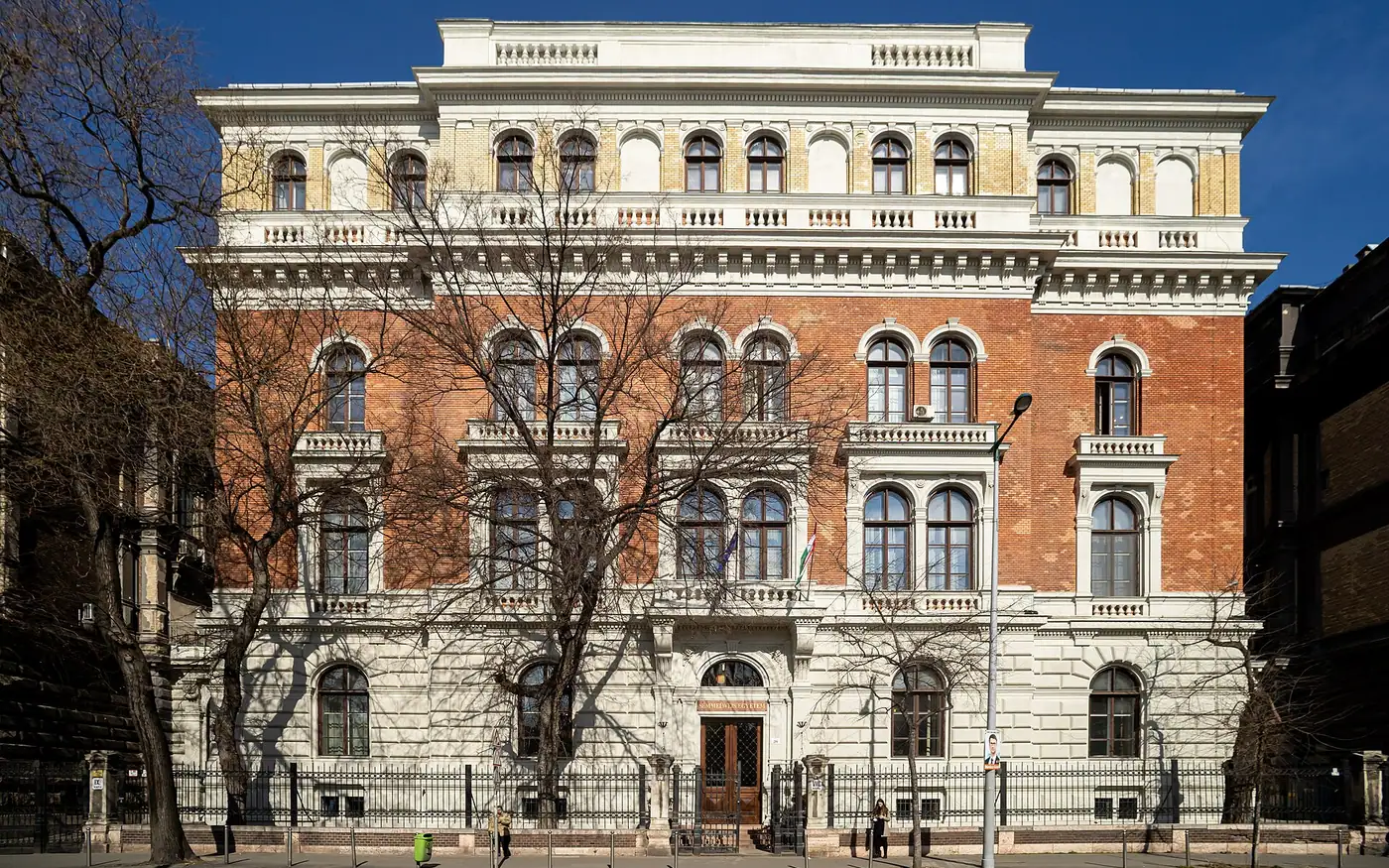
Semmelweis University
Budapest university founded 1769; 3 long-cycle degrees (medicine, dentistry, pharmacy) and 8 health bachelor's…
Budapest11 programmes

Central Europe · May 2027 IB session · Autumn 2027 entry
Medicine in English — usually paid for yourself
Budapest and the Chain Bridge
13 institutions
Budapest university founded 1769; 3 long-cycle degrees (medicine, dentistry, pharmacy) and 8 health bachelor's…
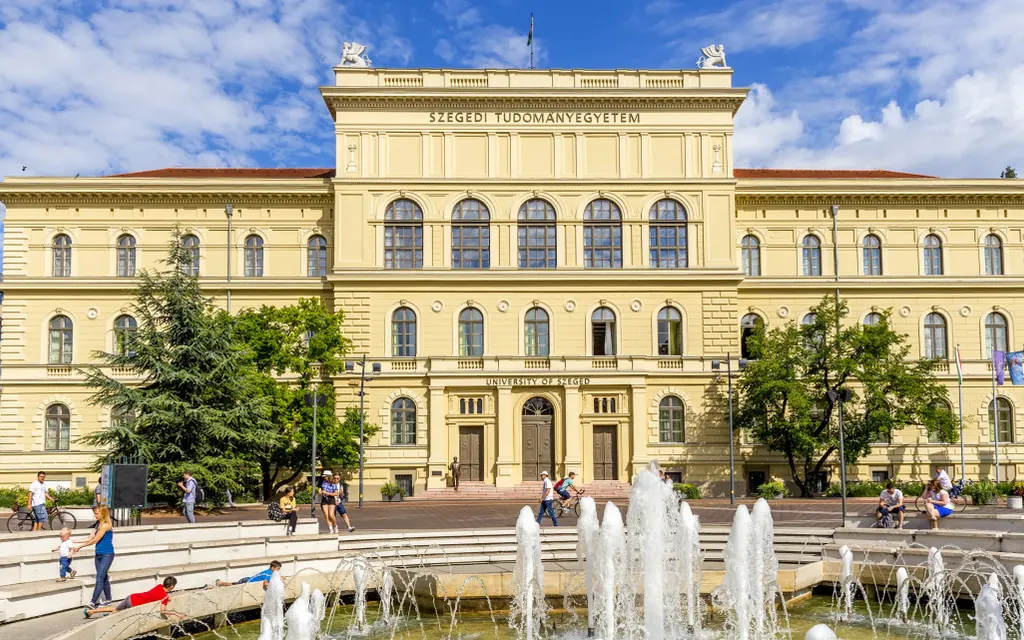
Szeged university with 12 faculties and up to 25,000 students; English-taught medicine, dentistry, pharmacy…
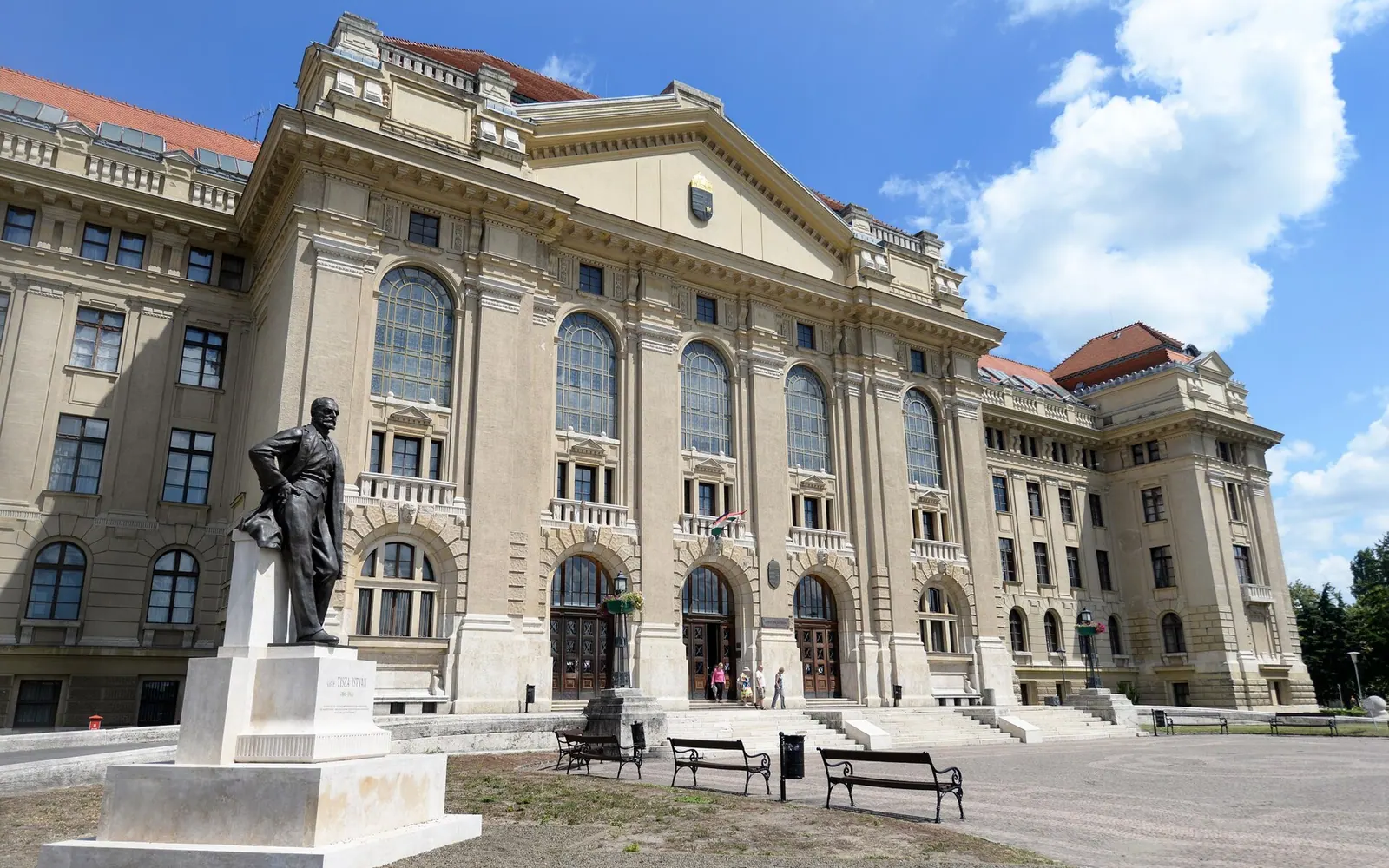
Debrecen university with 13 faculties, 8 campuses and 34,000+ students; English-taught degrees from medicine…
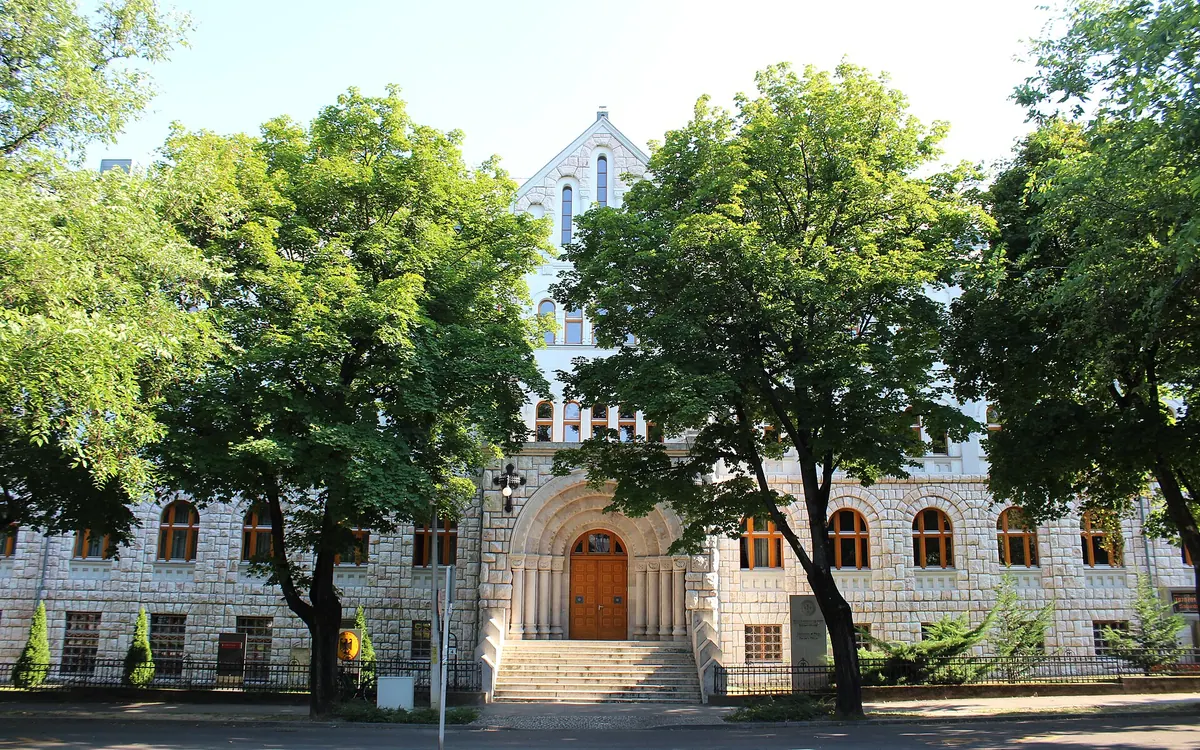
Pécs university with 10 faculties; over 40 bachelor's and long-cycle degrees in English, from…
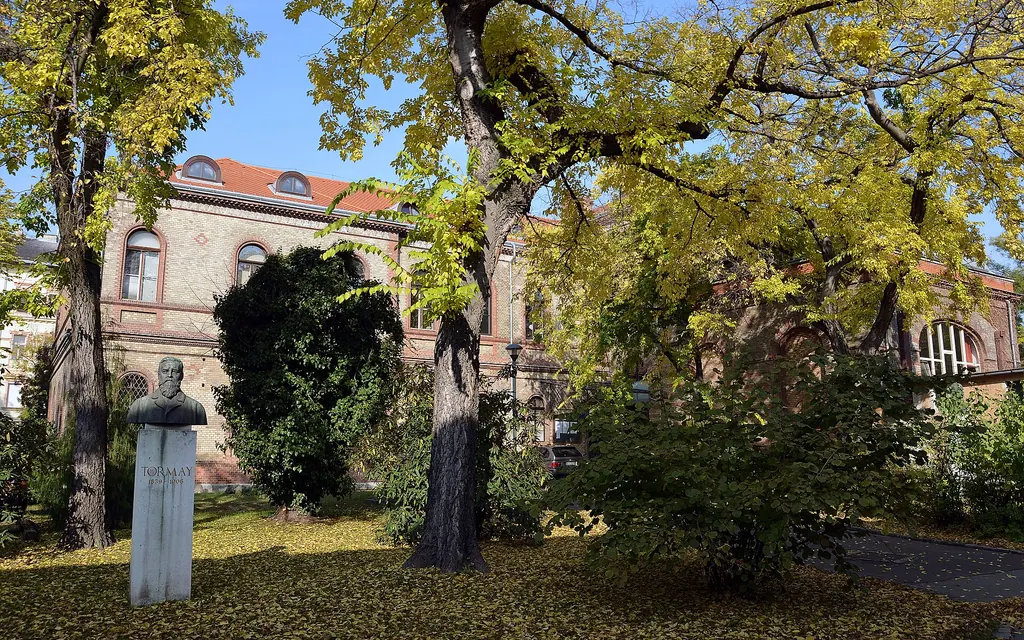
Budapest veterinary university, teaching since 1787; English-taught veterinary medicine (5.5 years) and a five-year…
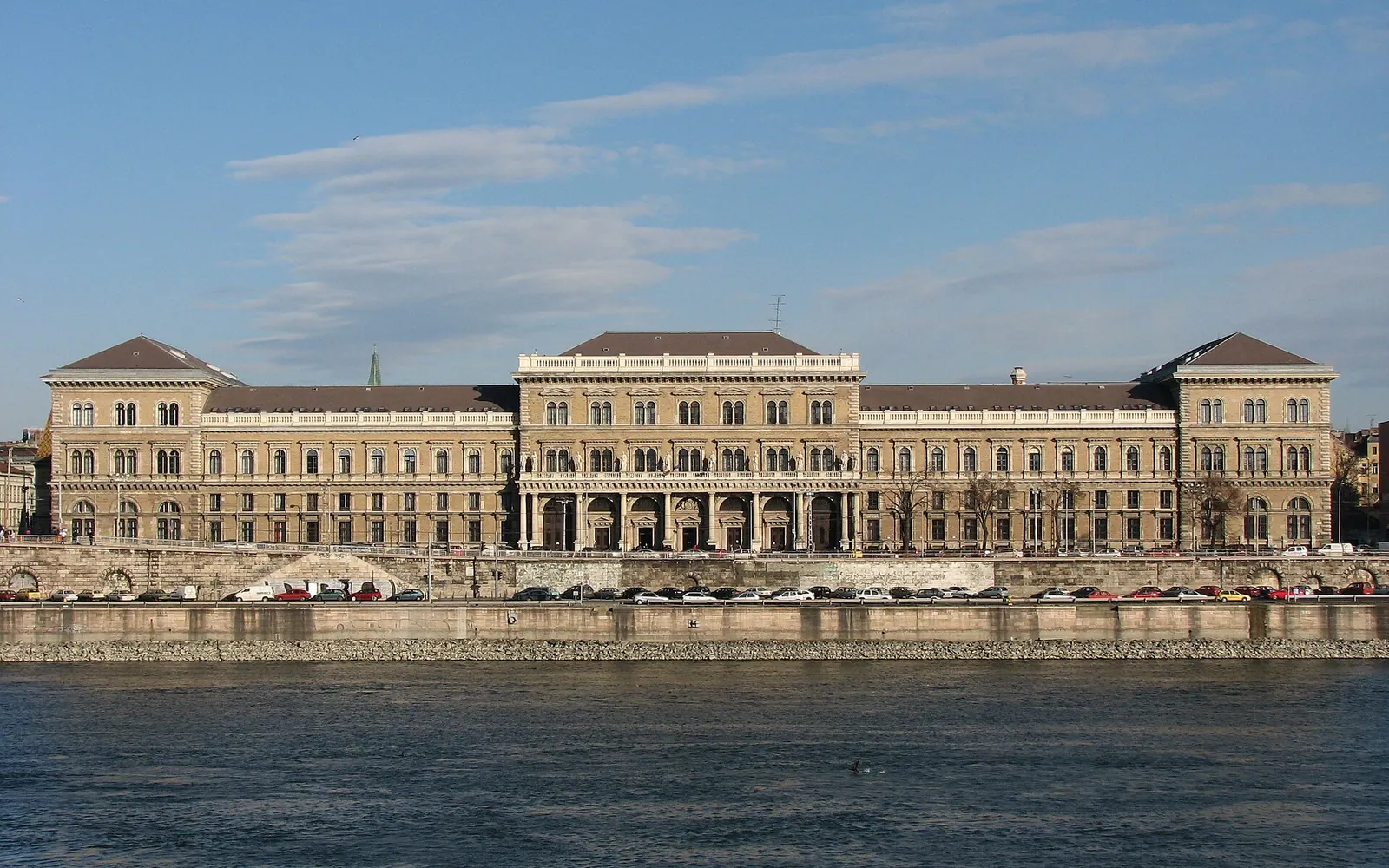
Budapest business and social-science university; 8 bachelor's taught in English, from economics and data…
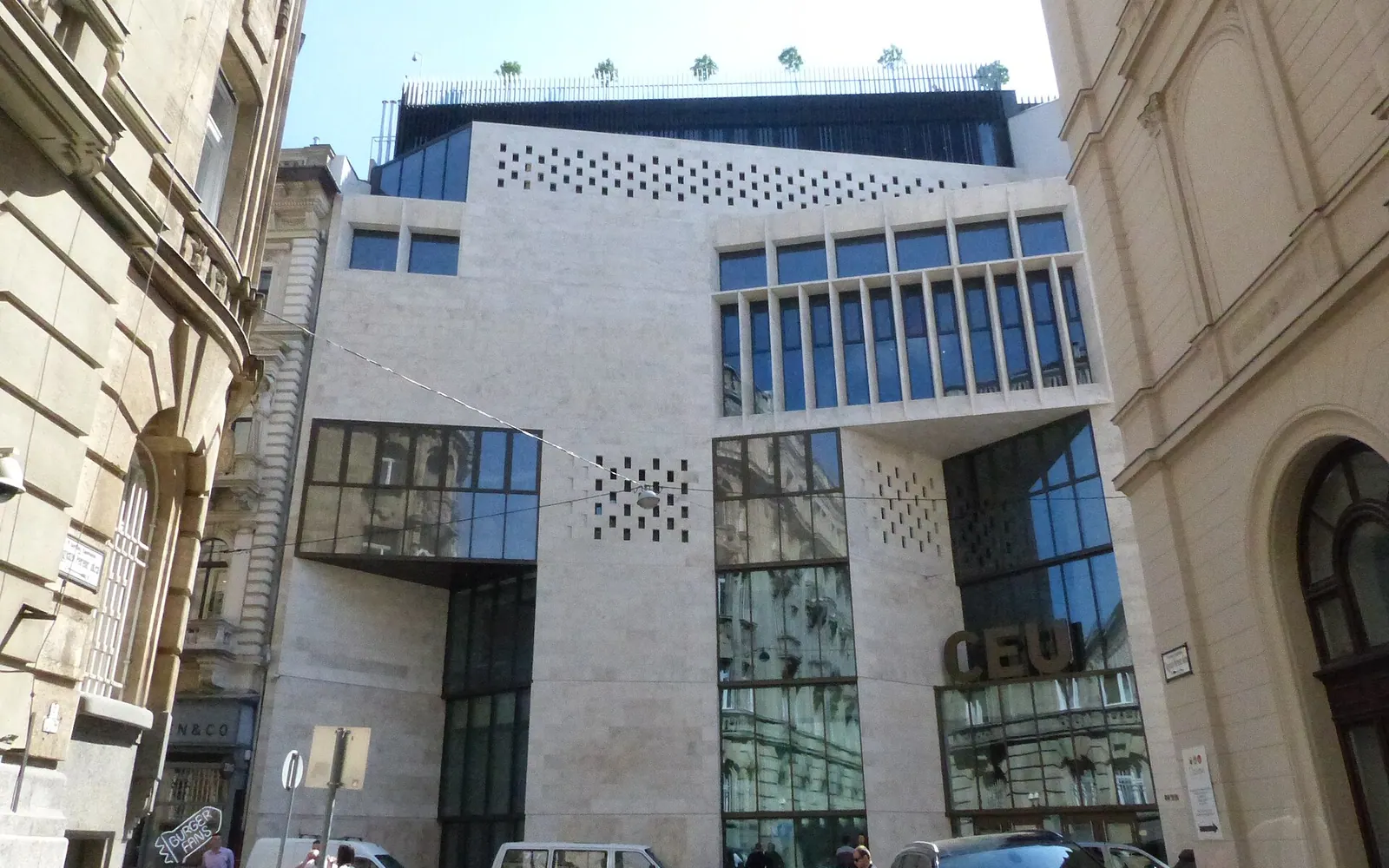
Vienna-based university teaching in English; three bachelor's degrees, each in 3 years (Austrian) or…
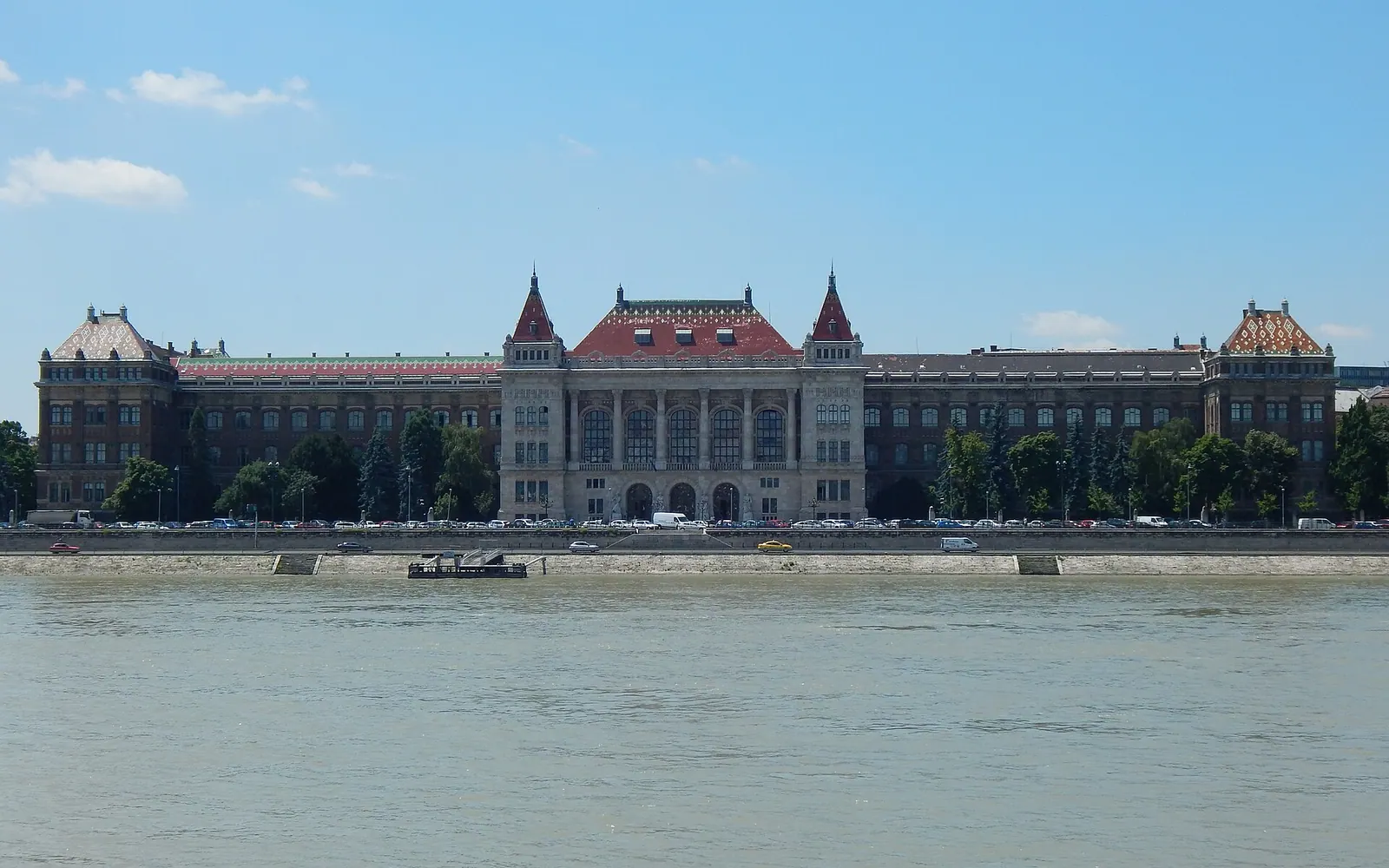
Budapest technical and economics university: twelve English-taught BSc and single-cycle degrees, entered through its…
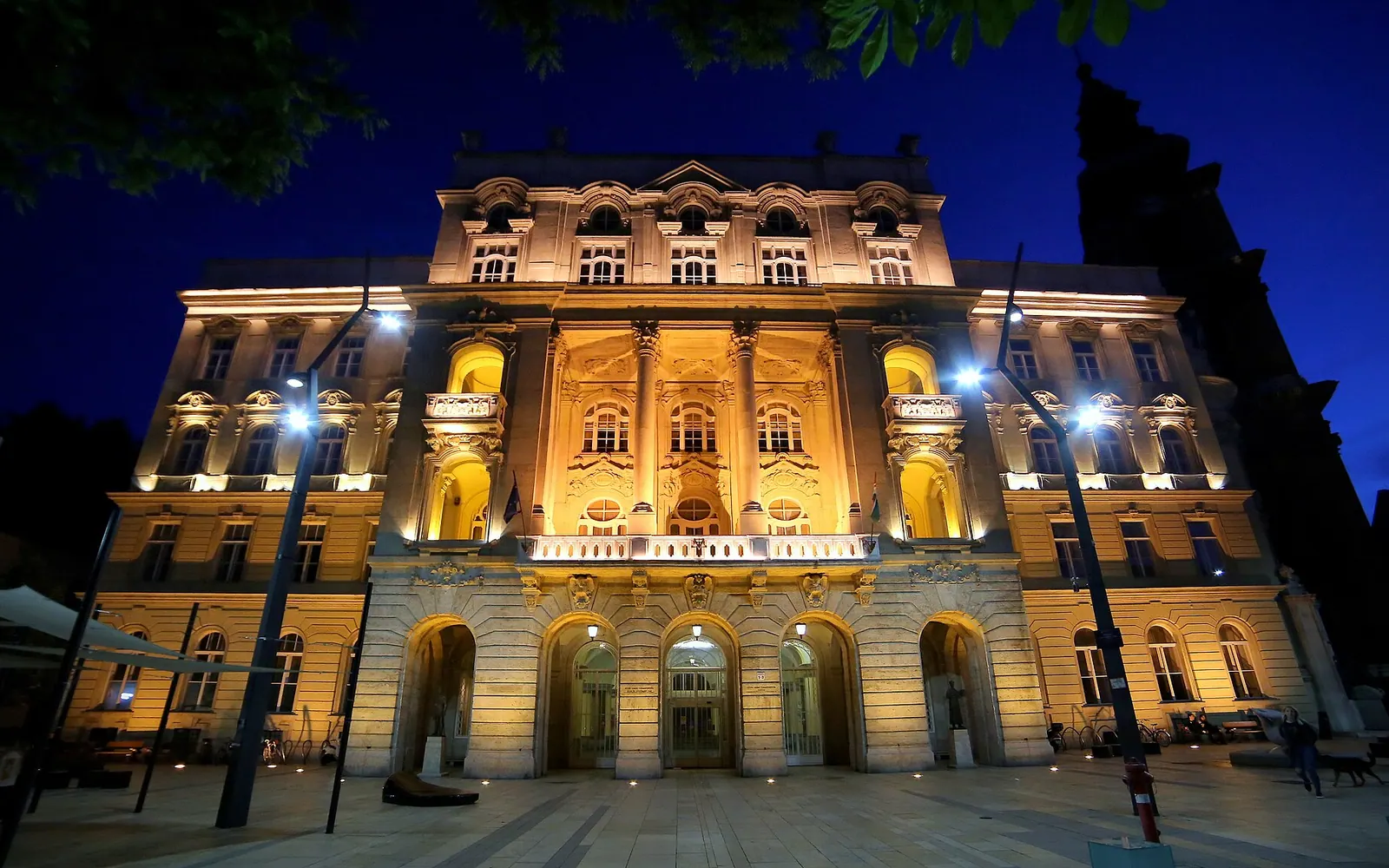
Budapest university with a Szombathely campus: fourteen English-taught bachelor's degrees from informatics and chemistry…
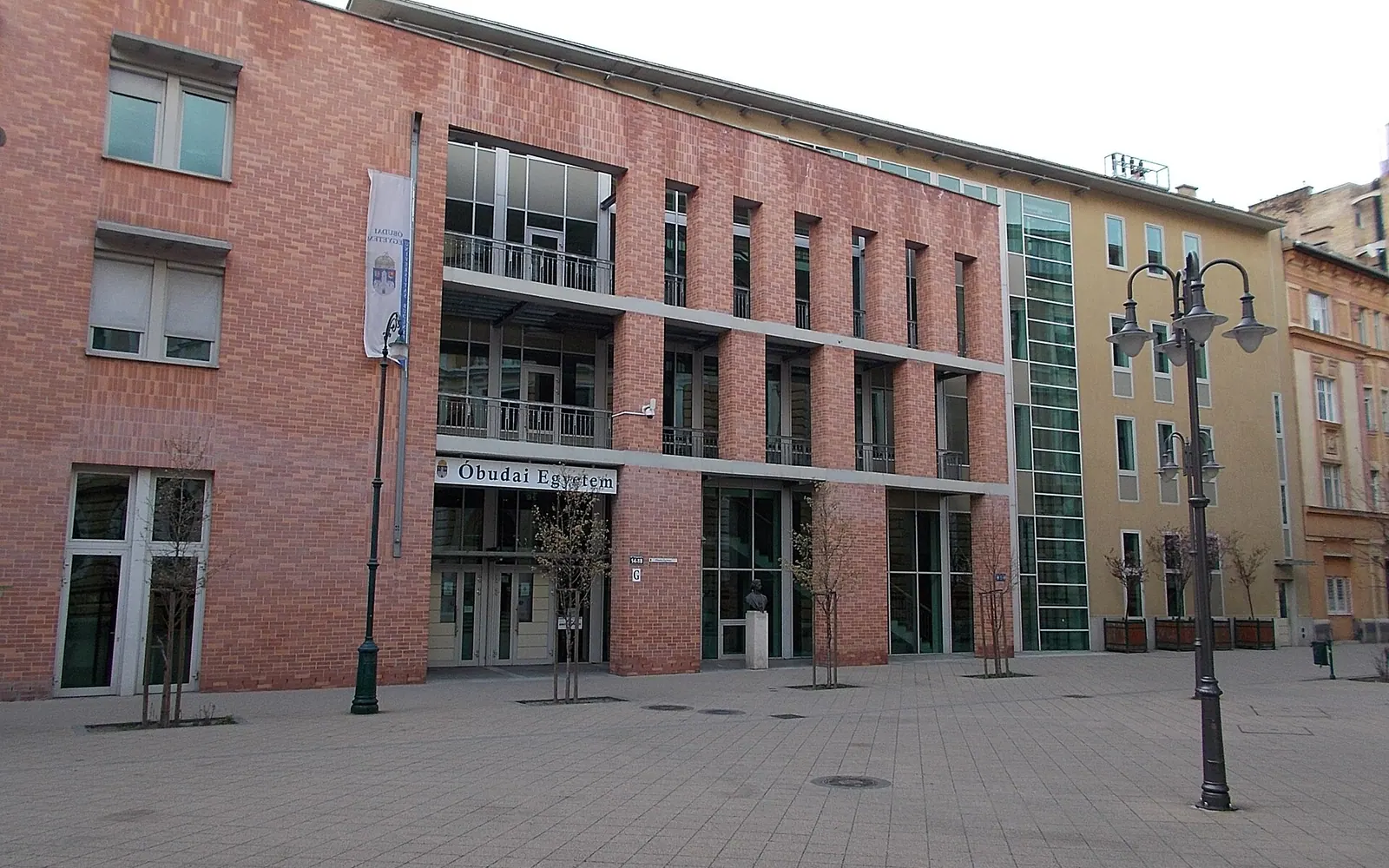
Budapest technical and business university: eight of its 16 BSc degrees are taught entirely…
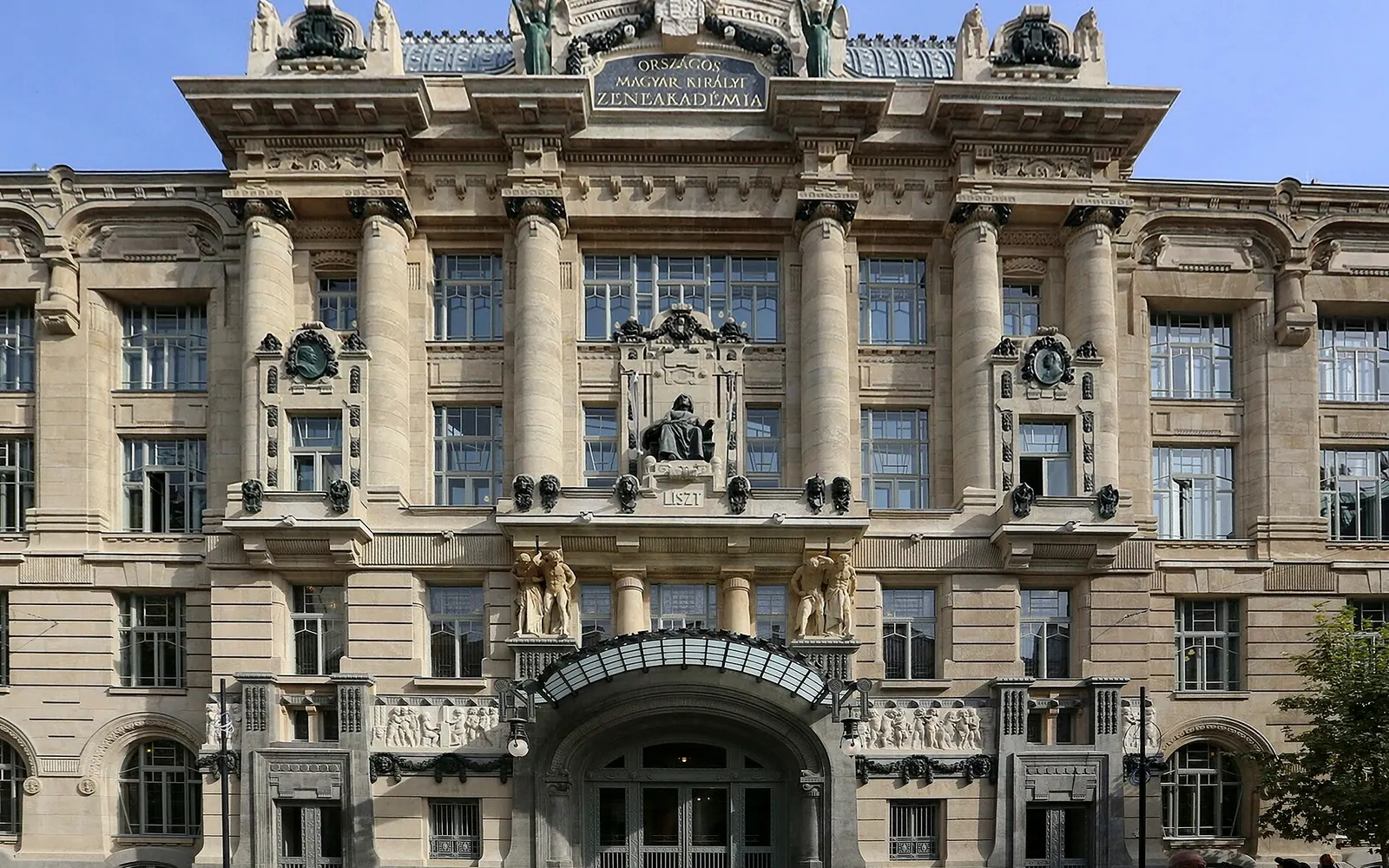
Budapest conservatoire where main-subject classes for BA instrument, voice and conducting majors run in…
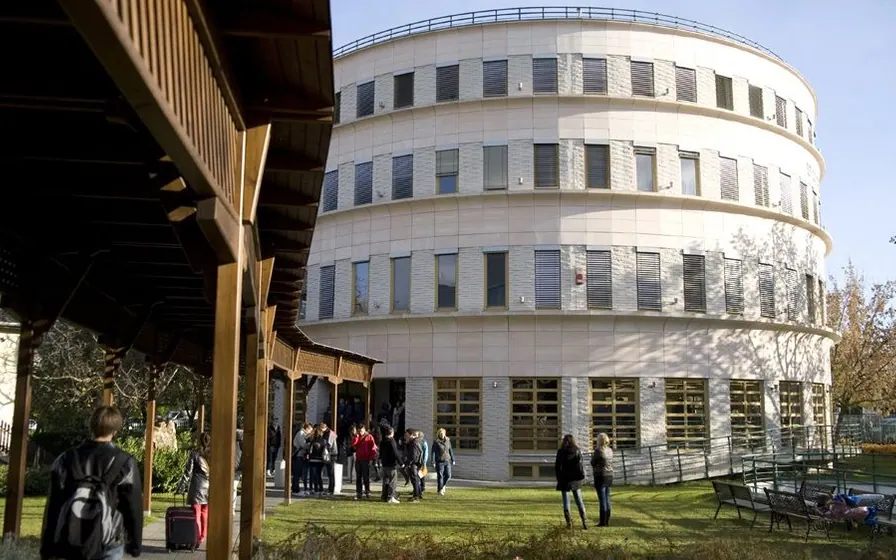
Budapest university with English-taught bachelor's degrees in art and design, business, communication and tourism…
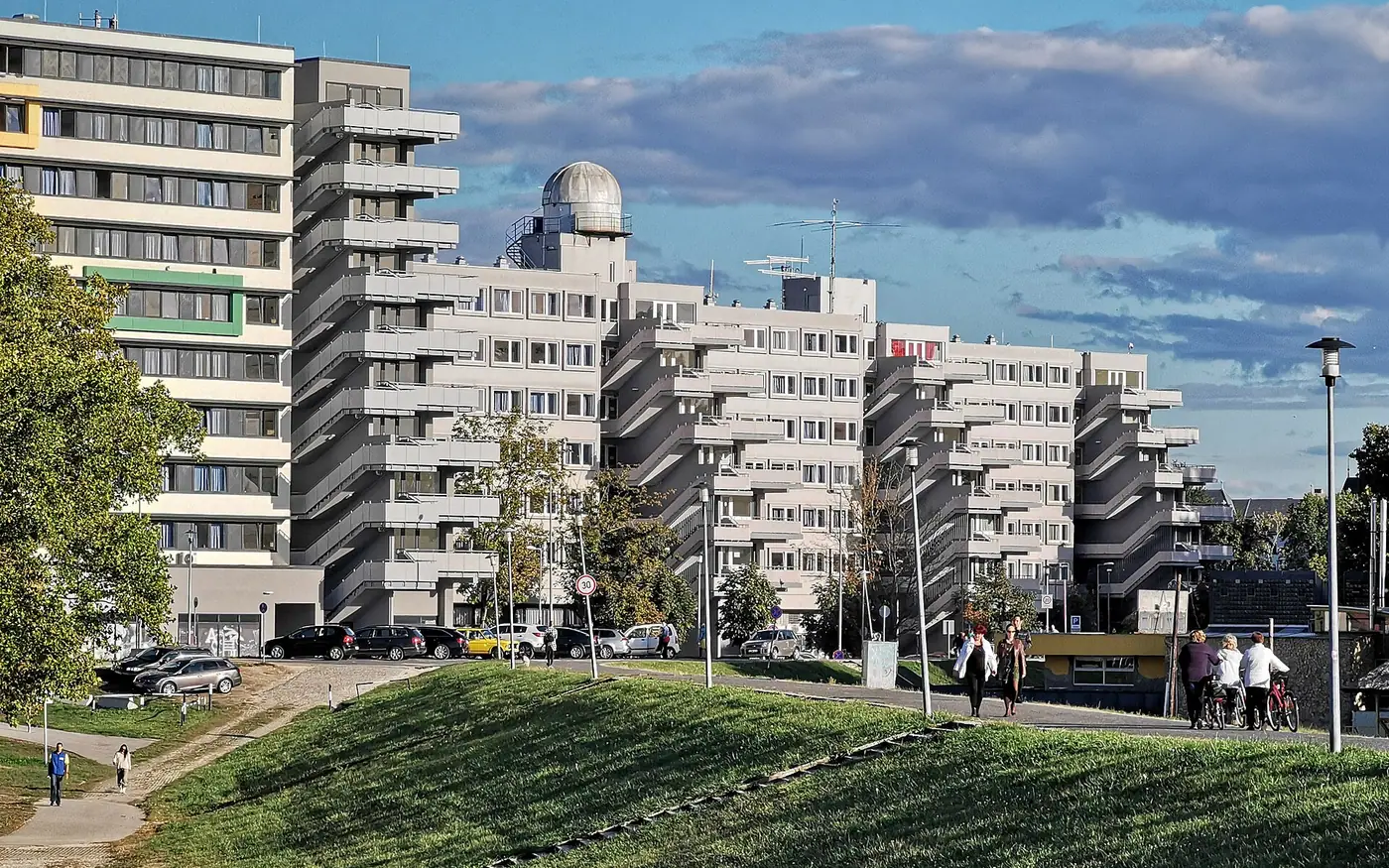
Győr university with sixteen English-taught bachelor's degrees across engineering, agriculture, business, social science and…
This browser cannot draw the globe. Every place is in the list below.
Hungary is where Scandinavians go to study medicine in English, and its four medical universities - Semmelweis, Debrecen, Pécs and Szeged - are genuinely open to you.
What you need to understand before anything else is the money. Hungary's big scholarships — Stipendium Hungaricum and the Diaspora Scholarship — are both closed to EU citizens, and Hungary's bilateral state scholarships depend on your nationality — Denmark is not on the list, so check whether your country is. Unless it is, you are self-funded, and a medical degree costs roughly 15,000 to 19,000 euros a year for six years. The one piece of good news: Szeged waives its medicine entrance exam entirely if your IB has a 5 in two Higher Level sciences.
Four universities - Semmelweis, Debrecen, Pécs and Szeged - teach medicine fully in English, most also dentistry and pharmacy, and Univet teaches veterinary medicine; many entrance exams can be sat online from Denmark.
Stipendium Hungaricum is closed to EU citizens: it works through bilateral sending-partner agreements, and no EU member state is on the list (Ukraine, among other non-EU countries, is).
Hungary has 64 accredited higher education institutions of two legal types, the egyetem (university) and the főiskola (college, often called a university of applied sciences in English).
Hungary has 64 accredited higher education institutions of two legal types, the egyetem (university) and the főiskola (college, often called a university of applied sciences in English). Medicine is a 10–12-semester undivided programme inside the universities, the arts have their own universities, and a two-year felsőoktatási szakképzés gives a vocational qualification without a degree.
The research universities, including the medical universities and faculties that teach medicine, dentistry and pharmacy in English. Where most English-taught bachelor's and all English-taught medicine sit.
Smaller, practice-oriented institutions awarding bachelor's degrees and sometimes more.
Music, art and design — the Liszt Academy and MOME among them — admitting on audition or portfolio.
Entry turns on the audition or portfolio, not IB points.
Four semesters at a higher education institution, ending in a vocational qualification but not a degree. Part of the credits count if you go on to a bachelor's.
Not covered for international applicants on this site.
Yes, an IB Diploma is accepted.
Yes
IB subjects are mapped onto Hungarian érettségi subjects — Business Management to üzleti ismeretek, Economics to gazdasági ismeretek, and so on. To claim érettségi points you need at least two acceptable or matchable subjects at the required level. Higher Level counts at full value; Standard Level is multiplied by two thirds.
Hungarian legislation establishes that the IB Diploma is equivalent to the Hungarian érettségi, so no separate recognition application is needed. The Educational Authority (Oktatási Hivatal) converts grades to points: a 7 counts as 100 percent and scores 100 points at Higher Level or 67 at Standard; a 6 is 88 percent, 88 or 59 points; a 5 is 76 percent, 76 or 51; a 4 is 63 percent, 63 or 42; a 3 is 51 percent, 51 or 34; a 2 is 39 percent, 39 or 26.
How Hungary reads an IB Diploma.
These are the pages this section was written from. None has been signed off by a person yet, so confirm anything consequential at the source.
Apply directly to each university.
Work out the funding first. Stipendium Hungaricum and the Diaspora Scholarship are closed to EU citizens, and Hungary's bilateral state scholarships depend on your nationality — Denmark is not on the list, so check whether your country is. Unless it is, budget the full tuition plus living costs before you commit to anything.
Decide whether you are applying in English or in Hungarian. They are different systems: English-taught programmes go direct to each university on its own portal, while felvi.hu / E-felvételi handles Hungarian-language and state-funded places on a central mid-February deadline.
If you want medicine, decide early whether to target Szeged. Its IB exam exemption is worth a great deal of effort — grade 5 in two HL sciences and you skip the entrance exam altogether.
Apply directly to each university through its own portal: SEMAPHOR at Semmelweis, DreamApply at Szeged and Corvinus, apply.univet.hu at the veterinary university, and their own systems at Debrecen and Pécs.
Apply early rather than close to the deadline. Pécs, Univet and Corvinus all admit on a rolling basis, and Debrecen closed its September 2026 medicine applications before the published date because of demand.
Pay the application fee, which varies enormously: 100 euros at Corvinus, 150 dollars at Debrecen, 200 dollars at Pécs, 200 euros at Univet, 300 euros at Szeged, 400 dollars at Semmelweis — and at Pécs a further 250 dollars for the entrance exam.
Book your entrance exam. At the medical schools these run roughly March to July and are taken online — Szeged on Coospace monitored by Zoom, Semmelweis on Moodle, Pécs and Univet with an oral interview over Zoom or Teams.
Pay the tuition deposit to hold your place. It is usually deducted from your first semester fee: 2,000 dollars at Semmelweis, 800 euros at Szeged and at Univet.
Upload your IB Diploma the week it arrives. Semmelweis wants it by 21 August and Corvinus by 1 August; Pécs will take it as late as September, and Univet before enrolment.
After you arrive, register with the National Directorate-General for Aliens Policing within 93 days of entry. The registration certificate costs HUF 1,000 and never expires — and it is what unlocks unlimited work rights.
The English-taught medical programmes select on their own entrance exam, not on your IB points. The pattern is a written multiple-choice paper in biology and chemistry (or physics) plus English, followed by an oral interview over Zoom on motivation and subject knowledge. Debrecen can also place you in a preparatory Basic Medicine Course rather than admitting or rejecting outright. Szeged caps English-programme intake at around 200 students a year and Pécs at 180. At Corvinus, maths is either evidenced by your IB grade or tested in a 26-question online exam, and three programmes add an interview.
Central European University: by 15 October 2026.
Priority
Later applications are considered after these.
All four rounds close at 23:59 CET. CEU’s own financial aid is awarded in the first two rounds only, so apply in October or February if you want it. Accepted students pay a 500-euro registration fee. Note that CEU’s bachelor’s programmes are taught in Vienna, not in Budapest - it appears on this page because it was founded in Budapest, but you would be living in Austria.
Applies to: applicants to the January/February start, not the September one
Hard deadline
After this the door closes.
Published with its year: Debrecen lists "January/February 2026/2027 - all programs: 1st November 2026". This is the only route on this page that starts in February rather than September, which makes it the fallback for a student who misses a September round - and the nearest deadline on this whole page. Debrecen also states that it closed applications early for the September 2026 Medicine and Dentistry intake "due to an exceptionally high number of applications received", so treat its published deadlines as the latest possible date rather than a safe one. Application fee 150 USD, non-refundable.
Published with its year: "the application period starts on 1st November 2026 and the application deadline is 30th June 2027 for the academic year 2027/2028 beginning from September 2027". Pécs adds the sentence that makes the opening date matter: "Since admission is continuous, the earlier you apply, the more spots we can offer." There is one intake a year. It is on the online-application page (https://admissions.medschool.pte.hu/application-form), as of 23 September 2026; the page on the same site titled "Deadlines & Requirements" publishes no deadline at all, so look for dates on the application page.
Rolling
Considered as they arrive, until places run out.
Published as a standing rule with no year: "Applications are accepted on a rolling basis from 1st January until 30th June (in cases of vacancies later)"; this site assumes the 2027 intake. Decisions are made on a rolling basis through the window, so an early application is a better one. Entrance examinations are arranged online between March and July, with "further rounds of entrance examinations organized in August depending on the number of vacancies" - a real second chance, but one that depends on other people turning places down. An applicant still in the final year of school may apply, but the school leaving certificate must be presented before enrolment.
Priority
Later applications are considered after these.
All four rounds close at 23:59 CET. CEU’s own financial aid is awarded in the first two rounds only, so apply in October or February if you want it. Accepted students pay a 500-euro registration fee. Note that CEU’s bachelor’s programmes are taught in Vienna, not in Budapest - it appears on this page because it was founded in Budapest, but you would be living in Austria.
Published with its year: "Entrance exams are organized each Wednesday between 3rd March and 14th July 2027." The window runs weekly, not continuously - there are twenty Wednesdays in it and you sit one of them. Register two weeks in advance. Exams can be sat in Pécs, in Budapest at McDaniel College, or abroad through representative agencies, and there is a 250 USD (about €220 at the ECB rate of 24 September 2026) entrance exam fee on top of the application fee.
Priority
Later applications are considered after these.
All four rounds close at 23:59 CET. CEU’s own financial aid is awarded in the first two rounds only, so apply in October or February if you want it. Accepted students pay a 500-euro registration fee. Note that CEU’s bachelor’s programmes are taught in Vienna, not in Budapest - it appears on this page because it was founded in Budapest, but you would be living in Austria.
Hard deadline
After this the door closes.
Published with its year: "The application period for the September 2027 intake will open later this year, and the final application deadline will be May 15, 2027." In 2026 the deadline was 15 June; for 2027 Debrecen has brought it forward by a month, so a 15 June date you see elsewhere is wrong for 2027. The opening date is still only "later this year" (as of 23 September 2026). Debrecen closed its September 2026 Medicine and Dentistry applications ahead of the published deadline because of demand, so do not plan to use the last week of this window.
Hard deadline
After this the door closes.
Published with its year, as "Application deadline: 31 May, 2027", on all three programme pages, so this is a genuine 2027 date rather than an assumed one. The opening date is not: Semmelweis shows "Application starts: (to be announced soon)". Applications run through the SEMAPHOR system. Entrance exams are held once or twice a week from early March until the end of June, but Semmelweis publishes no calendar - "The exact dates and times will be provided to the applicants having submitted their application(s)" - so the exam dates are only visible from inside the system. One eligibility rule that catches younger IB candidates: you must be 18 by the end of the spring semester of year one, "i.e., by the end of May 2027".
Hard deadline
After this the door closes.
Published with its year: "the application deadline is 30th June 2027 for the academic year 2027/2028". It is on the online-application page, not on the page called "Deadlines & Requirements", which carries no dates at all. Because the entrance-exam window closes on 14 July and exams have to be arranged two weeks ahead, applying at the very end of June leaves almost no room to sit the exam, let alone re-sit it.
Via Hungarian university
After most Hungarian deadlines. You apply on predicted grades and entrance exams, and upload the Diploma once you have it.
Hard deadline
After this the door closes.
All four rounds close at 23:59 CET. CEU’s own financial aid is awarded in the first two rounds only, so apply in October or February if you want it. Accepted students pay a 500-euro registration fee. Note that CEU’s bachelor’s programmes are taught in Vienna, not in Budapest - it appears on this page because it was founded in Budapest, but you would be living in Austria.
Hard deadline
After this the door closes.
Published as "1 August" with no year, twice: the application-information page lists "Step 8 Submit final diplomas and certificates by 1 August", and the admissions-requirements page says Corvinus "accepts the following proof of English language proficiency (minimum equivalent B2 level) submitted no later than 1 August". This site assumes the 2027 intake. Comfortable for an IB candidate - the diploma is issued in early July - but it is the last gate before enrolment, and an offer is conditional on it.
Applies to: applicants who applied before their diploma was issued
Hard deadline Via Hungarian university
After this the door closes.
Semmelweis only. Published as a standing rule, '21st of August the year of application', so this site assumes 2027. Other universities set their own document deadline.
Published as "the 21st of August the year of application", with no year; this site assumes the 2027 intake. Semmelweis lets you apply and sit the entrance exam while still in your final year - "Those who have not yet received this certificate can also submit their application and take the entrance examination" - but "The final deadline for uploading the Matriculation Certificate is the 21st of August." Your IB Diploma is issued in early July, so the gap is about six weeks; the risk is not the date but forgetting the step exists.
Via Hungarian university
English-taught programmes are applied for on each university's own portal, not through the national felvi.hu system. Dates differ: Semmelweis closes medicine on 31 May 2027; Pécs takes applications from 1 November 2026 to 30 June 2027 and admits continuously. Several universities fill places as applications arrive, so treat a published deadline as the last possible day.
Corvinus publishes the month and not the day: "The online admission platform for the Academic year 2027/28 will open in October 2026" (as of 23 September 2026). Nothing can be submitted before it opens, and because Corvinus runs rolling admissions with staged entrance-exam rounds, opening day is effectively the start of the queue - in the 2026 cycle the first "early bird" phase ran from 1 October 2025 to 26 January 2026 and those applicants got the February oral exams. The application fee is 100 euros and is payable before the application is processed at all.
Applies to: applicants to Hungarian-taught or state-funded places only
Hungary does have a central admissions system, and it is not the one an IB student from Denmark normally uses: felvi.hu / E-felvételi handles Hungarian-language and state-funded places, while the English-taught programmes on this page are applied for directly to each university. felvi states the rule in Hungarian rather than publishing a 2027 date: "a szeptemberben induló képzésekre vonatkozó általános felvételi eljárás meghirdetései legkésőbb az előző év december 31-ig jelennek meg honlapunkon, a jelentkezési határidő többnyire a rákövetkező év február 15-én jár le" - the programmes are announced by 31 December of the previous year at the latest and the application deadline usually falls on 15 February, with the point thresholds (ponthatárok) set in July. "Többnyire" is felvi’s own hedge, which is why no date is recorded. Semmelweis puts the division plainly from the other side: "Our English language programs are fundamentally available for applicants having no Hungarian citizenship as the Hungarian citizens are eligible to apply for the Hungarian language programs through FELVI." (felvi.hu is in Hungarian.)
Hard deadline
After this the door closes.
Corvinus had published nothing beyond "October 2026" for the 2027/28 cycle by 23 September 2026, so no closing date is given. Precedent from the 2026 cycle, which shows how the shape of it matters more than the day: applications ran "from 27 January onwards until 25 May 2026", but admission is staged, and what you actually have to hit is the deadline to complete the written entrance exam or upload exemption evidence in order to be invited to the next oral round. Those fell on 8 February, 22 February, 29 March, 3 May and 26 May 2026, with oral exams on 11-13 February, 11-13 March, 15-17 April, 20-22 May and 10-12 June. Applying in the last week means the last oral round or none.
Hard deadline
After this the door closes.
Not published yet: on 23 September 2026 the DreamApply course page still showed "Fall semester 2026/27 - Application period has ended" and nothing for 2027/28. For the 2026/27 intake entrance exams ran from the end of February to the end of June, every second week. Szeged is worth watching for rather than writing off: it exempts strong IB science candidates from the entrance exam altogether, and it caps the English programme at roughly 200 students a year. Check the portal from late 2026.
Substantial in medicine and business, thinner elsewhere. Four universities teach medicine in English, most also dentistry and pharmacy; Corvinus has 8 English-taught bachelor's degrees in business, economics and social sciences; the veterinary university teaches its whole degree in English; BME…
Substantial in medicine and business, thinner elsewhere. Four universities teach medicine in English, most also dentistry and pharmacy; Corvinus has 8 English-taught bachelor's degrees in business, economics and social sciences; the veterinary university teaches its whole degree in English; BME lists 13 English-taught BSc degrees. Counts for ELTE, Óbuda, MOME, the Liszt Academy, Budapest Metropolitan and Széchenyi István are not confirmed here.
Set institution by institution, and generally easy for an IB student. Corvinus accepts IB English at SL 5 or HL 4, or IELTS 6.0. CEU accepts IB English at 5 or above at either level, or IELTS 6.5 / TOEFL iBT 88. Debrecen requires a proctored B2 certificate but exempts anyone who completed secondary education in English — which covers an IB school. At Semmelweis, Szeged, Pécs and Univet, English is assessed inside the entrance exam itself, so no external certificate is usually needed.
Not for English-taught programmes
No EU discount exists — you pay the same published fees as everyone else.
No EU discount exists — you pay the same published fees as everyone else. Medicine: Semmelweis 9,340 euros per semester (18,680 a year), Szeged 7,900 per semester (15,800 a year), Debrecen 16,900 US dollars a year, Pécs 16,750 dollars a year. Dentistry: Semmelweis 9,340 euros per semester, Debrecen 17,500 dollars, Pécs 17,350 dollars. Pharmacy: Semmelweis 5,820 euros per semester, Debrecen 8,000 dollars, Pécs 8,400 euros. Veterinary medicine at Univet Budapest 12,480 euros a year. Corvinus bills EEA applicants in forints: HUF 1,700,000 to 1,980,000 a year. (Semmelweis 2027 entry, Pécs 2027/28, Szeged and Debrecen and Univet 2026/27, Corvinus year not stated)
Broadly the same, with one exception. The medical schools publish a single fee per programme with no nationality split. Corvinus does distinguish: it bills non-EEA applicants in euros at 6,600 to 7,000 a year and EEA applicants in forints at HUF 1,700,000 to 1,980,000, so the difference is the currency and the exchange-rate risk as much as the headline price. (2026/27)
Varies a lot: 100 euros at Corvinus, 150 US dollars at Debrecen plus a 350-dollar exam fee, 200 dollars at Pécs plus 250 for the exam and 220 registration, 200 euros at Univet plus 250 for the exam and 220 registration, 300 euros at Szeged, 400 US dollars at Semmelweis plus a 2,000-dollar deposit and 230 enrolment fee. CEU charges accepted students a 500-euro registration fee.
Dormitory places run from HUF 13,000 a month in Szeged and 18,000 in Debrecen up to HUF 36,000 in Budapest and 40,000 in Győr. A shared flat with utilities costs around HUF 80,000 outside Budapest and 140,000 in the capital; a private flat 135,000 to 175,000 outside Budapest and 225,000 in it. A restaurant meal is HUF 2,500 to 4,000 and a single transport ticket 350 to 650. (not stated on the source page)
As an EU citizen you may stay beyond three months if you are enrolled at an accredited institution, and you must register with the National Directorate-General for Aliens Policing within 93 days of entering the country.
As an EU citizen you may stay beyond three months if you are enrolled at an accredited institution, and you must register with the National Directorate-General for Aliens Policing within 93 days of entering the country. Bring your admission certificate, your passport or ID card, proof of sufficient funds and evidence of health insurance. The fee is HUF 1,000, payable by card or transfer, and you can file at a regional directorate or electronically through the Enter Hungary platform. The registration certificate is issued immediately and has no expiry date.
EU and EEA students have no limit on working hours, provided you hold a registration card. That makes registering within 93 days more than a formality. Non-EU students are capped at 30 hours a week during term and 90 days or 66 working days outside it. Study in Hungary puts unskilled student work at roughly 445 euros net a month for eight-hour days and skilled work at about 550.
Dormitories, called kollégium, are the cheap option and the gap between cities is enormous: HUF 13,000 a month in Szeged against HUF 36,000 in Budapest and 40,000 in Győr. Whether international fee-paying students can actually get dormitory places is not confirmed here, and neither are university-specific dormitory prices — so treat the national figures as indicative and ask your university directly. Private rentals in Budapest run HUF 120,000 to 225,000 a month depending on which official page you read, with a deposit of at least two months' rent.
Bring your EHIC. As an EU citizen you are covered on the same terms as a Hungarian, with the same rights and obligations. Students on exchange or at a state-run institute get free medical care; students who do not meet those criteria can sign an agreement with the Hungarian Health Insurance Fund at a cost of 30 percent of the local minimum wage. Note that the EHIC covers medically necessary state-provided care, not comprehensive private cover. Whether an EU student needs a Hungarian TAJ social security card alongside the EHIC is not confirmed here — the official healthcare page does not mention it; ask your university.
If you hold Hungarian citizenship, you do not register a right of residence or prove your fee status, and Hungary's own student grants and loans are open to you on their ordinary terms; check them, because some depend on where you have lived.
Your IB is still a foreign qualification here, so the IB entry rules still apply to you.