
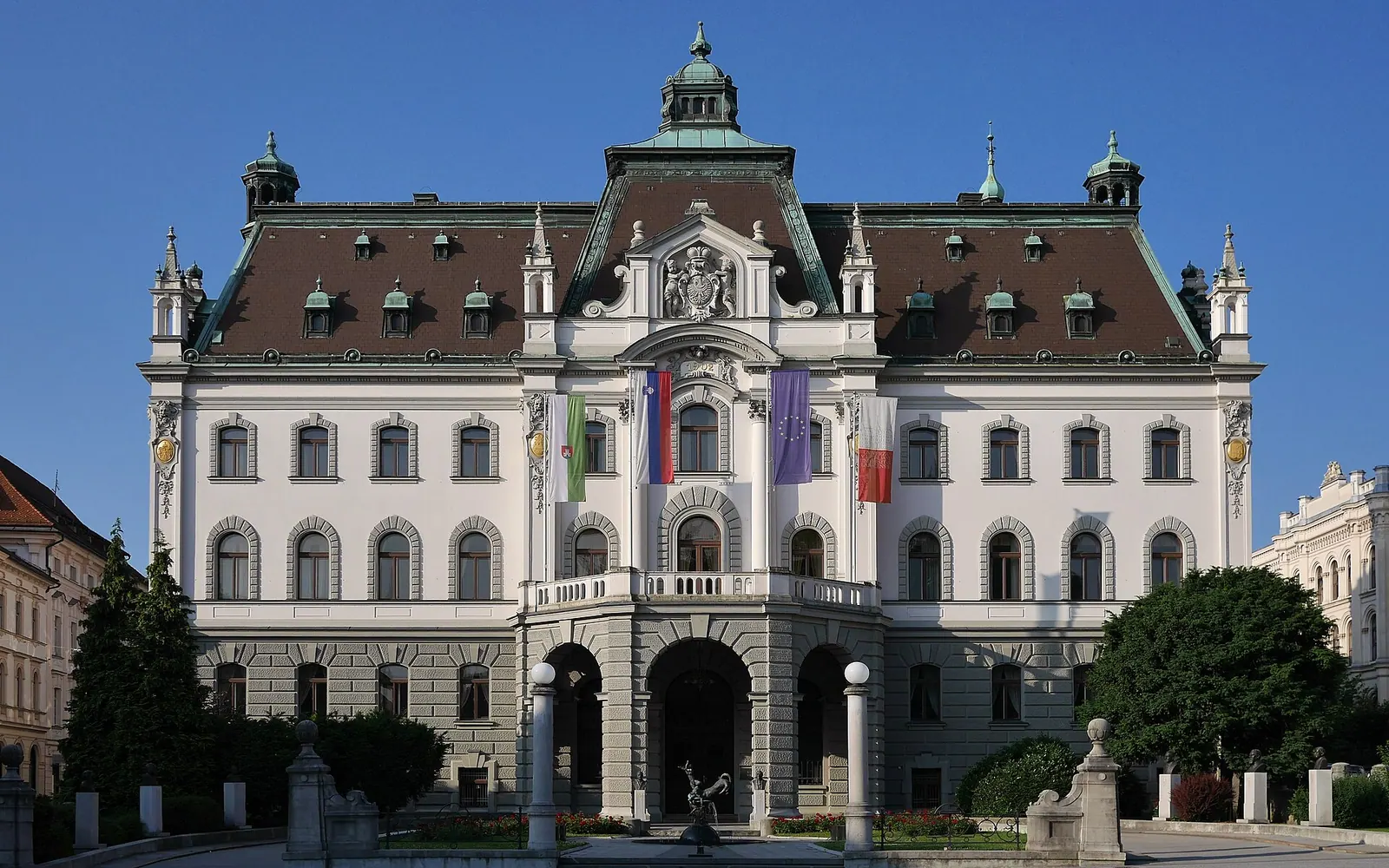
UL — University of Ljubljana
Founded 1919, about 38,000 students in 26 faculties; one English-taught bachelor's, Business and Economics…
Ljubljana1 programme
Central Europe · May 2027 IB session · Autumn 2027 entry
Free tuition for EU students, but very few English bachelor's
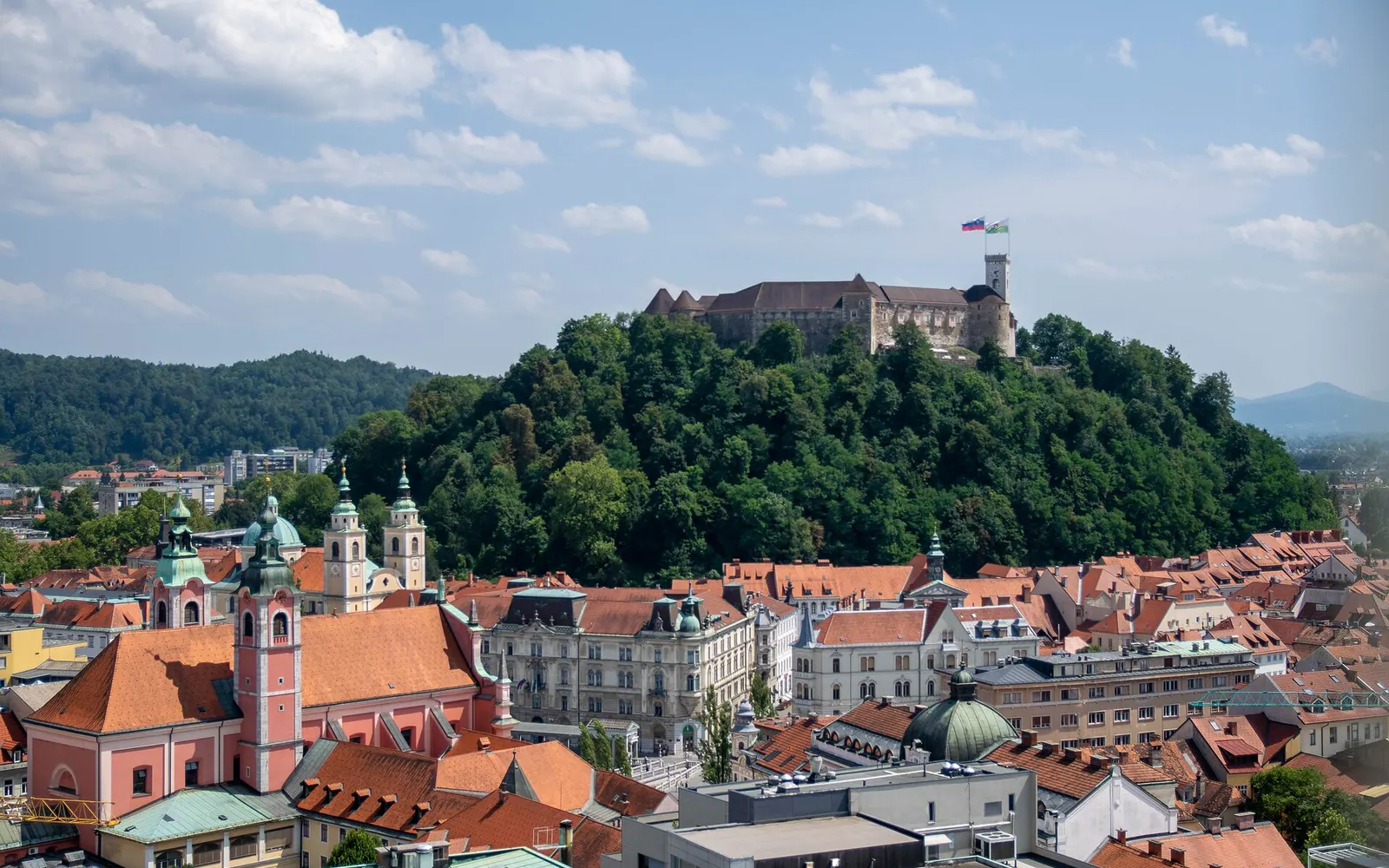
Ljubljana and its castle
6 institutions
Founded 1919, about 38,000 students in 26 faculties; one English-taught bachelor's, Business and Economics…
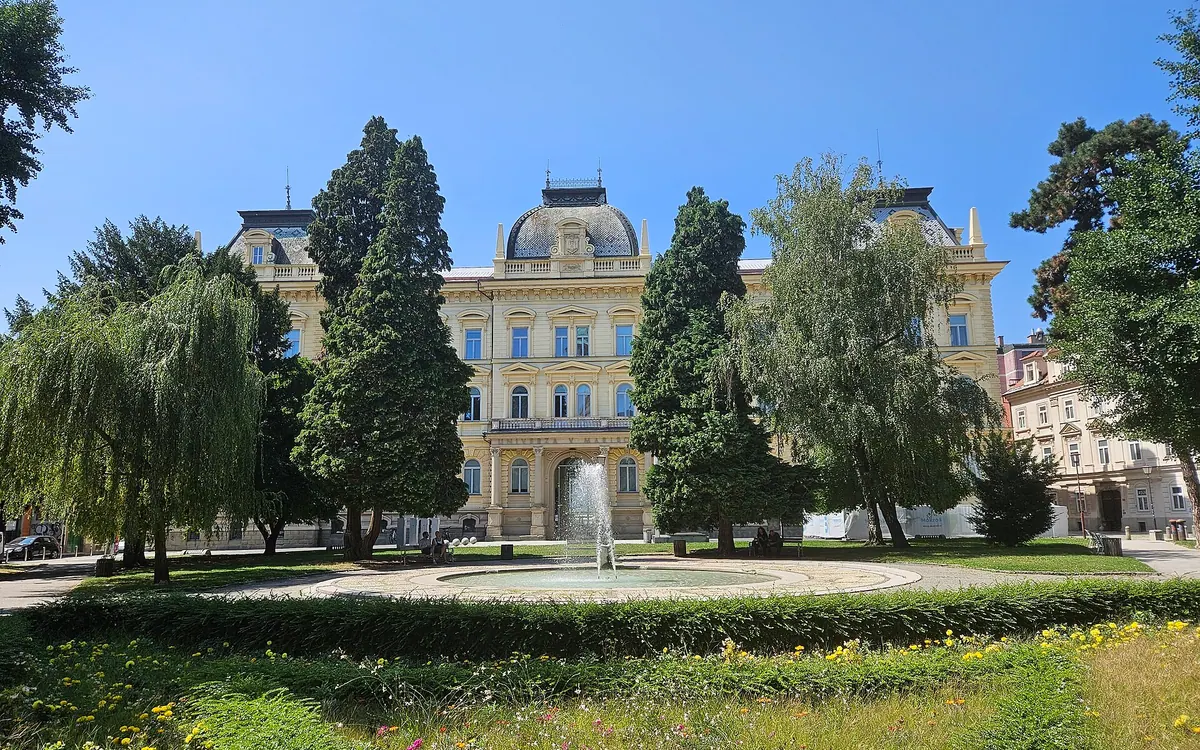
Founded 1975, 17 faculties and about 15,800 students; three English-taught bachelor's in business, tourism…
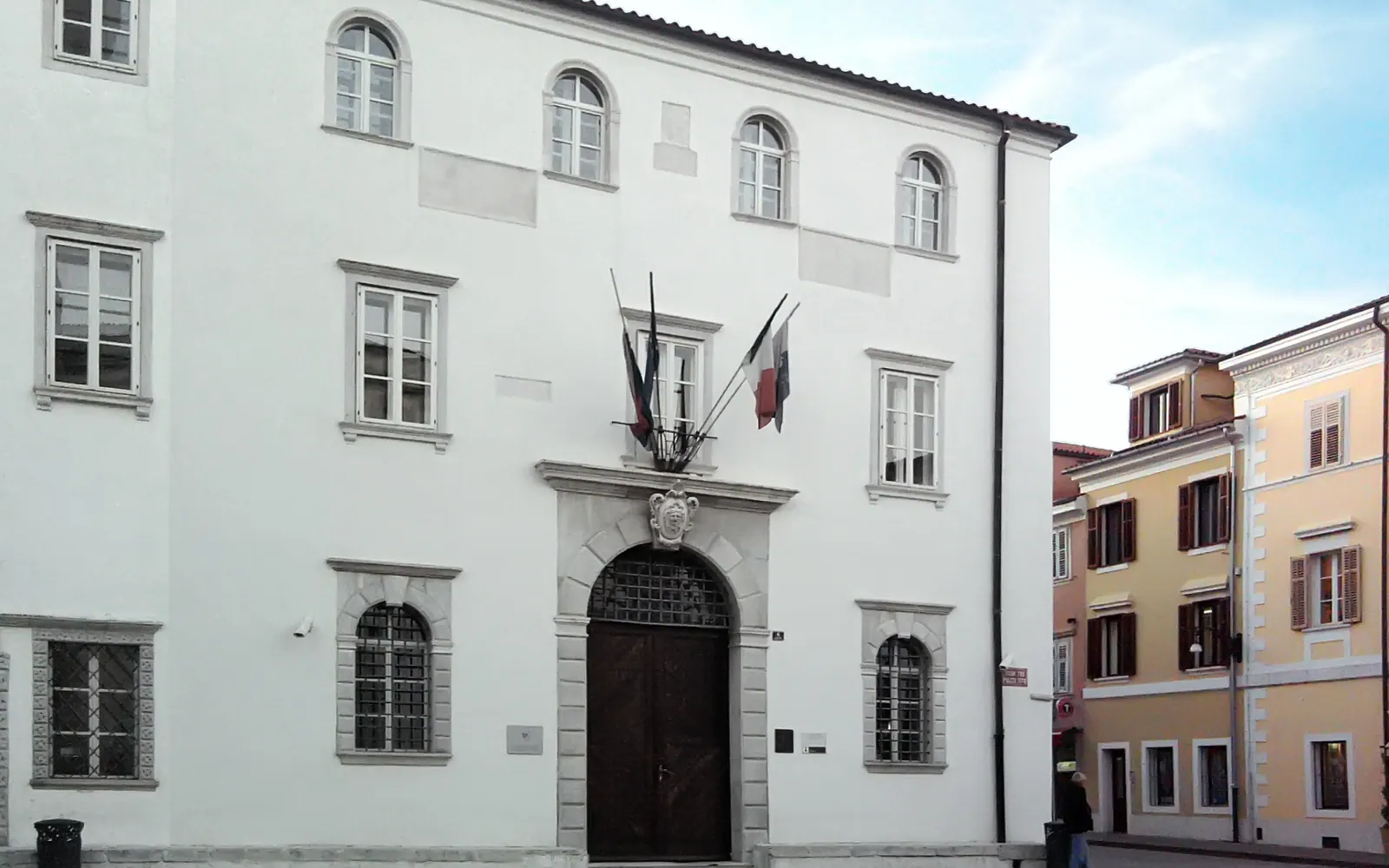
Public university on the Adriatic coast, founded 2003, about 5,900 students (a quarter international)…

Research-focused university on the Italian border with six schools; its Physics and Astrophysics bachelor's…

Private university in Maribor with study centres in Ljubljana, Koper and Murska Sobota; fee-paying…
Private business school in Ljubljana; its Faculty of Entrepreneurship offers one part-time, fee-paying bachelor's…
This browser cannot draw the globe. Every place is in the list below.
Slovenia is cheap, safe and free: as an EU citizen you pay no tuition for full-time bachelor study, exactly like a Slovenian.
The catch is blunt - almost all bachelor teaching is in Slovene. The four public universities list about seventeen English-taught bachelor's between them, most of them at Primorska and Maribor, and the University of Ljubljana's one was open only to non-EU applicants in 2026. If one of those programmes is what you want, you pay no tuition, but university dorms take private international students only in Maribor, so budget for the private market. If not, it is not an option.
Full-time bachelor tuition is free for EU/EEA citizens - the same deal Slovenian students get
English-taught bachelor's are very thin: 10 at Primorska, 5 at Maribor, 1 at Nova Gorica, and 1 at Ljubljana that the 2026 call opened only to non-EU applicants
Slovenia has four public universities (univerze) — Ljubljana, Maribor, Primorska and Nova Gorica — plus private universities and independent faculties, art academies and professional colleges (samostojni visokošolski zavodi).
Slovenia has four public universities (univerze) — Ljubljana, Maribor, Primorska and Nova Gorica — plus private universities and independent faculties, art academies and professional colleges (samostojni visokošolski zavodi). Alongside them, two-year higher vocational colleges (višje strokovne šole) offer practice-oriented short-cycle study.
The four public universities and their faculties and academies. Almost all English-taught bachelor's are here.
Private or independent faculties and professional colleges, often small and business-focused. Some hold a state concession and take part in the joint call.
Several are online or part-time, which is charged. Check the mode of study as well as the language.
Fine art, design, music and theatre, mostly within the universities.
Not covered in detail on this site.
Two-year, practice-oriented short-cycle programmes.
Not covered for international applicants on this site.
Yes, an IB Diploma is accepted.
Yes
How Slovenia reads an IB Diploma.
These are the pages this section was written from. None has been signed off by a person yet, so confirm anything consequential at the source.
Wait for the joint call for enrolment (skupni razpis za vpis) for your year. It has been published at the end of January two years running and it sets the deadlines, the programmes and the number of places.
Create a SI-PASS login and open an application in the eVS portal at portal.evs.gov.si.
Apply in the first period, which closed on 18 March in the 2026/2027 cycle. Name up to three programmes in order of preference - the order decides which one you get.
Ask the faculty in writing whether your IB Diploma needs a recognition decision. If it does, start it immediately: a decision can take two months and the July selection round only covers candidates who already hold one.
Get every document uploaded within days of IB results. In the 2026/2027 cycle the cut-off for the 24 July decision was 10 July; the outer deadline for that year’s school-leavers was 31 July, and so was the deadline for proving Slovene at B2.
If you are admitted on the July decision, enrol at the faculty itself before the mid-August deadline. Being selected is not being enrolled, and the enrolment window is about three weeks long.
Programmes with more applicants than places apply "omejitev vpisa" - an enrolment limitation - and rank applicants on points. Whether a cap applies is decided by 25 March, after the March application deadline has already closed, and the number of applications per programme is published the same day, so you commit to your three choices before you know how competitive they are. The exact points formula, and how IB grades are converted into it, is set out in each faculty’s razpis for the relevant year. No separate application fee for eVS is published.
Applies to: EU, EEA and Swiss citizens
Via eVŠ
Your results go into eVŠ after this. How late they may arrive for the first-round decision is set by the call.
Applies to: EU, EEA and Swiss citizens
Via eVŠ
Every date in the Slovenian cycle is set by this call. Until the 2027/28 call is out, nothing here has a date.
Applies to: EU, EEA and Swiss citizens
Hard deadline Via eVŠ
After this the door closes.
The period that matters. Later periods only fill places left over. As an EU citizen you apply on the Slovenian citizens' timetable, not the foreigners' one.
Precedent: the government approved the 2026/2027 joint call on 29 January 2026 and the ministry published it on 30 January 2026 — the University of Ljubljana leaflet dates it "MVZI, 30. januar 2026". The ministry says "at the beginning of February at the latest"; in practice it has been published at the end of January. One call covers the University of Ljubljana, the University of Maribor, the University of Primorska, the University of Nova Gorica and the accredited independent institutions, so it sets the same application periods for all of them. Until the call is out, the deadlines for your cycle do not formally exist, and neither does the number of places nor any cap on entry (omejitev vpisa).
Applies to: Slovenian citizens, EU citizens, and Slovenes abroad
Hard deadline
After this the door closes.
Precedent, from the University of Ljubljana's Slovene VPIS leaflet for 2026: "Prijava v prvem roku: od 18. februarja do 18. marca 2026". You apply electronically through the eVS portal at portal.evs.gov.si using an electronic identity or an SI-PASS account, and you may name up to three study programmes in order of preference — the order decides which one you get if you clear the points threshold for more than one. The window closes in March, four months before IB results, so you apply on predicted grades and rank your three choices before you know what you scored. Any cap on entry (omejitev vpisa) is decided by 25 March and the number of applications per programme is published the same day, so you learn how competitive your choice was only after you are committed to it.
Applies to: citizens of countries outside the EU
Hard deadline
After this the door closes.
Precedent: the 2026/2027 non-EU handbook (rokovnik) was published on 27 January 2026, the first non-EU application period closed on 18 March 2026, and results followed on 27 August 2026 — a month later than the EU results. Applications go through the same eVS portal but the timetable and the contact differ; the University of Ljubljana routes non-EU applicants to admission@uni-lj.si rather than to the central VPIS office. Business and Economics at Ljubljana is listed in English only in the non-EU rounds, but its faculty says students schooled abroad "can choose the English-language version of the program without restrictions when enrolling": as an EU applicant, apply in the EU round and choose English at enrolment.
Priority
Later applications are considered after these.
It is the least visible date in the Slovenian cycle, and the one that costs a term. The University of Ljubljana leaflet, in Slovene: "V prvem roku: do 24. julija 2026 za vse, ki bodo do 10. julija 2026 oddali vsa zahtevana dokazila in imeli izdano odlocitev o priznanju tuje izobrazbe." In plain terms, you are included in the first-round decision of 24 July only if all your evidence is in by 10 July. IB results are released on about 6 July, which leaves roughly four days. Miss it and you are not rejected — you move to the "naknadno sprejeti" list decided by 18 September and then enrol by 30 September, after term has started. The good news for an IB student is in the same leaflet: the IB Diploma and the European Baccalaureate certificate are equivalent to the Slovenian matura and need no recognition procedure at all. That exemption is for the full Diploma; a candidate holding IB certificates rather than the Diploma must run the recognition procedure, and the leaflet warns a recognition decision can take up to two months from a complete application.
Applies to: candidates finishing school in the same year; anyone who finished earlier submits by the March close instead
Hard deadline
After this the door closes.
The leaflet, in Slovene: "V prvem prijavnem roku: letosnja generacija do 31. julija 2026. Kandidati, ki so ze koncali srednjesolsko izobrazevanje: do 18. marca 2026." The same 31 July is the deadline for evidence that you meet the enrolment conditions, which for almost every degree at the University of Ljubljana means a certificate of Slovene at B2 on the Common European Framework. Teaching is in Slovene; the B2 certificate is a separate examination taken at the Centre for Slovene as a Second and Foreign Language, and it is not something you arrange in the weeks after IB results.
Precedent: 24 July 2026 for Slovenian and EU citizens whose evidence was complete by 10 July, 5 August 2026 for Slovenes abroad, 27 August 2026 for non-EU citizens, and 18 September 2026 for anyone admitted late in the first round. The decision is not posted to you: you read it by logging in to your own application at portal.evs.gov.si. Your enrolment window opens when it appears, and it is short.
Hard deadline
After this the door closes.
The leaflet, in Slovene: "Kandidati, ki so sprejeti v prvem roku, se vpisejo od 24. julija do najkasneje 14. avgusta 2026; naknadno sprejeti do 30. septembra 2026; sprejeti v drugem prijavnem roku in v roku za zapolnitev mest do 30. septembra 2026." The first-round window is about three weeks across late July and early August, it runs straight through the Danish summer holidays, and enrolment happens at the faculty rather than centrally — "Vpis poteka na fakultetah in akademijah", which contact you in writing or by e-mail. Plan to be reachable, and to be able to get to Ljubljana in the first half of August if your faculty asks you to come in person.
Hard deadline
After this the door closes.
Precedent: "Prijava v drugem roku: od 20. do 27. avgusta 2026", with the list of remaining places published on 19 August 2026, results on 21 September 2026 and enrolment by 30 September 2026. Only for programmes with places left after the first round, and the popular ones will not be on the list. The leaflet also limits who may use it: candidates who did not apply in the first round, who were accepted nowhere in it, who did not enrol by 14 August, or whose first-round selection had not concluded. Non-EU citizens run a separate second period — 2 and 3 September 2026 in the 2026/2027 cycle — which individual faculties handle rather than the central VPIS office.
Hard deadline
After this the door closes.
Precedent: "Prijava v roku za zapolnitev se prostih vpisnih mest: od 23. do 24. septembra 2026 do 10. ure", with the remaining places published on 22 September 2026 after 15:00, results by 25 September and enrolment by 30 September. Note the time of day: the window closes at 10:00 on the second morning, not at midnight, and evidence must be in by the same 10:00. One application, naming one programme, a week before term starts.
Maribor, Primorska and Nova Gorica do not set their own application deadlines: gov.si states that undergraduate and integrated master’s admission at Ljubljana, Maribor, Primorska, Nova Gorica and the accredited independent institutions runs through one joint call, so the periods above are the national ones and apply to all of them. What does differ per university is the list of programmes, the number of places, any cap on entry, and the enrolment appointments, which each faculty arranges itself. The dates here are taken from the University of Ljubljana VPIS leaflet.
Very limited. About 17 English-taught bachelor programmes across the four public universities: University of Primorska 10 (Tourism; Tourism destination management; Anthropology; Cultural Heritage; Academic Bachelor in Management; Bioinformatics; Computer Science; Mathematics; Mathematics and Computer Science; Wood Innovation for Sustainability); University…
Very limited. About 17 English-taught bachelor programmes across the four public universities: University of Primorska 10 (Tourism; Tourism destination management; Anthropology; Cultural Heritage; Academic Bachelor in Management; Bioinformatics; Computer Science; Mathematics; Mathematics and Computer Science; Wood Innovation for Sustainability); University of Maribor 5 (Contemporary Tourism Practices; Economic and business sciences; Business administration; Economic and Technical Logistics; System logistics); University of Nova Gorica 1 (Physics and Astrophysics); University of Ljubljana 1 (Business and Economics; students schooled abroad choose the English version when enrolling). Colleges and private institutions add about fifteen more, among them Alma Mater Europaea (eight), the College of Management Bled, the Academy of Visual Arts, NOA and GEA College.
Yes, for most programmes
Free. The University of Ljubljana states there are 'No tuition fees for full-time bachelor's and master's studies' for Slovenian citizens and 'students from EU countries, Switzerland, Iceland, Liechtenstein, and Norway'.
Free. The University of Ljubljana states there are 'No tuition fees for full-time bachelor's and master's studies' for Slovenian citizens and 'students from EU countries, Switzerland, Iceland, Liechtenstein, and Norway'. University of Primorska confirms 'full-time study at the 1st and 2nd level of study is free from tuition fee'. University of Nova Gorica lists EUR 0.00 per year for full-time EU/Slovenian citizens. Part-time study is not free, even for EU citizens. (2025/2026 (Nova Gorica, stated explicitly); Ljubljana and Primorska pages undated)
Roughly EUR 2,000-11,000 a year for bachelor study depending on the programme, per the national portal. University of Primorska publishes EUR 2,400-3,750 a year, but that range is explicitly labelled 2021/2022 and is probably out of date. University of Nova Gorica publishes EUR 2,800-3,500 a year for 2025/2026, though its wording attaches that bracket to part-time study. University of Ljubljana publishes only faculty-specific PDF price lists. Treat all of these as indicative. (National range undated; Primorska 2021/2022; Nova Gorica 2025/2026)
No application fee for eVS is published. University of Primorska charges a registration fee of approximately EUR 50 a year.
Roughly EUR 400-650 a month. Student dormitory EUR 120-250; a double room in a private flat EUR 150-200; a single room EUR 200-350. Subsidised student meals: the state contributes EUR 2.63 and you pay up to EUR 4.37. Public transport: EUR 1.50 for a 90-minute ticket, EUR 25 for a monthly student pass. (Undated on the source page (as of September 2026))
As an EU/EEA citizen you must get a residence registration certificate within your first three months, applied for at the local administrative unit.
As an EU/EEA citizen you must get a residence registration certificate within your first three months, applied for at the local administrative unit. You need a signed application, a biometric photo, a valid passport or ID, proof of address, proof of admission, proof of financial means of at least EUR 494.09 a month, and health insurance (EHIC). Fees are EUR 9.10 registration, EUR 4.50 application and EUR 12.32 for card printing, and renewal is typically by 30 September each year. Non-EU students must obtain a temporary residence permit before entering Slovenia, through a Slovenian diplomatic mission, and should get a police clearance certificate before travelling.
Slovenia has an unusual system called studentsko delo - student work through official Student Services, using a referral document ('napotnica'). Minimum referenced pay is EUR 7.21 an hour, with a 15.5% pension and disability deduction for all students, leaving about EUR 6.20. Foreign students additionally have 22.5% withheld as income tax prepayment, reclaimable if your home country has a double taxation treaty with Slovenia. Weekly or monthly hour limits, and any EU/non-EU eligibility difference, are not published with these rates; ask Student Services before you count on the income.
This is the practical catch. Study in Slovenia states plainly that 'If you are coming as a private international student, unfortunately you do not have the option of staying in university student dormitories, except in Maribor' - the dorms are mainly reserved for exchange and scholarship students. In Ljubljana, dorm places where available are first-come-first-served at EUR 80-160 a month for a double room. Maribor opens applications after acceptance and emails information in July for the first semester; cost EUR 540-850 a semester. Primorska (around EUR 190 a month shared) and Nova Gorica (EUR 120-170 a month) send accommodation information about a month before the semester starts. Budget for the private market.
As an EU/EEA citizen you are covered for necessary care with an EHIC. Students without EU/EEA or bilateral-agreement cover must buy compulsory Slovenian health insurance at EUR 126.33 a month (8.2% of average gross earnings), and the national portal recommends supplementary private insurance on top because the compulsory cover is only partial.
If you hold Slovenian citizenship, you do not register a right of residence or prove your fee status, and Slovenia's own student grants and loans are open to you on their ordinary terms; check them, because some depend on where you have lived.
Your IB is still a foreign qualification here, so the IB entry rules still apply to you.